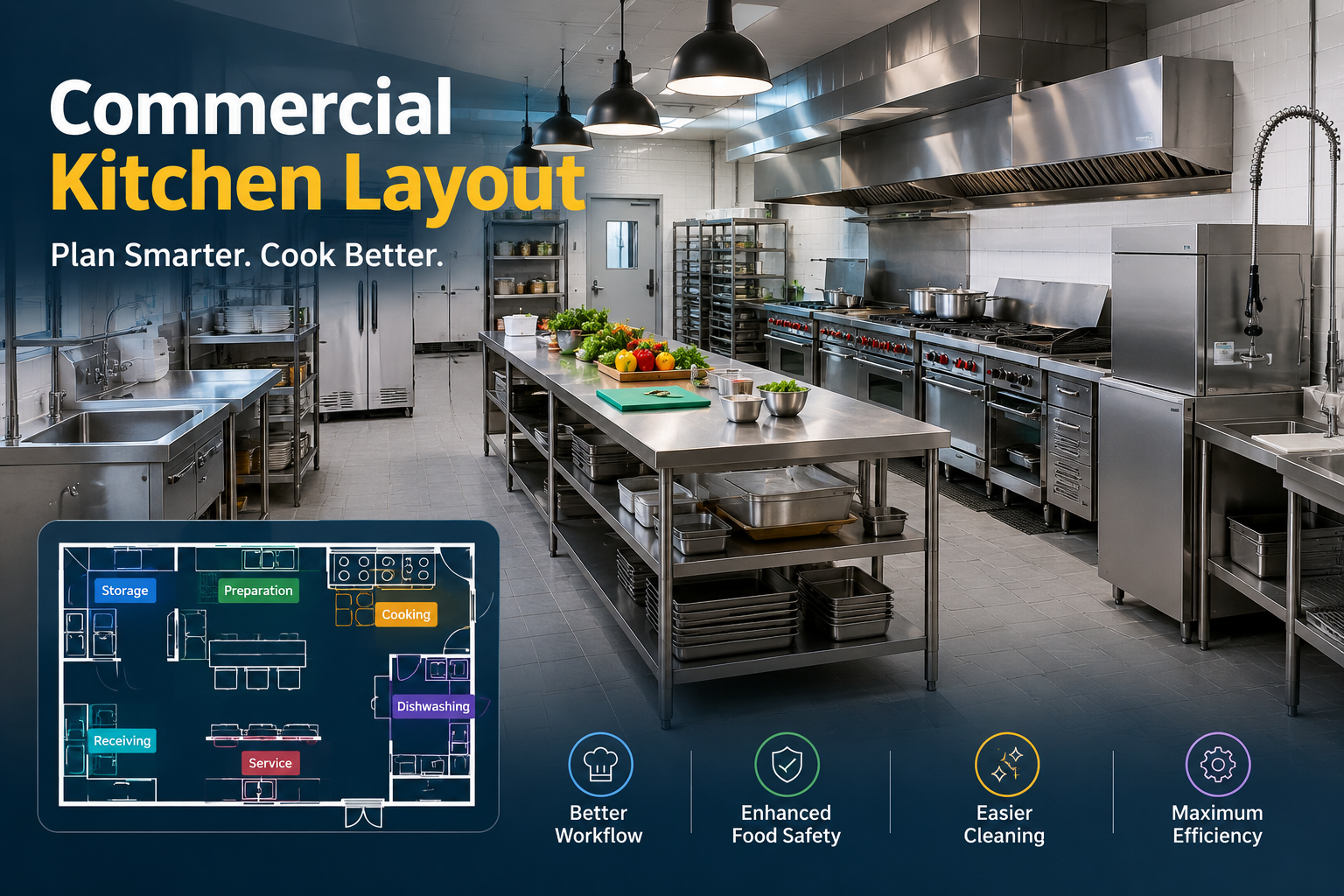
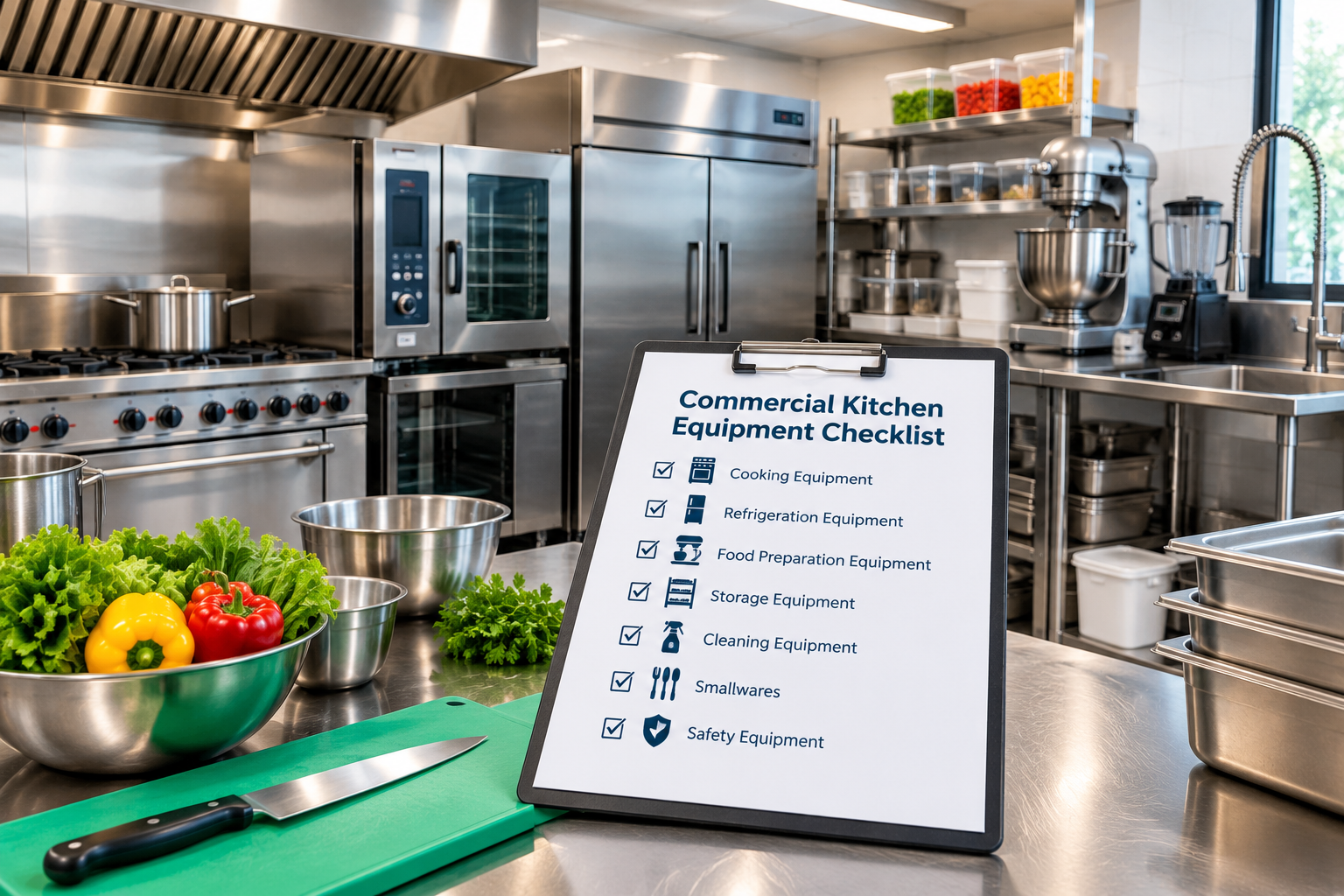
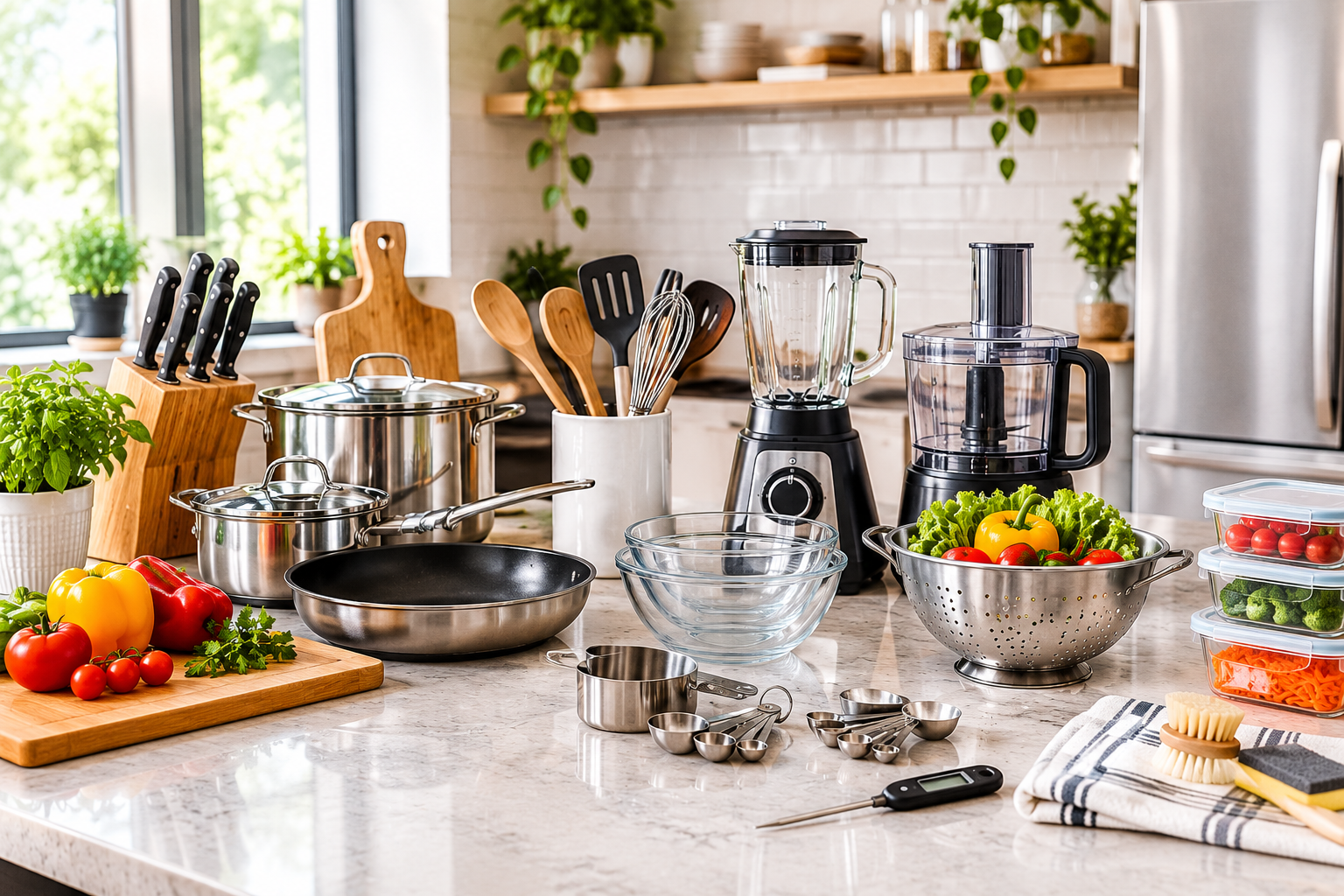
Knowing how to choose commercial kitchen equipment can help restaurant owners create a more efficient, safe, and productive kitchen. The right equipment should match your menu, kitchen space, food volume, budget, and daily workflow. Choosing carefully can also reduce operating costs and unnecessary equipment replacements.
Why Choosing the Right Commercial Kitchen Equipment Matters
Commercial kitchens handle much higher workloads than residential kitchens. Equipment must be able to operate frequently while maintaining consistent performance.
The right selection can improve preparation speed, reduce downtime, and make cleaning easier. It can also help employees work more efficiently during busy service periods.
Before purchasing anything, consider how each piece of equipment will fit into your kitchen and support your actual cooking needs.
How to Choose Commercial Kitchen Equipment Based on Your Menu
Your menu should be one of the first factors you consider when selecting restaurant equipment. Different cooking methods require different types of appliances.
For example, a restaurant that focuses on grilled foods may need a commercial griddle or char broiler. A bakery may require commercial mixers, ovens, proofers, and preparation equipment.
Make a list of the main dishes you serve and identify the equipment required to prepare them. This prevents you from purchasing appliances that are rarely used.
Match Equipment to Food Preparation
Think about each stage of food preparation, including:
Food storage
Ingredient preparation
Cooking
Holding
Serving
Cleaning
This simple process can help you identify which equipment is essential and which items are optional.
Consider Your Commercial Kitchen Space
Kitchen space is another important factor when choosing equipment. Large appliances may provide greater capacity, but they also require more floor or counter space.
Measure the available area before purchasing equipment. Remember to leave enough room for employees to move safely around appliances.
Also consider doorways, ventilation, electrical connections, plumbing, and access for maintenance.
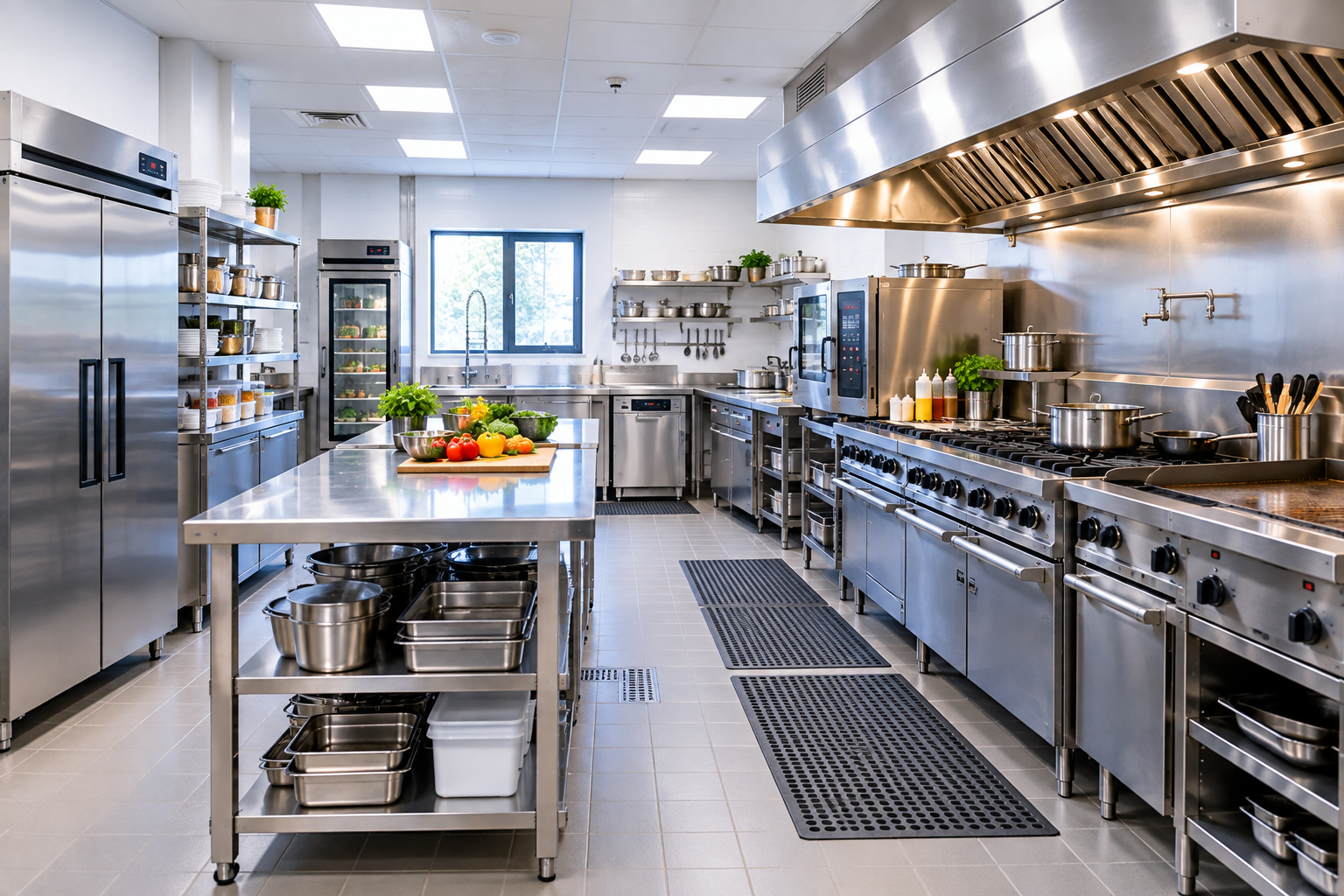
Measure Before You Buy
Create a basic kitchen layout showing where major equipment will be placed. Check the width, depth, and height of each appliance before ordering.
Do not forget to consider doors, handles, ventilation clearance, and service access. An appliance that technically fits may still create workflow problems if there is not enough surrounding space.
Choose the Right Equipment Capacity
Capacity should match your restaurant’s expected food volume. Buying equipment that is too small can slow down production, while oversized equipment may waste energy and valuable space.
Estimate how much food you prepare during normal and peak service periods. Then select equipment that can comfortably handle your busiest expected workload.
For example, a small café may not need the same refrigerator, fryer, or food processor capacity as a high-volume restaurant.
Think About Peak Hours
Your equipment should support your busiest periods rather than only average daily demand.
If your kitchen regularly experiences heavy lunch or dinner traffic, choose appliances that can maintain performance during those periods without creating unnecessary delays.
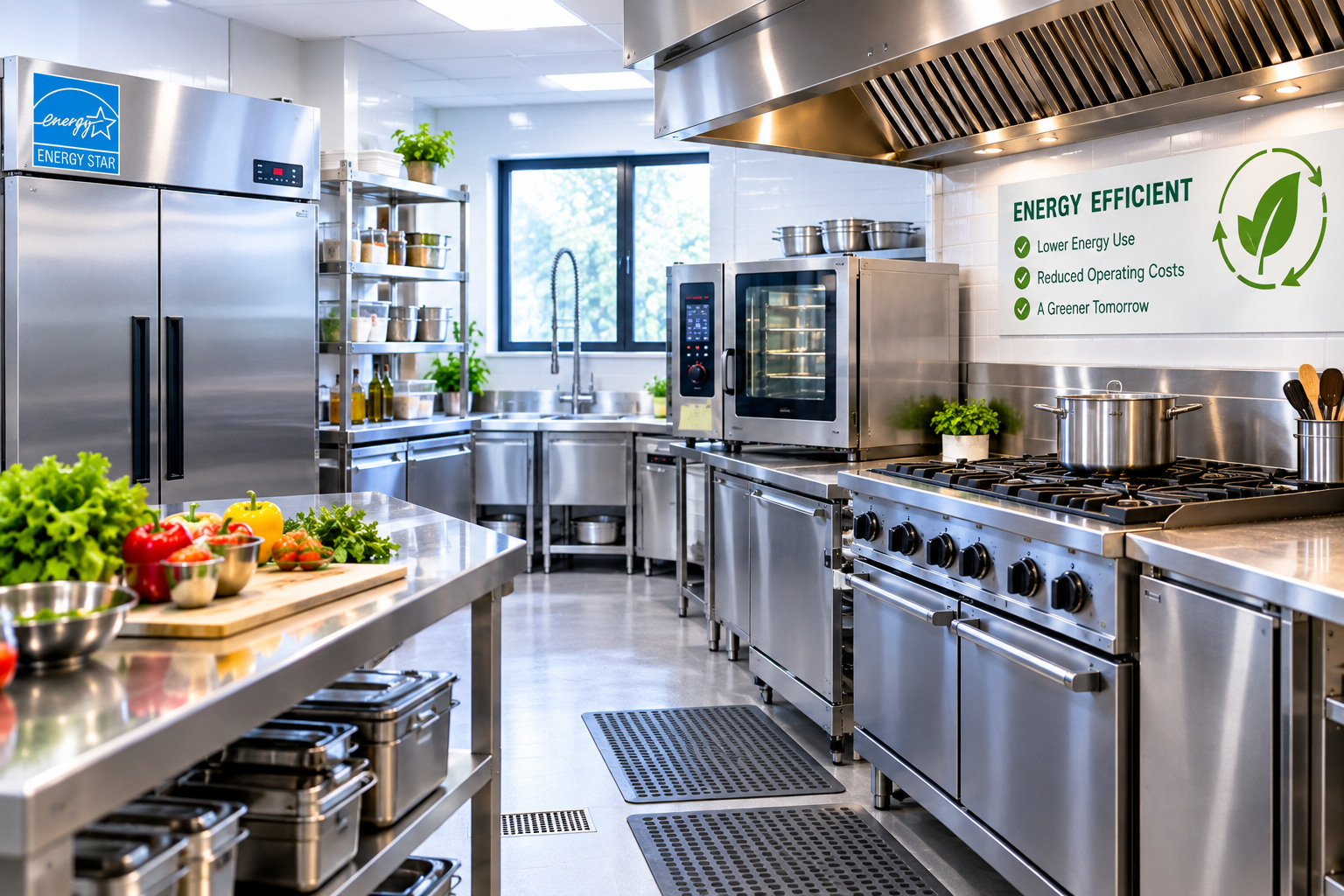
Check Energy Efficiency
Energy consumption can have a significant impact on operating expenses. When comparing equipment, look beyond the initial purchase price.
Consider electricity, gas, water, and other operating requirements. More efficient equipment may help reduce long-term utility expenses depending on usage and local energy costs.
For applicable commercial foodservice equipment, look for recognized efficiency information and certification. The ENERGY STAR program provides information about energy-efficient commercial foodservice equipment.
Prioritize Durability and Build Quality
Commercial kitchen equipment is exposed to frequent use, heat, moisture, spills, and cleaning chemicals. Durability is therefore an important consideration.
Look for equipment made from materials suitable for commercial environments. Stainless steel is commonly used in professional kitchens because it is durable and relatively easy to clean.
Also check the construction of handles, controls, hinges, doors, racks, and other frequently used components.
Consider Long-Term Reliability
A lower purchase price does not always mean lower overall cost. Equipment that requires frequent repairs or replacement may become expensive over time.
Check the manufacturer’s warranty, service availability, replacement parts, and maintenance requirements before making a decision.
Check Safety Features
Safety should always be considered when selecting commercial kitchen equipment. Hot surfaces, sharp components, electrical connections, gas appliances, and moving parts can create workplace hazards.
Look for appropriate safety features such as automatic shutoffs, protective guards, secure controls, and stable construction where applicable.
Installation should also follow the manufacturer’s requirements and applicable local regulations.
Compare Equipment Features
Commercial equipment can come with many different features. However, more features do not necessarily mean better value for every kitchen.
Focus on features that directly improve your workflow. For example, adjustable temperature controls, removable components, programmable settings, or easy-to-clean surfaces may be useful depending on the appliance.
Avoid paying extra for functions your staff will rarely use.
Focus on Practical Features
When comparing models, ask:
Does the equipment perform the required task?
Is it easy for employees to operate?
Can it be cleaned efficiently?
Are replacement parts available?
Does it fit the available space?
Does the capacity match your workload?
These questions can make equipment comparisons more practical.
Consider Cleaning and Maintenance
Easy cleaning is especially important in a busy commercial kitchen. Equipment that is difficult to clean can increase maintenance time and make daily operations more complicated.
Look for removable parts, accessible surfaces, simple controls, and designs that minimize areas where food debris can accumulate.
Before purchasing, check the manufacturer’s cleaning and maintenance instructions.
Plan for Regular Maintenance
Create a maintenance routine for important equipment. Regular inspections and cleaning can help identify problems before they cause unexpected downtime.
Keep records of maintenance, repairs, and replacement parts so your team can manage equipment more effectively.
Set a Realistic Equipment Budget
Budget is one of the most important parts of choosing commercial kitchen equipment. However, the purchase price should not be the only cost you consider.
Include installation, delivery, ventilation, plumbing, electrical work, maintenance, replacement parts, and expected energy consumption in your overall calculation.
Calculate the Total Cost
A useful approach is to compare the expected long-term cost of each option rather than focusing only on its retail price.
A durable appliance with reasonable operating costs may provide better long-term value than a cheaper model that requires frequent repairs.
Compare New and Used Equipment
Used commercial equipment can sometimes reduce upfront costs, but it requires careful inspection.
Before purchasing used equipment, check its overall condition, age, operating history, safety features, service records, and availability of replacement parts.
For critical equipment that operates continuously, carefully consider whether the potential savings justify the additional risk.
Check Manufacturer Support and Warranty
Reliable manufacturer support can make equipment ownership easier. Before buying, check the warranty period and determine whether service technicians are available in your area.
Also confirm how easily you can obtain replacement parts and whether the manufacturer provides installation, maintenance, or troubleshooting information.
A good support network can reduce downtime when equipment requires attention.
Avoid Common Equipment Buying Mistakes
Knowing what to avoid is an important part of learning how to choose commercial kitchen equipment.
Buying Equipment Without Measuring
Never assume an appliance will fit because its listed dimensions look suitable. Measure the actual installation area and access route before purchasing.
Choosing Based Only on Price
The cheapest equipment may not provide the durability, capacity, or features your kitchen needs. Compare total ownership costs instead.
Ignoring Workflow
Equipment should support the movement of food and staff through the kitchen. Poor placement can create unnecessary walking, congestion, and delays.
Buying More Capacity Than Necessary
Oversized equipment can take up valuable space and may increase operating costs. Choose capacity according to realistic production requirements.
Create a Commercial Kitchen Equipment Checklist
Before making a final purchase, review each equipment option using a simple checklist:
| Factor | What to Check |
|---|---|
| Menu | Does it support your dishes? |
| Size | Does it fit the available space? |
| Capacity | Can it handle your workload? |
| Energy Use | What are its operating requirements? |
| Durability | Is it suitable for frequent use? |
| Safety | Does it include appropriate safety features? |
| Cleaning | Is daily cleaning practical? |
| Maintenance | Are parts and service available? |
| Warranty | What protection does the manufacturer provide? |
| Budget | Does the total cost fit your plan? |
Final Tips for Choosing Commercial Kitchen Equipment
When deciding how to choose commercial kitchen equipment, focus on your actual kitchen requirements rather than simply choosing the most powerful or expensive model.
Start with your menu, estimate food volume, measure your space, compare capacity and energy requirements, and review safety and maintenance needs. Then compare manufacturers, warranties, service options, and total ownership costs.
A thoughtful purchasing process can help you build a commercial kitchen that supports efficient food preparation and consistent daily operations.
- All Posts
- Buying Guides
- Commercial Kitchen
- Kitchen Equipment
- Product Reviews
- Tips & Maintenance