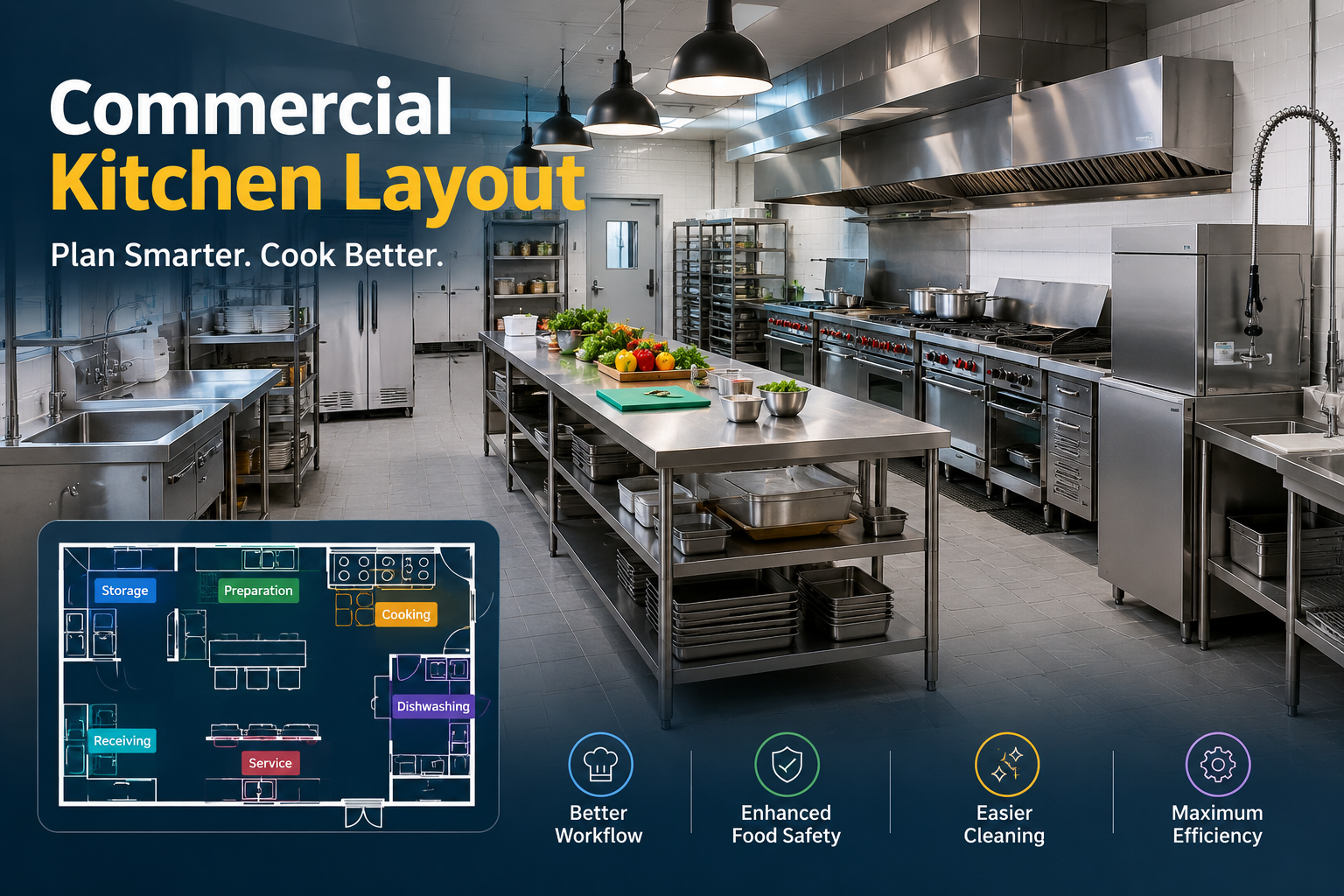
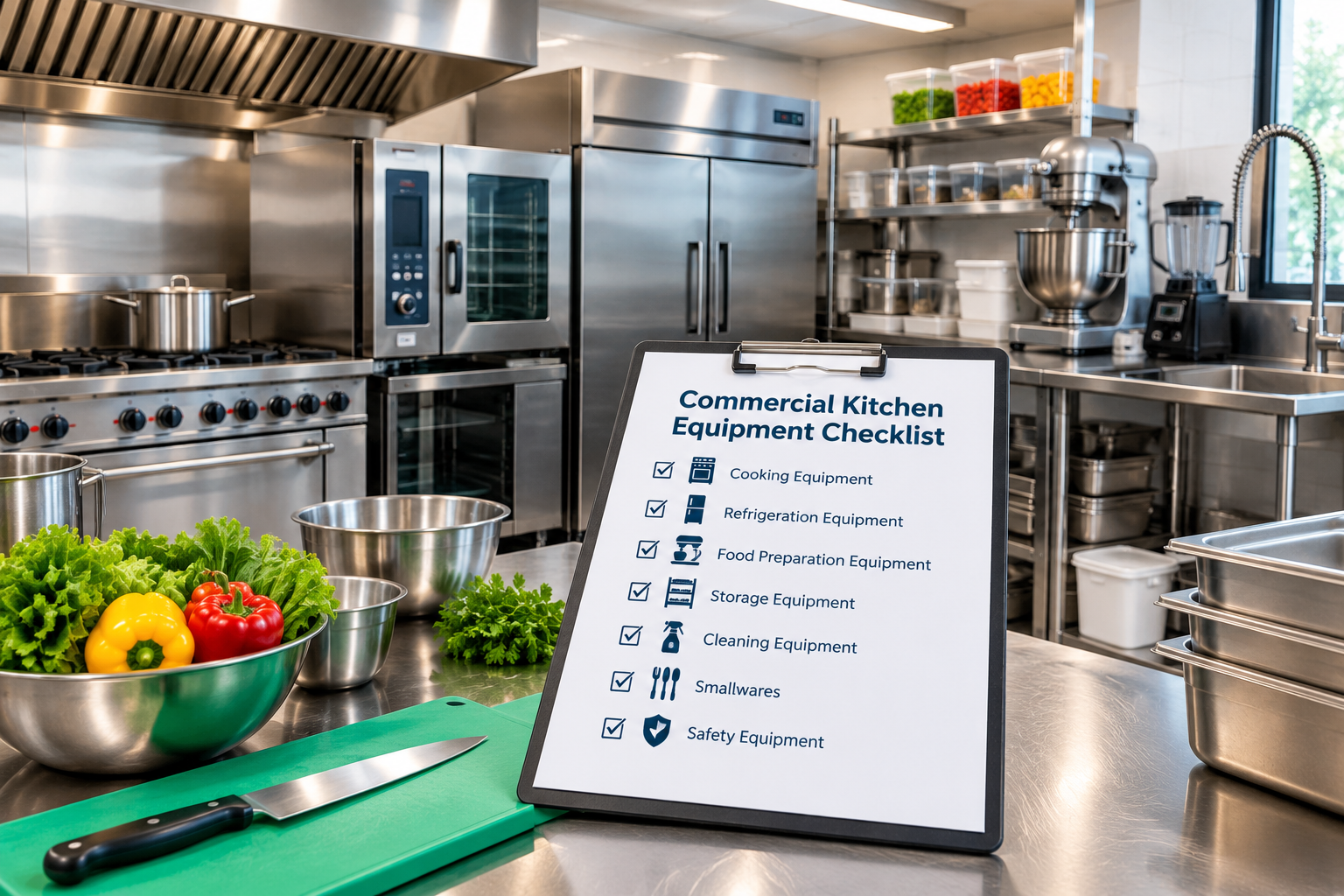
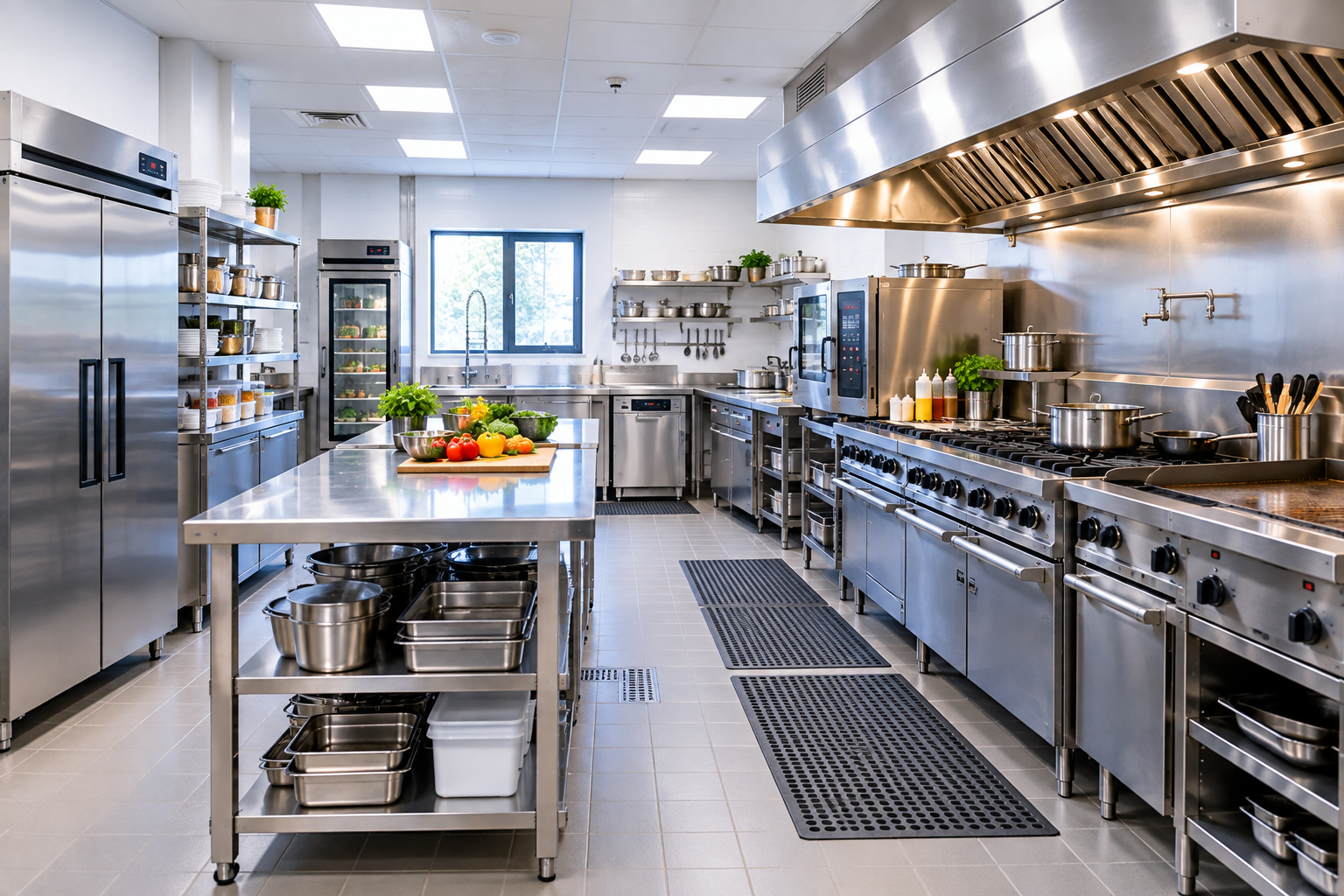
A Commercial Kitchen Equipment Checklist helps restaurant owners, chefs, and kitchen managers organize the essential equipment needed for daily food preparation and service. From cooking appliances and refrigeration to food preparation tools and cleaning equipment, having the right items can improve workflow, safety, and kitchen efficiency.
Choosing commercial equipment without a proper checklist can lead to missing essential items, wasted space, or unnecessary spending. A well-planned checklist makes it easier to identify what your kitchen actually needs before making purchasing decisions.
Why Use a Commercial Kitchen Equipment Checklist?
A commercial kitchen usually requires more equipment than a residential kitchen because it must handle higher workloads and frequent daily use.
A checklist helps you review each area of the kitchen before purchasing equipment. It can also help prevent important items from being overlooked during a new kitchen setup or renovation.
Before buying, consider your menu, available kitchen space, expected food volume, energy requirements, cleaning needs, and available budget.
Commercial Cooking Equipment Checklist
Cooking equipment is one of the most important parts of a professional kitchen. The right appliances should match your menu and daily production requirements.
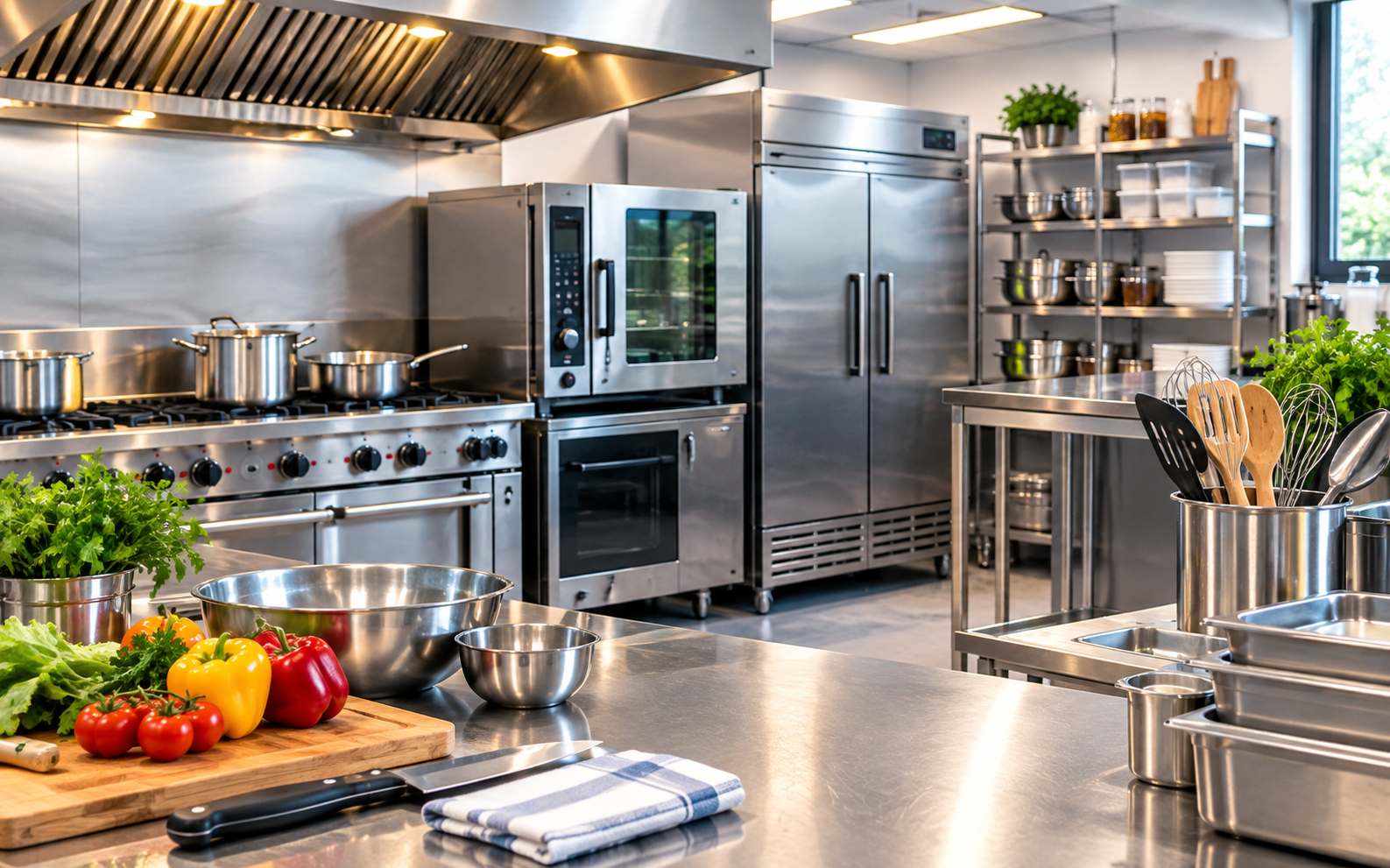
Commercial Ranges and Cooktops
Commercial ranges and cooktops provide the heat needed for boiling, sautéing, frying, simmering, and other cooking tasks.
They are commonly used throughout busy restaurant kitchens for preparing different types of dishes.
Choose a configuration that fits your menu, available space, and expected cooking volume.
Gas, electric, and induction options may be suitable depending on the kitchen layout and utility setup.
Commercial Ovens
A commercial oven is useful for baking, roasting, reheating, and preparing large quantities of food efficiently.
Restaurants can choose from options such as convection ovens, combination ovens, and specialized baking ovens.
Consider cooking capacity, temperature control, energy use, and available installation space before buying.
Select an oven that matches the types of dishes prepared and the expected workload of your kitchen.
Commercial Grills and Griddles
Commercial grills and griddles are useful for preparing burgers, sandwiches, vegetables, meats, and breakfast foods.
They provide a dedicated cooking surface that can support fast and consistent food preparation during busy service.
Consider cooking surface size, temperature control, heat distribution, and cleaning requirements when choosing a model.
The equipment should also fit comfortably within your available workspace without creating unnecessary congestion.
Commercial Fryers
Commercial fryers are commonly used in restaurants that serve fried foods such as chicken, fries, seafood, and appetizers.
They are designed to handle frequent cooking and maintain consistent oil temperatures during busy service periods.
When selecting a fryer, consider oil capacity, recovery time, filtration options, and ease of cleaning.
Available floor or counter space should also be checked before purchasing and installing the equipment.
Commercial Refrigeration Equipment Checklist
Refrigeration is essential for storing ingredients safely and maintaining food quality.
Your checklist may include:
Reach-in refrigerators
Undercounter refrigerators
Walk-in refrigerators
Commercial freezers
Prep refrigerators
Refrigerated display units
Ice machines
The required refrigeration capacity depends on your menu, food volume, storage space, and delivery schedule.
Food Preparation Equipment Checklist
Food preparation equipment can help reduce manual work and improve consistency during busy service periods.
Commercial Food Processors
Commercial food processors can assist with chopping, slicing, shredding, mixing, and other food preparation tasks.
They can help reduce preparation time and provide more consistent results during busy kitchen operations.
Choose a model with a capacity that matches your food production needs and expected daily workload.
Consider blade options, cleaning requirements, durability, and available counter space before purchasing a unit.
Commercial Mixers
Commercial mixers are useful for restaurants, bakeries, cafés, and food businesses that regularly prepare dough, batters, sauces, and other mixtures.
They can handle repeated mixing tasks and help maintain consistency when preparing larger quantities of ingredients.
Consider bowl capacity, mixing speed, available attachments, and the type of ingredients you prepare most often.
Make sure the mixer fits your available counter or floor space and can handle your expected workload.
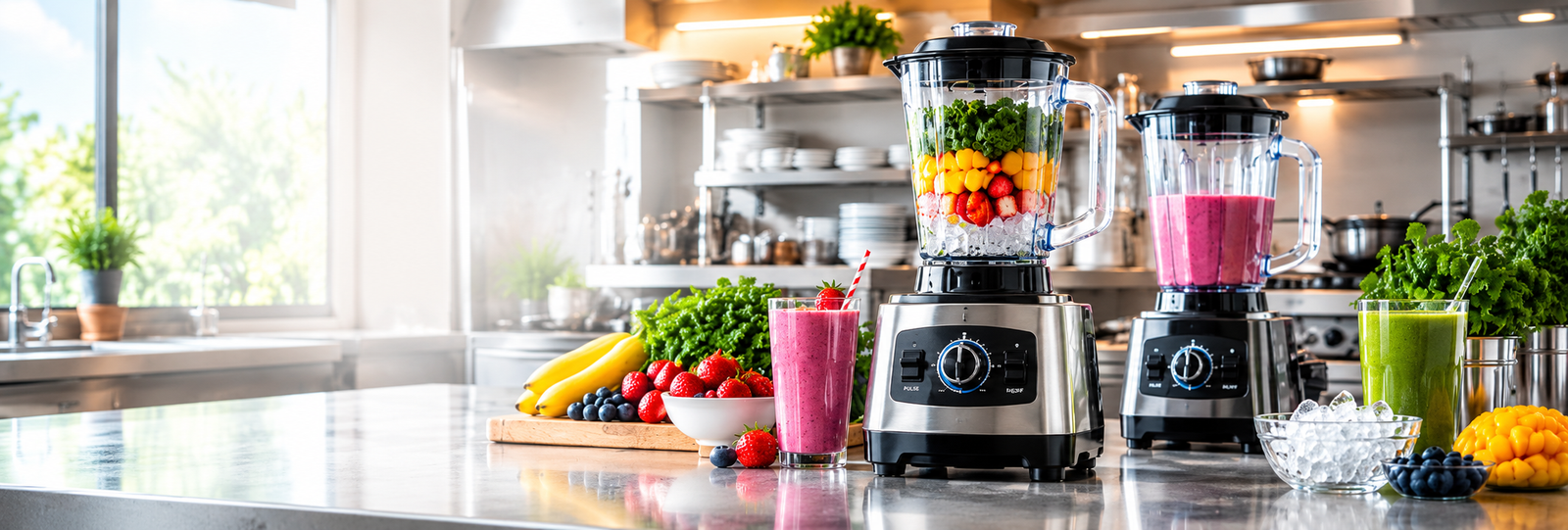
Commercial Blenders
Commercial blenders are useful for preparing sauces, soups, smoothies, dressings, beverages, and other blended ingredients.
They are designed for frequent use and can help speed up preparation in busy restaurant and foodservice environments.
A durable motor, suitable container capacity, easy cleaning, and appropriate speed settings are important factors to consider.
Choose a blender based on the ingredients, production volume, and types of recipes prepared in your kitchen.
Food Storage Equipment Checklist
Proper storage helps keep ingredients organized and accessible during food preparation.
A basic storage checklist can include:
Shelving units
Food storage containers
Ingredient bins
Stainless steel storage racks
Dunnage racks
Dry storage cabinets
Food-safe containers with lids
Use food-safe storage products and organize ingredients according to your kitchen’s storage system.
Commercial Kitchen Cleaning Equipment Checklist
Cleaning equipment is another important part of a professional kitchen. Regular cleaning helps maintain a safe and organized working environment.
Your cleaning checklist may include:
Commercial dishwashers
Three-compartment sinks
Handwashing sinks
Floor cleaning tools
Cleaning brushes
Sanitizing supplies
Grease removal products
Waste containers
Stainless steel cleaning supplies
For food-safety information and general guidance, restaurant operators can also review resources from the U.S. Food and Drug Administration and the U.S. Department of Agriculture Food Safety and Inspection Service.
Commercial Kitchen Smallwares Checklist
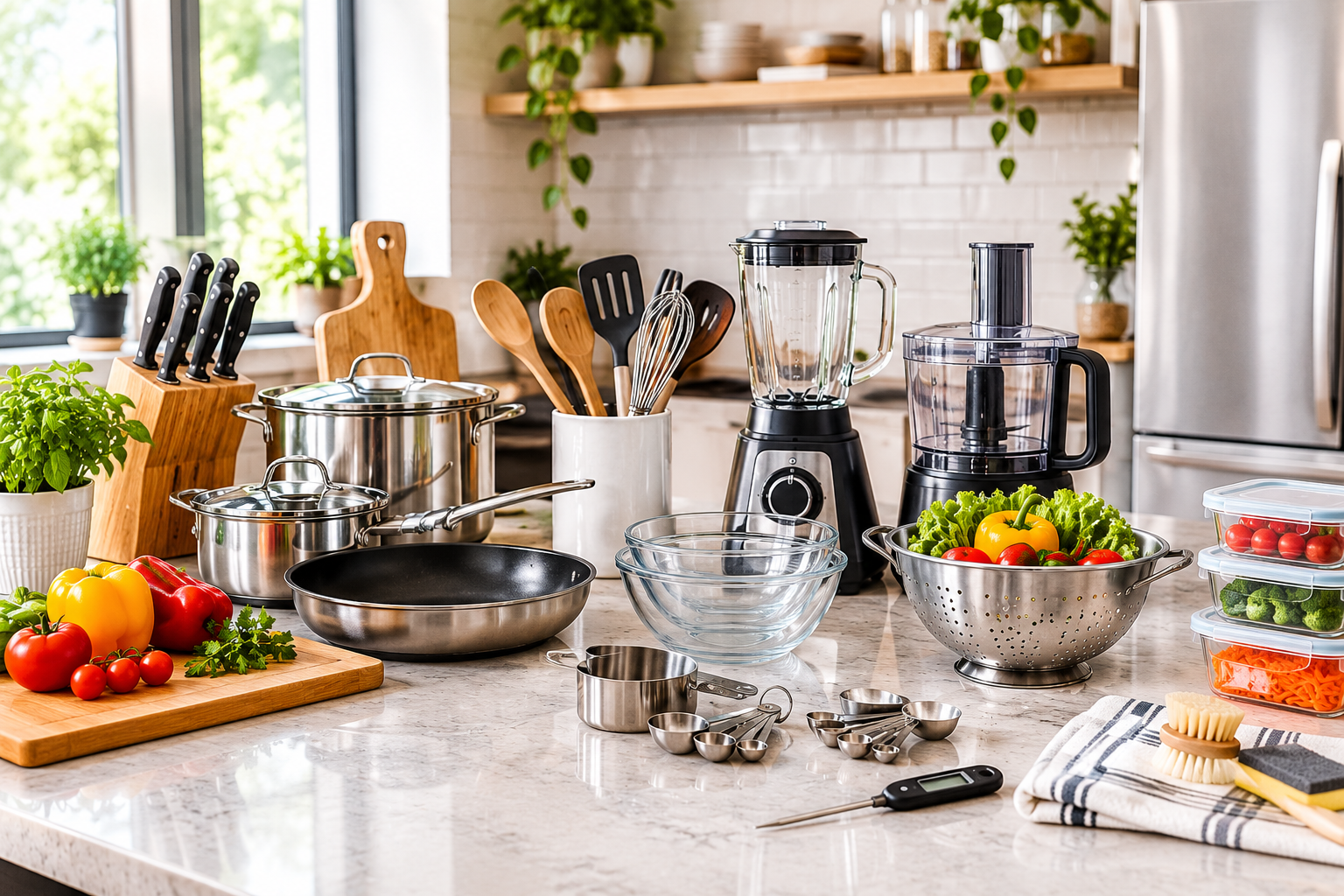
Smallwares may be smaller than major appliances, but they are essential for everyday kitchen operations.
Consider adding these items to your purchasing list:
Chef’s knives
Cutting boards
Mixing bowls
Measuring cups
Measuring spoons
Tongs
Spatulas
Whisks
Ladles
Food thermometers
Colanders
Sheet pans
Stock pots
Sauce pans
The exact quantities should depend on your menu, staff size, and daily workload.
Safety Equipment Checklist for Commercial Kitchens
Kitchen safety equipment should also be included when planning a professional foodservice operation.
Important items may include:
Fire extinguishers
First-aid supplies
Non-slip floor mats
Protective gloves
Proper ventilation
Emergency shut-off controls
Clearly marked exits
Appropriate food thermometers
Equipment should be installed and maintained according to applicable local safety requirements.
How to Choose Equipment for Your Kitchen
A checklist is most useful when every item is evaluated according to your actual kitchen requirements.
Consider Your Menu
Your menu should guide many of your equipment decisions. A bakery, fast-food restaurant, café, and full-service restaurant will have different equipment requirements.
Start by listing the dishes you prepare most often and identify which equipment is required for each preparation step.
Measure Available Space
Measure doorways, work areas, walls, ventilation areas, and available floor space before ordering large equipment.
Proper measurements can help prevent problems during delivery and installation.
Check Capacity and Workload
Equipment capacity should match your expected production volume. A unit that is too small may slow down service, while an unnecessarily large unit can consume valuable space and energy.
Consider how often the equipment will be used and how much food it needs to process during busy periods.
Consider Cleaning and Maintenance
Choose equipment that can be cleaned and maintained efficiently. Accessible components, removable parts, and simple controls can make routine maintenance easier.
Always review the manufacturer’s cleaning and maintenance instructions before purchasing.
Commercial Kitchen Equipment Checklist Before Buying
Before completing a purchase, review your list one more time.
Ask yourself:
Does the equipment support my current menu?
Is the size suitable for my kitchen?
Is the capacity sufficient for daily production?
Is the equipment easy to clean?
Are replacement parts available?
Does it have an appropriate warranty?
Does it meet applicable safety requirements?
Will installation require additional plumbing, electrical, gas, or ventilation work?
This final review can help reduce unexpected costs and prevent equipment from being purchased without considering the complete kitchen setup.
Final Thoughts
A Commercial Kitchen Equipment Checklist provides a practical way to organize equipment purchases for a restaurant or foodservice operation. By separating cooking, refrigeration, preparation, storage, cleaning, smallwares, and safety requirements, you can create a more complete purchasing plan.
The goal is not to buy every available appliance. Instead, choose equipment based on your menu, kitchen space, workload, maintenance requirements, and long-term operating needs.
Use this Commercial Kitchen Equipment Checklist as a starting point, then customize it according to the specific needs of your commercial kitchen.
- All Posts
- Buying Guides
- Commercial Kitchen
- Kitchen Equipment
- Product Reviews
- Tips & Maintenance