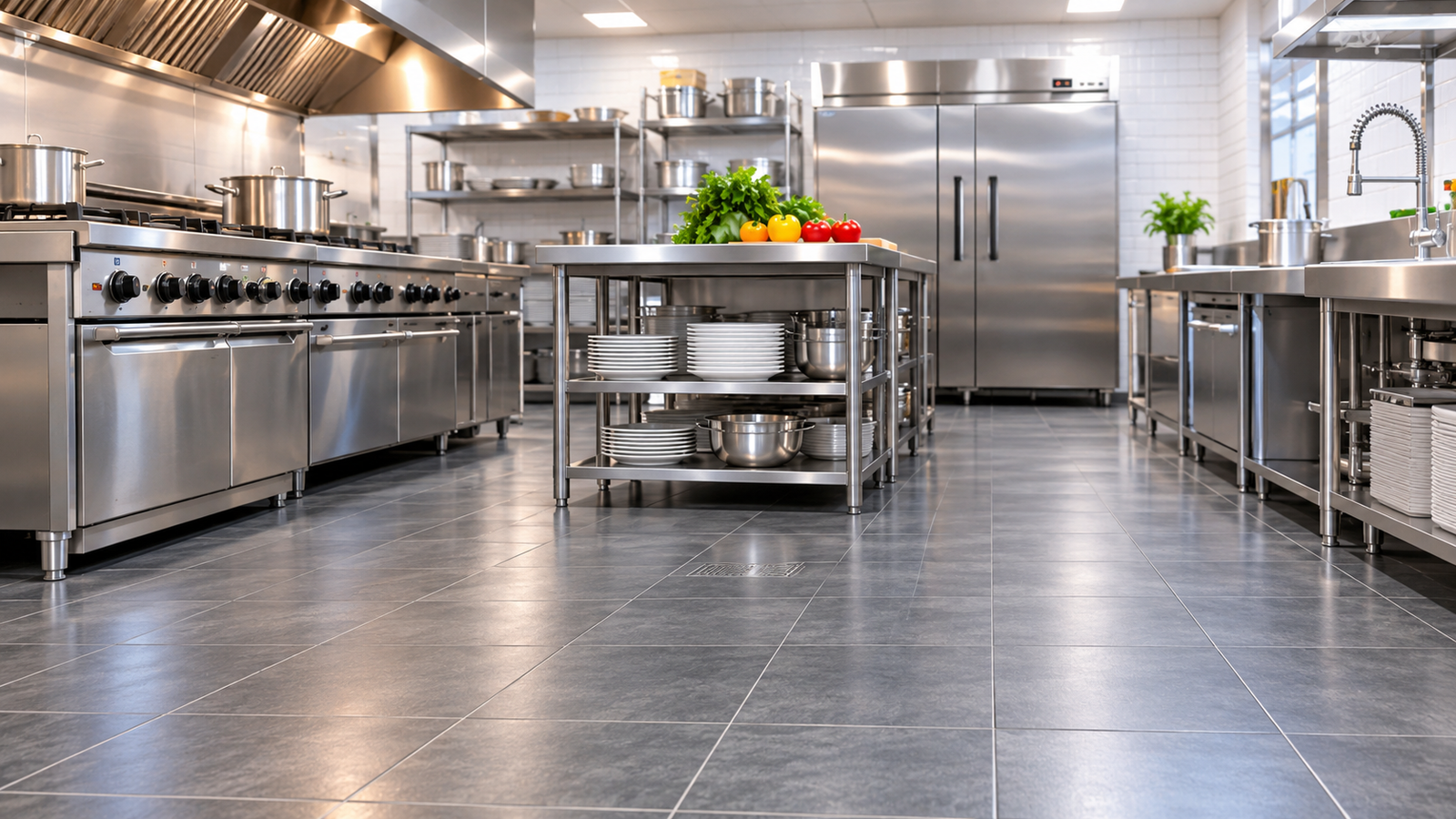
Commercial Kitchen Ventilation is essential for maintaining a comfortable, clean, and safe working environment in restaurants, hotels, cafeterias, and other foodservice facilities. A properly designed ventilation system removes excess heat, smoke, grease particles, steam, and cooking odors from the kitchen. Understanding how these systems work helps restaurant owners choose suitable equipment and maintain better indoor air quality.
Understanding how these systems work helps restaurant owners choose suitable commercial kitchen equipment and maintain better indoor air quality.
Why Commercial Kitchen Ventilation Is Important
A busy commercial kitchen produces heat, airborne grease, moisture, and odors throughout the day. Without effective ventilation, these conditions can make the workspace uncomfortable and affect employees’ ability to work efficiently.
A well-designed system helps remove cooking pollutants, control indoor temperatures, and reduce grease accumulation around cooking areas. It can also support fire prevention when combined with appropriate cleaning, inspection, and fire-suppression measures.
Main Components of a Commercial Kitchen Ventilation System
A complete ventilation setup includes several components that work together to capture contaminated air and remove it safely. Each component should match the kitchen layout, cooking appliances, and expected food production volume.
Exhaust Hoods
Exhaust hoods are installed above cooking appliances to capture heat, smoke, steam, and grease-laden air. Their size and design depend on the appliances underneath and the type of cooking performed.
A suitable hood should cover the required cooking area and capture rising emissions effectively. Professional planning helps prevent smoke and heat from escaping into the surrounding workspace.
Exhaust Fans
Exhaust fans move contaminated air through the ventilation ductwork and discharge it outside where the system design permits. Their capacity must be suitable for the hood, duct layout, and cooking load.
An undersized fan may provide inadequate extraction, while an incorrectly selected system can waste energy or create airflow problems. Choose equipment based on professional calculations rather than fan power alone.
Grease Filters
Grease filters capture airborne grease before it enters the exhaust ductwork. They help reduce grease buildup inside the system, although they do not eliminate the need for regular duct cleaning.
Filters should be compatible with the hood and easy to remove for cleaning. Follow the manufacturer’s instructions and establish a maintenance schedule based on cooking frequency and grease production.
Ductwork
Ductwork carries extracted air from the hood to the designated discharge point. Proper sizing, routing, access for inspection, and suitable materials are important for safe and reliable operation.
Poorly designed ducts can restrict airflow and make cleaning difficult. Have the system designed and installed by qualified professionals who understand applicable building and fire-safety requirements.
Make-Up Air Systems
Exhaust systems remove air from the kitchen, so replacement air must also enter the building. Make-up air systems supply fresh air to help maintain balanced airflow and reduce unwanted pressure differences.
When replacement air is insufficient, doors may become difficult to open, drafts may develop, and exhaust performance may suffer. The supply and exhaust systems should therefore be planned together.
Types of Commercial Kitchen Ventilation Hoods
Different cooking operations require different hood designs. The right choice depends on the equipment, available space, cooking emissions, and applicable local requirements.
Type I Exhaust Hoods
Type I hoods are generally used over appliances that produce grease-laden vapors, such as fryers, griddles, and many commercial ranges. They typically include grease-removal filters and may require an appropriate fire-suppression system.
Their installation and protection requirements depend on the equipment and applicable codes. Always confirm the correct hood classification with a qualified ventilation professional.
Type II Exhaust Hoods
Type II hoods are generally designed to capture heat, steam, and condensation from appliances that do not produce grease-laden vapors. They may be suitable for certain ovens, dishwashers, and similar equipment, depending on the application.
Not every appliance can use a Type II hood. Check manufacturer specifications and local requirements before choosing a system.
Wall-Mounted and Island Hoods
Wall-mounted hoods are installed against a wall above cooking equipment and are common in kitchens with a wall-based cooking line. Island hoods are positioned above cooking equipment located away from walls.
Island installations may need careful planning because air can approach the hood from several directions. The kitchen layout and cooking intensity help determine which design is most appropriate.
How to Choose the Right Kitchen Ventilation System
Choosing the right system involves more than selecting a hood and fan. Consider the complete cooking operation, including equipment placement, airflow, cleaning access, and future business needs.
Assess Your Cooking Equipment
List the appliances that will operate under the ventilation system, including ranges, fryers, grills, ovens, and griddles. Different appliances release different amounts of heat, moisture, smoke, and grease.
Share this information with a qualified designer before purchasing equipment. This step helps determine the suitable hood type, exhaust capacity, and fire-protection requirements.
Consider Kitchen Size and Layout
Measure the cooking area and identify walls, ceilings, doors, windows, and other possible installation obstacles. The layout influences hood dimensions, duct routing, make-up air placement, and maintenance access.
Plan the ventilation system alongside your other commercial kitchen equipment. Coordinating these elements early can help avoid costly changes after installation.
Plan the ventilation system alongside your other commercial kitchen equipment. Coordinating these elements early can help avoid costly changes after installation.
Check Airflow Requirements
Airflow requirements depend on the cooking appliances, hood design, installation conditions, and applicable standards. A professional should calculate the required exhaust and replacement air rather than relying on a general rule for every kitchen.
Balanced airflow helps the hood capture cooking emissions while maintaining a comfortable workspace. The final design should also account for the building’s HVAC system.
Review Energy Efficiency
Ventilation fans can consume substantial energy when operating for long periods. Efficient motors, suitable controls, properly maintained filters, and a well-designed duct system can help reduce unnecessary energy use.
Demand-controlled kitchen ventilation can adjust fan speed in response to cooking activity when the system is designed for that purpose. Review the ENERGY STAR guidance on demand-controlled kitchen ventilation to learn more about this approach.
Commercial Kitchen Ventilation Installation and Safety
Correct installation is essential for effective extraction, reliable operation, and fire safety. Hood positioning, ductwork, exhaust discharge, electrical connections, and fire-protection equipment should be handled by qualified professionals.
The design must follow applicable local building, mechanical, and fire codes. In the United States, NFPA 96 provides a recognized standard addressing ventilation control and fire protection for commercial cooking operations. Other locations may have different legal requirements, so verify the rules that apply to your facility.
After installation, have the system tested to confirm that airflow, hood capture, and make-up air perform as intended. Staff should know how to operate the equipment and report unusual noise, poor extraction, or visible smoke escaping the hood.
Cleaning and Maintaining Kitchen Ventilation Equipment
Regular maintenance helps keep the ventilation system working effectively and reduces the risk of excessive grease accumulation. The cleaning frequency should reflect the type of cooking, operating hours, and manufacturer’s instructions.
Regular maintenance helps keep the ventilation system working effectively. Learn how to clean commercial kitchen equipment to maintain a cleaner and more efficient kitchen.
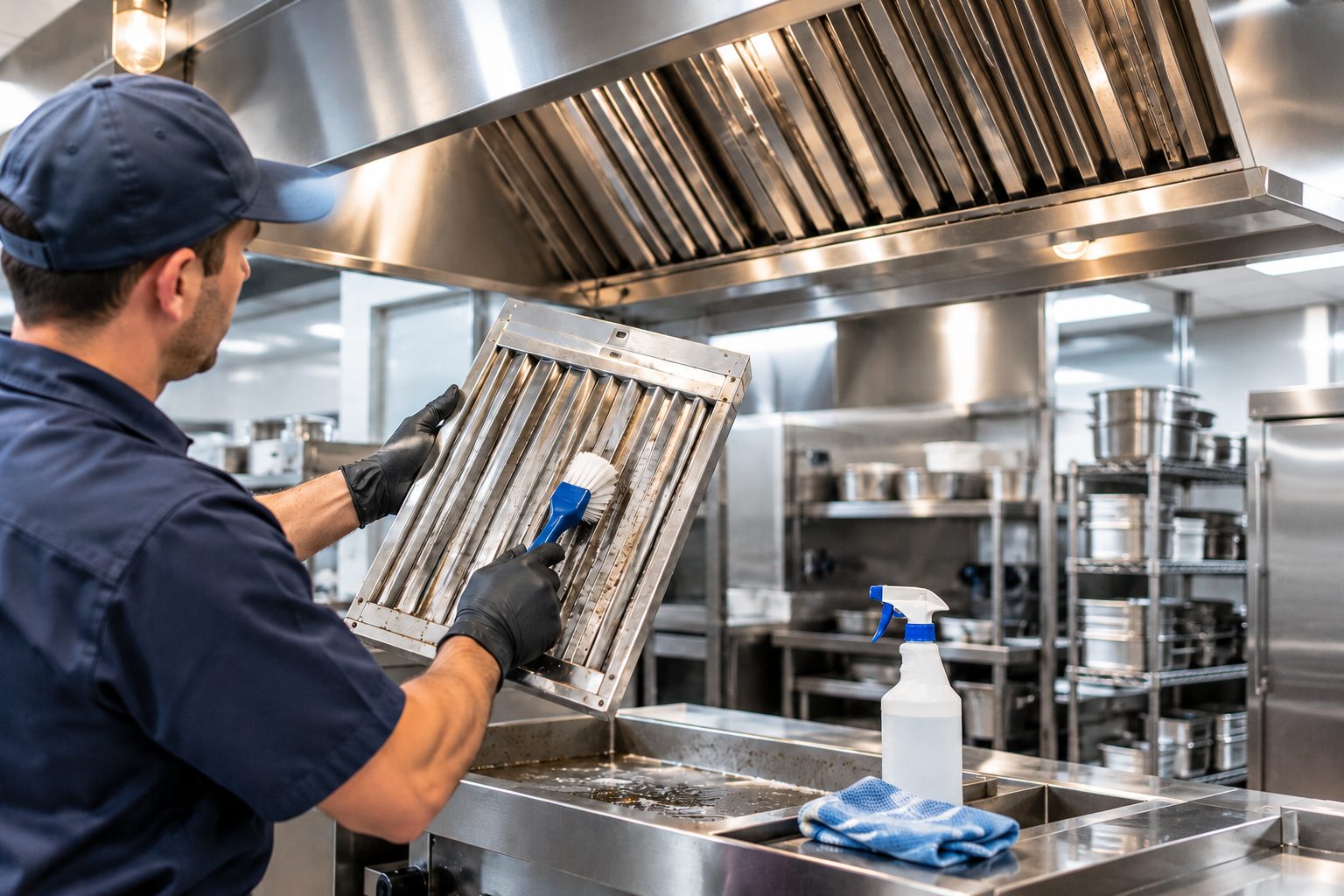
Clean Grease Filters Regularly
Inspect grease filters for visible buildup and clean them according to the manufacturer’s guidance. Heavy grease deposits can interfere with airflow and create additional cleaning requirements.
Allow filters to dry properly before reinstalling them. Replace damaged filters with compatible parts rather than operating the hood without the required filtration.
Inspect Fans and Ductwork
Check fans for unusual vibration, noise, damage, or reduced performance. Arrange professional inspections of ductwork and other components to identify grease accumulation or airflow restrictions.
Exhaust ducts may require specialized cleaning, particularly in kitchens with frequent frying or high-volume cooking. Keep maintenance records and follow applicable fire-safety requirements.
Schedule Professional Servicing
Routine servicing can identify problems before they lead to equipment failure or poor extraction. A qualified technician can assess fan performance, electrical components, controls, and other system parts.
Do not ignore persistent odors, smoke escaping the hood, or sudden changes in airflow. Stop using affected equipment when necessary and arrange a prompt professional assessment.
Common Commercial Kitchen Ventilation Mistakes
Some ventilation problems begin during planning, while others develop because of inadequate maintenance. Avoiding these mistakes can improve system performance and help control long-term operating costs.
Focusing Only on Initial Cost
The cheapest equipment may not provide the airflow, durability, or service access your kitchen needs. Compare installation costs, energy consumption, maintenance needs, warranty terms, and expected operating conditions before making a decision.
Conclusion
Commercial Kitchen Ventilation plays an important role in controlling heat, smoke, grease, and odors in busy foodservice environments. Selecting the right hood, exhaust fan, ductwork, and make-up air system can improve comfort and support safer kitchen operations.
Plan the system around your cooking equipment and building layout, and use qualified professionals for design, installation, inspection, and servicing. Regular maintenance and compliance with applicable safety requirements will help keep the ventilation system operating reliably over time.
- All Posts
- Buying Guides
- Commercial Kitchen
- Kitchen Equipment
- Product Reviews
- Tips & Maintenance