Moving into a new home is exciting, especially when you get to set up your kitchen from scratch. However, buying too many cooking accessories can waste money and fill your cabinets with things you rarely use. The must have kitchen tools for new home owners should focus on practical items that make cooking, preparing meals, and cleaning easier. With a few reliable essentials, you can build a functional kitchen without overspending.
If you are planning a complete kitchen setup, explore our guide to kitchen equipment to discover more tools and equipment for everyday cooking.
1. Chef’s Knife
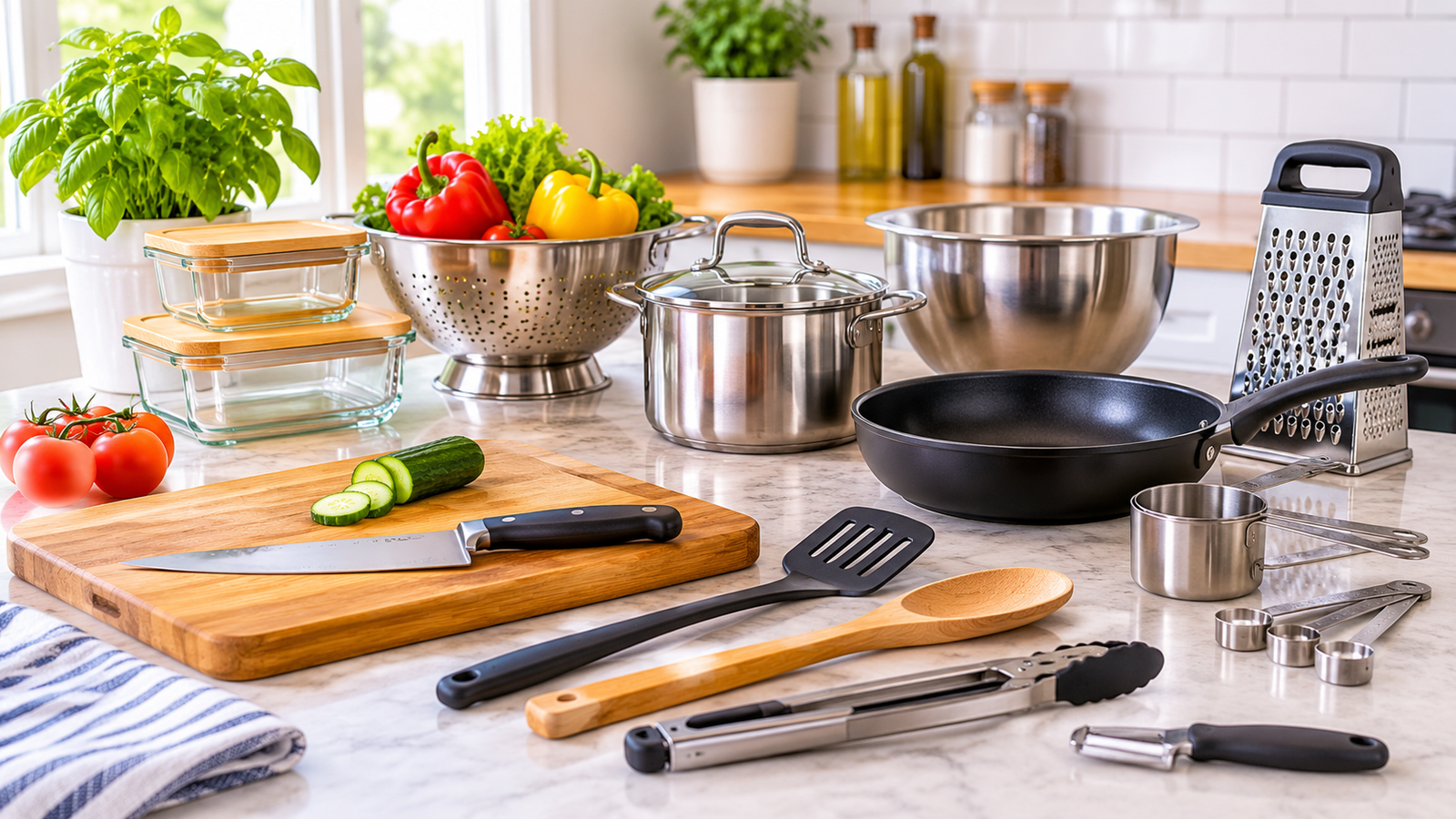
A sharp chef’s knife is one of the most useful tools in any kitchen. It helps you chop vegetables, slice meat, mince herbs, and prepare ingredients quickly. Instead of buying a large knife set immediately, start with one comfortable, versatile knife.
Choose a knife with a sturdy handle, balanced weight, and a blade that feels comfortable in your hand. Moreover, regular sharpening will help it perform better for everyday food preparation.
2. Cutting Boards
Cutting boards protect your countertops and provide a stable surface for preparing ingredients. Keep at least two boards in your kitchen to separate raw meat from fruits, vegetables, and ready-to-eat foods.
Plastic boards are easy to clean, while wooden boards offer durability and a natural appearance. In addition, choose a board that stays firmly in place during chopping.
3. Nonstick Frying Pan
A nonstick frying pan makes breakfast, quick meals, and everyday cooking easier. You can prepare eggs, pancakes, vegetables, and delicate foods without much oil.
For a new kitchen, one medium-sized frying pan is usually enough to get started. Choose a durable surface and use utensils recommended by the manufacturer to prevent scratches.
4. Saucepan
A saucepan is useful for boiling eggs, heating milk, preparing sauces, cooking noodles, and making small portions of soup. Therefore, it is one of the most practical cookware items to buy when setting up a kitchen.
A saucepan with a lid and comfortable handle offers greater convenience. Stainless steel is a popular choice because it can handle many everyday cooking tasks.
5. Mixing Bowls
Mixing bowls help you combine ingredients, prepare marinades, mix batter, and organize food before cooking. A set of different sizes gives you more flexibility when preparing meals.
Stainless steel or glass bowls are useful choices because they are easy to maintain. Furthermore, nesting bowls save cabinet space in smaller kitchens.
6. Measuring Cups and Spoons

Accurate measurements can make a big difference when preparing recipes. Measuring cups help you portion ingredients, while measuring spoons work well for spices, baking powder, oil, and other small quantities.
Although experienced cooks sometimes estimate measurements, beginners benefit from having a reliable set. As a result, recipes become easier to follow and repeat.
7. Spatula and Cooking Spoon
A spatula and a cooking spoon are simple utensils that you will probably use every day. A spatula helps flip eggs, pancakes, and other foods, while a cooking spoon allows you to stir soups, sauces, and vegetables.
Silicone or wooden utensils are suitable for many cookware surfaces. In addition, comfortable handles make cooking easier when you prepare several dishes.
8. Kitchen Tongs
Kitchen tongs give you better control when turning food, serving vegetables, handling grilled items, or moving ingredients in a hot pan. They also help you keep your hands away from heat.
Choose a pair with a secure grip and a locking mechanism for compact storage. For everyday cooking, medium-sized tongs are a useful option.
9. Colander
A colander makes it easy to drain pasta, rinse vegetables, wash fruits, and remove excess water from ingredients. Its holes allow water to pass through while keeping food inside.
A stainless steel or sturdy plastic colander can serve many purposes. However, choose a size that fits comfortably in your sink and does not take up too much storage space.
10. Vegetable Peeler
Peeling potatoes, carrots, cucumbers, and other vegetables becomes much easier with a vegetable peeler. It removes thin layers quickly and reduces food waste compared with using a knife for the same task.
Look for a sharp blade and an ergonomic handle. A compact peeler also fits easily into a kitchen drawer.
11. Can Opener
A manual can opener is a small but important kitchen accessory. It allows you to open canned beans, vegetables, sauces, tuna, and other pantry ingredients.
Choose a model that feels comfortable to turn and creates a smooth edge. In addition, clean and dry it after use to help prevent rust and maintain hygiene.
12. Baking Sheet
A baking sheet is useful for roasting vegetables, baking cookies, heating frozen foods, and preparing oven meals. Even if you do not bake regularly, it can support several cooking methods.
A sturdy metal baking sheet distributes heat more consistently than a thin, flimsy one. Therefore, choose a size that fits your oven and leaves enough room for food to cook properly.
13. Food Storage Containers
Food storage containers help keep leftovers, chopped ingredients, snacks, and meal-prepped foods organized. They also make it easier to reduce waste and store food neatly in your refrigerator.
For convenience, select containers with secure lids and stackable designs. Glass containers work well for reheating, while lightweight plastic options can be easier to carry.
14. Kitchen Grater
A kitchen grater is useful for shredding cheese, grating carrots, zesting citrus, and preparing ingredients for salads or recipes. It can save time when you need finely prepared ingredients.
A box grater with multiple sides offers different grating sizes in one tool. Nevertheless, handle it carefully and store it where the sharp surfaces cannot cause accidental injuries.
15. Food Thermometer
A food thermometer helps you check whether meat, poultry, and other foods have reached a safe internal temperature. Unlike visual checks, temperature measurements provide a more reliable way to determine whether food is properly cooked.
For example, chicken should reach 165°F (74°C). If you want to learn more, check the CDC’s food safety and cooking temperature guidance.
How to Choose Kitchen Tools for a New Home
Buying everything at once is not necessary. Instead, consider your cooking habits, available storage, and budget before adding more items to your kitchen.
Start with everyday essentials: Buy tools that support your regular meals first.
Choose durable materials: Look for comfortable handles, sturdy construction, and easy-to-clean surfaces.
Consider storage space: Compact and stackable tools work well in small kitchens.
Avoid unnecessary duplicates: One reliable tool is often more useful than several similar products.
Build your collection gradually: Add specialized tools when you actually need them.
These steps will help you create a practical kitchen without spending money on equipment that rarely gets used.
Final Thoughts
Setting up a new kitchen does not require a huge collection of cookware and gadgets. The must have kitchen tools for new home owners include versatile knives, cookware, measuring tools, utensils, storage containers, and food preparation accessories.
Start with the essentials, choose items that fit your cooking routine, and add more equipment over time. With the right tools in place, everyday cooking becomes easier, more organized, and more enjoyable.
- All Posts
- Buying Guides
- Commercial Kitchen
- Kitchen Equipment
- Product Reviews
- Tips & Maintenance