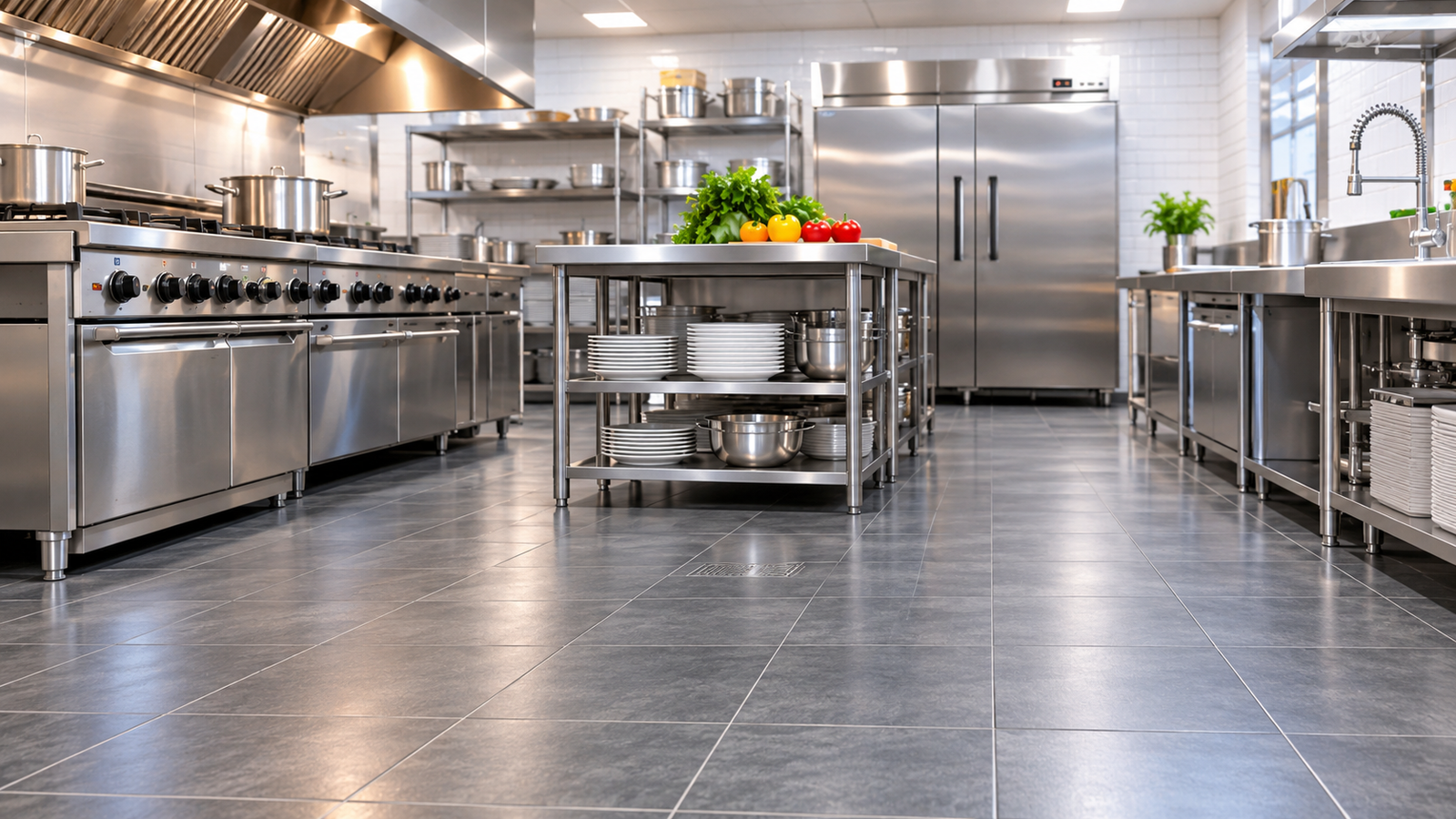
Commercial kitchen flooring plays an important role in restaurant safety, cleanliness, and daily operations. Restaurant kitchens experience heavy foot traffic, food spills, water, grease, and frequent cleaning. Therefore, choosing the right floor material is essential for maintaining a safe and efficient working environment.
Choosing the right commercial kitchen equipment is also important for creating an efficient restaurant workspace
The best flooring should provide slip resistance, durability, moisture protection, and easy maintenance. Restaurant owners should also consider installation costs, drainage requirements, and the type of food preparation activities performed in their kitchens.
In this guide, we will explore different restaurant flooring options, their benefits, and important factors to consider before making a decision.
Why Is Commercial Kitchen Flooring Important?
A restaurant kitchen needs flooring that can handle demanding working conditions. Ordinary residential flooring may not withstand heavy equipment, constant moisture, and daily cleaning.
Choosing suitable flooring offers several important benefits:
Improved safety: Slip-resistant surfaces help reduce accidents caused by water, oil, and grease.
Better hygiene: Easy-to-clean materials help remove food particles and dirt.
Long-term durability: Strong flooring can withstand heavy equipment and continuous foot traffic.
Moisture protection: Suitable materials help prevent water damage and surface deterioration.
Better workflow: A properly designed floor supports smooth movement between cooking, preparation, and washing areas.
Good flooring also helps restaurant owners maintain a cleaner and more organized workspace.
7 Best Types of Commercial Kitchen Flooring

Different flooring materials offer different advantages. The right choice depends on your restaurant’s budget, kitchen layout, cleaning routine, and operating conditions.
1. Quarry Tile Flooring
Quarry tile is a popular flooring option for restaurants and commercial food preparation areas. It is generally made from dense clay and is designed to handle demanding environments.
Benefits:
Durable and resistant to heavy foot traffic.
Handles heat better than many ordinary floor coverings.
Available in textured finishes for improved traction.
Suitable for busy restaurant kitchens.
Limitations:
Quarry tiles can become difficult to clean when grease accumulates in grout lines. Proper grout selection and regular maintenance are important for keeping the surface hygienic.
2. Epoxy Flooring
Epoxy flooring is created by applying a protective resin coating over a prepared concrete surface. It creates a seamless finish that is widely used in commercial and industrial environments.
Benefits:
Provides a seamless and easy-to-clean surface.
Resists many chemicals and common kitchen spills.
Offers different finishes and textures.
Can help protect concrete from moisture and wear.
Limitations:
Epoxy floors require proper surface preparation and professional installation. Smooth finishes can become slippery when wet, so kitchens should use an appropriate slip-resistant texture.
3. Commercial Vinyl Flooring
Commercial vinyl flooring is available in different thicknesses, textures, and designs. Certain heavy-duty products are manufactured specifically for demanding commercial environments.
Benefits:
Available in multiple designs and finishes.
Generally comfortable underfoot.
Some products offer good moisture resistance.
Can be easier to maintain than traditional tile.
Limitations:
Not every vinyl product is suitable for commercial cooking areas. Heat, heavy equipment, sharp objects, and installation conditions can affect its performance.
Always select products specifically rated for the intended kitchen environment.
4. Concrete Flooring
Concrete flooring is a practical option for restaurants that need a strong and long-lasting foundation. It can be polished, sealed, or treated with protective coatings.
Benefits:
Handles heavy kitchen equipment.
Offers excellent structural strength.
Can last for many years with proper maintenance.
Works with different protective finishes.
Limitations:
Unsealed concrete can absorb moisture, grease, and stains. It may also feel hard underfoot during long working hours.
Applying a suitable protective coating can improve its performance and cleanability.
5. Rubber Flooring
Rubber flooring is commonly used in areas where employees stand for extended periods. It can provide additional comfort and traction when the correct product is selected.
Benefits:
Provides cushioning for standing workers.
Helps reduce foot and leg fatigue.
Offers different textured surfaces.
Can be useful in designated preparation areas.
Limitations:
Some rubber products may absorb grease, odors, or moisture. They may also require more detailed cleaning than seamless flooring systems.
Choose commercial-grade rubber flooring designed for food-service environments.
6. Porcelain Tile Flooring
Porcelain tile is made from refined clay and fired at high temperatures. It is known for its dense structure and low water absorption.
Benefits:
Available in different sizes and finishes.
Resists moisture when properly installed.
Offers good resistance to everyday wear.
Can provide a professional appearance.
Limitations:
Grout lines require regular cleaning and maintenance. Smooth porcelain tiles may become slippery when wet, so textured, slip-resistant products are preferable for kitchen environments.
7. Cementitious Urethane Flooring
Cementitious urethane flooring is a specialized system designed for demanding commercial and industrial environments. It is particularly useful in areas exposed to moisture, temperature changes, and frequent cleaning.
Benefits:
Offers strong resistance to thermal shock.
Handles demanding commercial conditions.
Provides durable surface protection.
Can be installed with textured, slip-resistant finishes.
Limitations:
Installation requires experienced professionals and proper surface preparation. Its initial cost may also be higher than some traditional flooring materials.
Key Factors to Consider When Choosing Restaurant Kitchen Flooring
Selecting the right flooring requires more than comparing material prices. Restaurant owners should evaluate several practical factors before installation.
Slip Resistance and Workplace Safety
Safety should be one of the main priorities when selecting kitchen flooring. Water, oil, food debris, and grease can create dangerous conditions.
Choose a flooring system with suitable slip-resistant properties for the specific work area. Also, maintain proper cleaning procedures and provide employees with appropriate non-slip footwear.
The OSHA restaurant safety guidelines explain how wet floors and spills can contribute to workplace injuries.
Durability and Load Capacity
Commercial kitchens contain heavy refrigerators, ovens, cooking ranges, and food preparation equipment.
The flooring must support these loads without cracking, separating, or becoming damaged. Consider equipment weight, movement, and expected daily foot traffic before choosing a material.
Moisture and Chemical Resistance
Kitchen floors regularly come into contact with water, cleaning solutions, food ingredients, and grease.
Select materials that can withstand the chemicals and cleaning methods used in your restaurant. Proper sealing and installation also help protect the floor from moisture-related problems.
Cleaning and Maintenance Requirements
Easy maintenance is essential for maintaining kitchen hygiene. Floors with fewer joints and smooth, cleanable surfaces can make daily cleaning easier.
Consider how frequently the floor needs cleaning and whether the material can withstand your cleaning equipment and detergents.
Installation and Long-Term Cost
The cheapest flooring option is not always the most economical choice.
Compare the initial material price, labor costs, surface preparation, repairs, and expected lifespan. A durable flooring system may require a larger initial investment but can reduce replacement and maintenance expenses over time.
Commercial Kitchen Flooring Requirements and Standards
Restaurant flooring should meet applicable food safety, building, and workplace safety requirements.
The FDA Food Code provides guidance on the design and maintenance of food establishment facilities. Its flooring provisions address cleanability, floor-wall junctions, and drainage.
According to the FDA Food Code, floors and floor coverings should be designed and installed to be smooth and easily cleanable, subject to applicable exceptions.
Important considerations include:
Cleanable surfaces: Flooring should support effective cleaning and maintenance.
Proper drainage: Wet cleaning areas should have suitable drainage where required.
Sealed floor-wall joints: Appropriate coving and sealing help prevent dirt and moisture from accumulating at floor edges.
Suitable floor coverings: Materials should be appropriate for the conditions in each kitchen area.
Local compliance: Restaurants must follow the food safety and building regulations adopted by their relevant authorities.
Always check the applicable local requirements before installing a new flooring system.
How to Maintain Commercial Kitchen Flooring
Even high-quality flooring needs regular maintenance. A proper cleaning routine helps protect the surface and maintain a safer working environment.
Follow these practical steps:
1. Clean Spills Immediately
Remove water, oil, grease, and food spills as soon as possible. Quick cleaning helps reduce slip hazards and prevents stubborn stains.
2. Follow a Daily Cleaning Schedule
Sweep or remove loose debris before washing the floor with an appropriate cleaning solution. Follow the flooring manufacturer’s cleaning instructions.
3. Use Suitable Cleaning Products
Avoid harsh chemicals or abrasive tools that may damage protective coatings, grout, or flooring finishes.
4. Inspect Floors Regularly
Check for cracks, loose tiles, damaged grout, peeling coatings, and uneven surfaces. Repairing small problems early can prevent more expensive damage.
5. Maintain Proper Drainage
Keep floor drains clear of food debris and other obstructions. Proper drainage helps prevent standing water in wet kitchen areas.
For additional equipment maintenance advice, follow our guide on how to clean commercial kitchen equipment.
Common Commercial Kitchen Flooring Mistakes to Avoid
Choosing the wrong material or ignoring installation details can create long-term problems.
Avoid these common mistakes:
Choosing flooring based only on appearance.
Ignoring slip resistance in wet and greasy areas.
Installing materials that cannot withstand kitchen temperatures.
Using unsuitable grout or sealing products.
Overlooking drainage and floor slope.
Ignoring manufacturer cleaning recommendations.
Hiring installers without relevant commercial flooring experience.
Proper planning helps prevent unnecessary repairs and improves the overall performance of the kitchen floor.
A well-planned commercial kitchen design also helps improve workflow, safety, and space utilization.
Final Thoughts
Choosing the right commercial kitchen flooring is an important investment for any restaurant or food-service business. The ideal material should provide durability, slip resistance, moisture protection, and easy cleaning.
Quarry tiles, epoxy, commercial vinyl, concrete, rubber, porcelain, and cementitious urethane each offer different advantages. Restaurant owners should compare these options based on their kitchen requirements, budget, and maintenance needs.
By selecting suitable materials and following a consistent maintenance routine, restaurants can create a safer, cleaner, and more efficient working environment.
- All Posts
- Buying Guides
- Commercial Kitchen
- Kitchen Equipment
- Product Reviews
- Tips & Maintenance