Commercial Kitchen Equipment Cost depends on the type of restaurant, kitchen size, equipment quality, production capacity, and installation requirements. Whether you are opening a small café, a fast-food restaurant, or a full-service dining business, understanding these expenses helps you plan a realistic budget. This guide explains the major cost factors, essential equipment expenses, and practical ways to control your spending without compromising kitchen performance.
What Affects Commercial Kitchen Equipment Cost?
The total investment varies because every commercial kitchen has different operational needs. A small café may require only basic cooking and refrigeration equipment, while a busy restaurant may need multiple cooking stations, commercial dishwashers, and advanced ventilation systems.
Several factors influence the final budget, including equipment capacity, material quality, brand reputation, energy efficiency, and installation complexity. Planning these requirements before shopping makes it easier to compare suppliers and avoid unnecessary purchases.
Average Commercial Kitchen Equipment Cost by Business Type
The budget for a commercial kitchen depends heavily on the menu, service style, and expected customer volume. A coffee shop generally needs fewer cooking appliances than a full-service restaurant with an extensive menu.
The following figures are illustrative equipment-budget examples in US dollars, not fixed market prices or guaranteed quotations. Actual costs may differ depending on location, new or used equipment, kitchen specifications, and installation requirements.
| Business Type | Illustrative Equipment Budget |
|---|---|
| Coffee shop or small café | $10,000–$45,000 |
| Ghost kitchen or delivery kitchen | $20,000–$65,000 |
| Quick-service restaurant | $30,000–$95,000 |
| Full-service restaurant | $50,000–$200,000+ |
These ranges are broad planning examples rather than verified standard prices. They may exclude construction, rent, permits, major utility upgrades, and other startup expenses. Request itemized quotations from local suppliers before finalizing your budget.
Essential Equipment and Their Cost Factors
Understanding the main equipment categories helps you distribute your budget according to your kitchen’s priorities. Focus first on the appliances and workstations needed to prepare, store, and serve your planned menu.
Learn more about commercial kitchen equipment and the tools that support an efficient restaurant operation.
1. Commercial Cooking Equipment
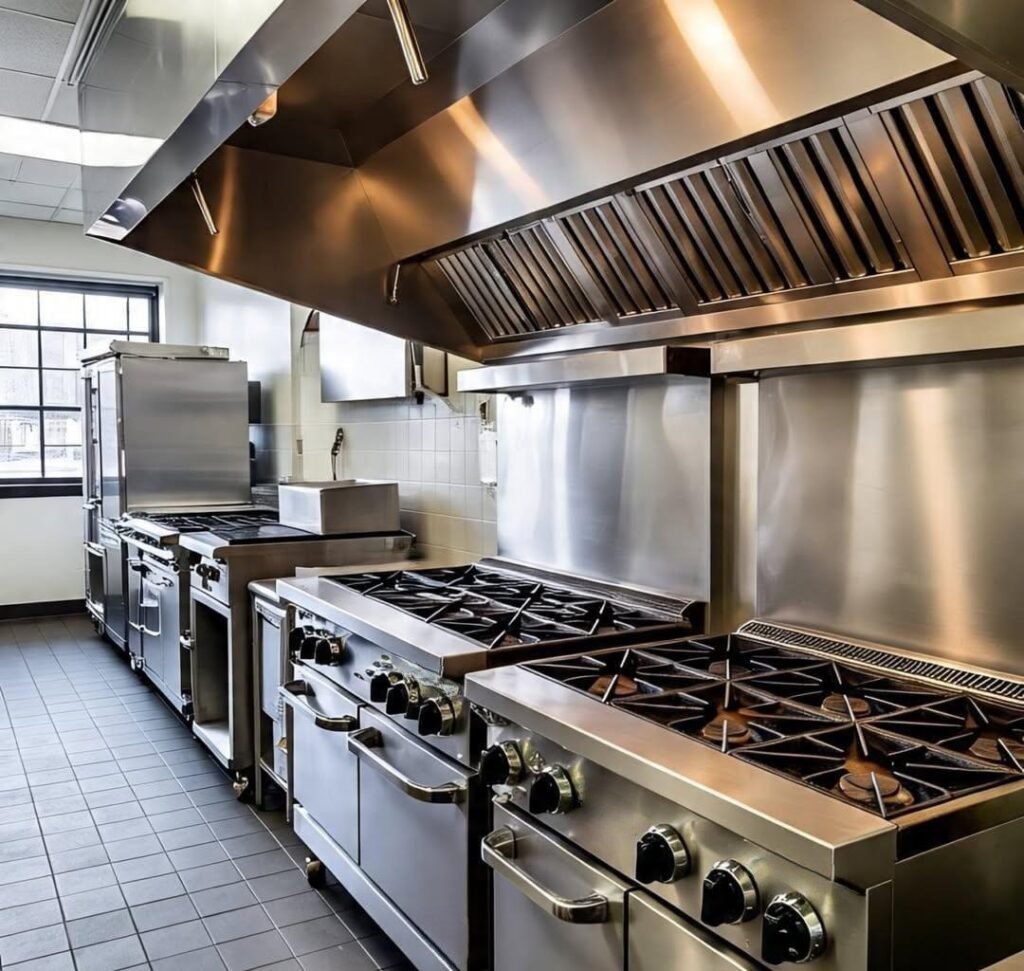
Cooking equipment may include commercial ranges, ovens, griddles, fryers, grills, and induction cooktops. The price depends on the fuel type, cooking capacity, number of burners, construction quality, and available features.
Choose appliances based on your daily production requirements rather than purchasing the largest models available. A properly sized cooking line can improve workflow while helping you avoid unnecessary upfront spending.
2. Commercial Refrigeration Equipment
Refrigerators, freezers, prep tables, and walk-in coolers are essential for storing ingredients at appropriate temperatures. Their cost depends on storage capacity, temperature requirements, insulation, configuration, and energy performance.
Before purchasing, measure the available space and determine how much refrigerated storage your menu requires. Also consider door clearance, ventilation space, maintenance access, and ongoing electricity expenses.
3. Food Preparation Equipment
Preparation equipment includes commercial mixers, food processors, slicers, stainless steel worktables, and ingredient storage containers. The right combination depends on whether your kitchen focuses on baking, fast food, catering, or full-service dining.
Prioritize equipment that reduces repetitive manual work or supports high-volume preparation. For smaller operations, buying only the essential tools may be more cost-effective than investing in specialized machines that are rarely used.
4. Commercial Dishwashing Equipment
Commercial dishwashers, pre-rinse units, sinks, and drying racks help maintain an efficient cleaning area. Costs vary with washing capacity, cycle speed, water consumption, sanitation requirements, and installation needs.
Estimate the number of dishes, utensils, and cookware items your team handles during busy periods. A machine that matches your actual workload can prevent bottlenecks without creating unnecessary equipment expenses.
5. Ventilation and Exhaust Systems
Commercial ventilation may require exhaust hoods, grease filters, exhaust fans, make-up air systems, and associated ductwork. The final expense depends on the cooking appliances, building layout, ventilation requirements, and installation complexity.
Do not treat ventilation as an optional extra when your cooking operation requires it. Have qualified professionals assess the kitchen and applicable local codes before purchasing or installing the system.
Additional Costs Beyond Equipment Purchase
The purchase price is only one part of the total investment. Commercial kitchen equipment cost planning should also include the expenses required to deliver, install, connect, and operate each appliance.
Consider these additional budget items:
Delivery and transportation: Moving heavy or oversized appliances to the kitchen.
Installation and labor: Positioning equipment, assembly, testing, and professional setup.
Utility connections: Electrical circuits, gas connections, plumbing, drainage, and water supply modifications.
Ventilation work: Ductwork, exhaust installation, and replacement-air requirements where applicable.
Permits and inspections: Applicable approvals and compliance checks required for the project.
Maintenance and spare parts: Routine servicing, cleaning supplies, and replacement components.
Contingency funds: Money reserved for unexpected expenses or changes in project requirements.
The US Small Business Administration recommends calculating startup costs before launching a business and separating one-time expenses from ongoing expenses. Read its business startup cost planning guide for additional budgeting guidance.
New vs. Used Commercial Kitchen Equipment
Buying new equipment may provide manufacturer warranties, current features, and a clearer service history. However, the initial investment can be higher, particularly for specialized appliances and premium commercial brands.
Used equipment may reduce upfront expenses, but inspect its condition, service records, parts availability, and remaining useful life before buying. Test the appliance where possible and confirm that it meets the operational and safety requirements of your business.
Compare the total expected ownership cost rather than the purchase price alone. A low-priced machine that needs frequent repairs or consumes excessive energy may cost more over time than a reliable alternative.
How to Reduce Commercial Kitchen Equipment Cost
A practical purchasing plan helps control expenses while preserving the equipment quality needed for daily operations. Use the following strategies before requesting quotations or placing orders.
Explore our commercial kitchen equipment buying guides to compare essential appliances and make informed purchasing decisions.
Start With a Detailed Equipment List
Prepare a list based on your menu, production volume, available floor space, and staffing requirements. Separate essential appliances from optional upgrades so that limited funds go toward the equipment your kitchen needs most.
Compare Multiple Supplier Quotes
Request itemized quotations from several reputable suppliers. Compare equipment specifications, warranties, delivery charges, installation fees, after-sales service, and expected lead times rather than choosing a supplier solely because of a low advertised price.
Consider Energy-Efficient Models
Energy-efficient appliances can help reduce utility expenses over their working life. The ENERGY STAR commercial food service equipment guide provides information about qualifying equipment categories and potential operating-cost savings.
Compare energy use, water consumption, expected workload, and purchase price before deciding whether a more efficient model offers better long-term value.
Avoid Unnecessary Features
Advanced controls, oversized capacities, and specialized functions may increase the purchase price without providing meaningful benefits to every restaurant. Choose features that support your menu and expected production volume.
Plan the Kitchen Layout Before Purchasing
Measure doorways, counters, utility connections, and equipment clearances before ordering large appliances. A well-planned layout can reduce installation changes and help employees move safely between preparation, cooking, cleaning, and storage areas.
How to Create a Commercial Kitchen Equipment Budget
A written budget makes it easier to compare proposals and track spending throughout the purchasing process. Start by listing each appliance, its quantity, estimated purchase price, delivery cost, installation expense, and expected operating requirements.
Next, obtain supplier quotations and replace preliminary estimates with actual prices. Keep one-time expenses separate from recurring costs such as electricity, water, servicing, and replacement parts.
Finally, review the complete budget against your available capital and business priorities. If the total exceeds your limit, reconsider optional equipment, compare suitable used models, or divide nonessential purchases into later phases.
Common Budgeting Mistakes to Avoid
Even a carefully planned project can become expensive when important requirements are overlooked. Avoid these common mistakes when estimating your equipment investment.
Focusing Only on the Purchase Price
A low initial price does not always mean better value. Include installation, utility consumption, servicing, replacement parts, and expected equipment life when comparing different models.
Buying Equipment Before Finalizing the Layout
Purchasing appliances before measuring the kitchen can lead to clearance problems, blocked walkways, and expensive installation changes. Confirm dimensions, utility requirements, and access routes before placing an order.
Underestimating Ventilation and Utility Requirements
Cooking equipment may require electrical upgrades, gas connections, drainage, or specialized ventilation. Assess these requirements early to reduce unexpected costs and delays during installation.
Purchasing More Capacity Than Necessary
Oversized appliances can consume additional space and may increase initial and operating expenses. Match equipment capacity to realistic demand, while allowing enough flexibility for reasonable business growth.
Final Thoughts
Commercial Kitchen Equipment Cost is best managed through careful planning, realistic supplier quotations, and a clear understanding of daily operating requirements. The right purchasing strategy balances initial investment, equipment reliability, energy use, maintenance, and available kitchen space.
Start with essential appliances, verify installation requirements, and compare the total cost of ownership before making major purchases. A detailed budget can help you build a functional commercial kitchen while keeping spending aligned with your business goals.
- All Posts
- Buying Guides
- Commercial Kitchen
- Kitchen Equipment
- Product Reviews
- Tips & Maintenance