Finding the best pressure cooker for canning starts with choosing the right equipment for safe food preservation. A suitable pressure canner helps process low-acid foods such as vegetables, meat, poultry, and seafood at the temperatures required for safe storage. However, not every pressure cooker is designed for this purpose. Understanding the differences, capacity, safety features, and pressure controls will help you make a better buying decision.
Why Choose the Best Pressure Cooker for Canning?
Home canning allows you to preserve seasonal produce, prepare food in advance, and reduce food waste. The right equipment makes the process more convenient while supporting safe food preservation.
A pressure canner is particularly important when processing low-acid foods. These foods can support the growth of Clostridium botulinum, the bacteria responsible for botulism.
Unlike ordinary cooking appliances, a proper pressure canner is designed to maintain the conditions required by tested canning processes.
Important: A regular pressure cooker or electric multicooker should not be substituted for a recommended pressure canner when processing low-acid foods.
Best Types of Pressure Canners for Home Canning
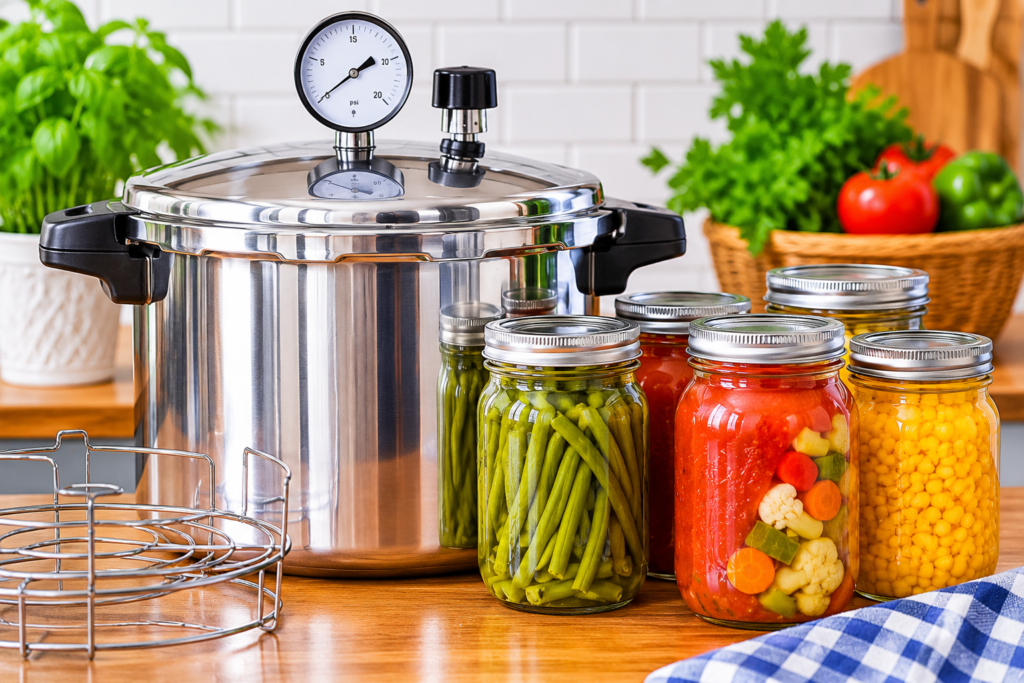
Different pressure canners offer different capacities and operating features. Consider these common options before choosing one.
1. Stovetop Pressure Canner
A stovetop pressure canner is a popular choice for people who regularly preserve vegetables, meat, and other foods.
These models generally feature a durable metal body, a locking lid, a pressure gauge, and a jar rack. They also offer flexibility because they can be used with compatible gas or electric stovetops.
For example, the Presto 23-Quart Pressure Canner and Cooker is a well-known option for larger home canning batches.
2. Induction-Compatible Pressure Canner
Induction-compatible models are designed for users with induction cooktops. Their base must contain suitable magnetic material to work with an induction heating surface.
Presto offers a 23-quart induction-compatible pressure canner with a stainless-steel-clad base.
Before purchasing, check the manufacturer’s stove compatibility requirements. Not every aluminum pressure canner works on an induction cooktop.
3. Digital Pressure Canner
Digital models provide electronic controls and guided operating steps. Some include automatic temperature management, built-in timers, and convenient displays.
These features can simplify operation, especially for beginners. However, a digital display alone does not establish that an appliance is safe for pressure canning.
Choose only a model supported by appropriate research-based canning guidance. Do not assume that an ordinary electric pressure cooker or multicooker is suitable for preserving low-acid foods.
Important Features to Consider Before Buying
Selecting canning equipment involves more than comparing prices or exterior designs. Pay attention to the following features before making your decision.
The National Center for Home Food Preservation recommends a pressure canner large enough to hold at least four upright quart jars for USDA-recommended processes.
Capacity and Jar Compatibility
Capacity determines how many jars you can process in one batch. A larger canner can save time when preserving substantial quantities of food.
The National Center for Home Food Preservation recommends a pressure canner large enough to hold at least four upright quart jars for USDA-recommended processes.
Check the interior dimensions and jar arrangement rather than relying only on the advertised quart capacity.
Pressure Gauge Accuracy
Pressure control is essential for safe canning. Most traditional models use either a dial gauge or a weighted gauge.
A dial gauge displays the pressure inside the canner. It should be checked for accuracy every year before use.
Weighted gauges regulate pressure through a weight that rocks or jiggles according to the manufacturer’s instructions. Follow the operating guidance supplied with your particular model.
Safety Features
Reliable safety features help reduce the risk of incorrect operation. Look for a secure lid-locking mechanism, a pressure release system, an overpressure protection device, and a suitable vent pipe.
A sturdy jar rack is also important because it keeps jars properly positioned during processing.
Always inspect the gasket, valves, and other components before each canning session.
Construction and Durability
Pressure canners are commonly made from aluminum or stainless-steel components. Aluminum models are generally lighter and distribute heat efficiently.
Stainless-steel-clad bases can provide induction compatibility when specifically designed for that purpose.
Choose a model with durable construction, replaceable parts, and clear maintenance instructions.
Stove Compatibility
Your cooking surface can influence which pressure canner is suitable. Gas, electric coil, smooth-top, and induction ranges have different requirements.
Some manufacturers specify restrictions related to weight, base design, and burner size. Check the appliance manual and stove manufacturer’s recommendations before buying.
Popular Pressure Canner Models to Consider
The following products offer different features and capacities worth comparing.
Presto 23-Quart Pressure Canner and Cooker
The Presto 23-Quart model is a practical option for home users who need a larger stovetop canner.
Its main features include:
23-quart capacity.
Dial pressure gauge.
Durable aluminum construction.
Jar rack for positioning canning jars.
Compatibility with specified gas and electric ranges.
This model is worth considering for larger batches. Buyers should verify current specifications and stove compatibility before ordering.
Presto 16-Quart Pressure Canner and Cooker
A 16-quart model may suit households with limited storage space or smaller canning needs.
Its smaller capacity can make handling and storage more manageable. However, check the manufacturer’s jar-capacity specifications because this model does not accommodate quart jars for boiling-water canning.
Presto 23-Quart Induction-Compatible Pressure Canner
For induction stove owners, this model offers a specially designed stainless-steel-clad base.
Its larger capacity is useful for processing multiple jars in one session. Make sure your cooktop supports the canner’s dimensions and weight.
Common Mistakes to Avoid When Buying Canning Equipment
Even a well-designed appliance may not be suitable if it does not meet your food-preservation needs.
Choosing an Ordinary Pressure Cooker
A standard pressure cooker is designed primarily for preparing meals, not processing canning jars. Its heating and cooling characteristics differ from those of a tested pressure canner.
Avoid using ordinary stovetop pressure cookers and electric multicookers for low-acid pressure canning.
Ignoring Gauge Maintenance
An inaccurate gauge can lead to incorrect processing pressure. Check dial gauges annually and replace or service components according to the manufacturer’s instructions.
Buying Without Checking Compatibility
A canner that works on a gas stove may not work on an induction or smooth-top range. Confirm compatibility before spending money.
Following Unverified Recipes
Processing times and pressure levels depend on the food, jar size, preparation method, and altitude.
Use tested recipes from trusted food-preservation authorities instead of changing processing instructions.
How to Choose the Right Pressure Canner for Your Needs
The ideal choice depends on your cooking setup, available storage, and the quantity of food you want to preserve.
For larger batches, a 23-quart stovetop pressure canner can be a practical option. Smaller households may prefer a more compact model that still meets established canning requirements.
Induction users should prioritize a compatible base. Beginners can also benefit from clear operating instructions, accessible replacement parts, and reliable customer support.
Most importantly, select equipment that follows established food-safety recommendations rather than choosing a product based only on its advertised features.
You can also explore our other kitchen equipment reviews to compare useful appliances and find suitable options for your home.
Final Thoughts
Choosing the best pressure cooker for canning requires careful attention to capacity, pressure control, construction, and compatibility. A properly designed pressure canner is essential for safely preserving low-acid foods.
Compare established models such as the Presto 23-Quart and 16-Quart options before making a purchase. Always follow tested recipes, inspect safety components, and use the correct processing pressure for your altitude and food type.
- All Posts
- Buying Guides
- Commercial Kitchen
- Kitchen Equipment
- Product Reviews
- Tips & Maintenance