Finding the best meat slicer for home use can make it easier to prepare deli-style meats, roasts, cheese, and other foods with consistent slices. A good home meat slicer should offer reliable performance, convenient controls, easy cleaning, and safety features without taking up too much kitchen space.
Whether you regularly prepare sandwiches, slice cooked meats, or want more control over portion thickness, choosing the right slicer can save time and improve results.
What Is a Home Meat Slicer?
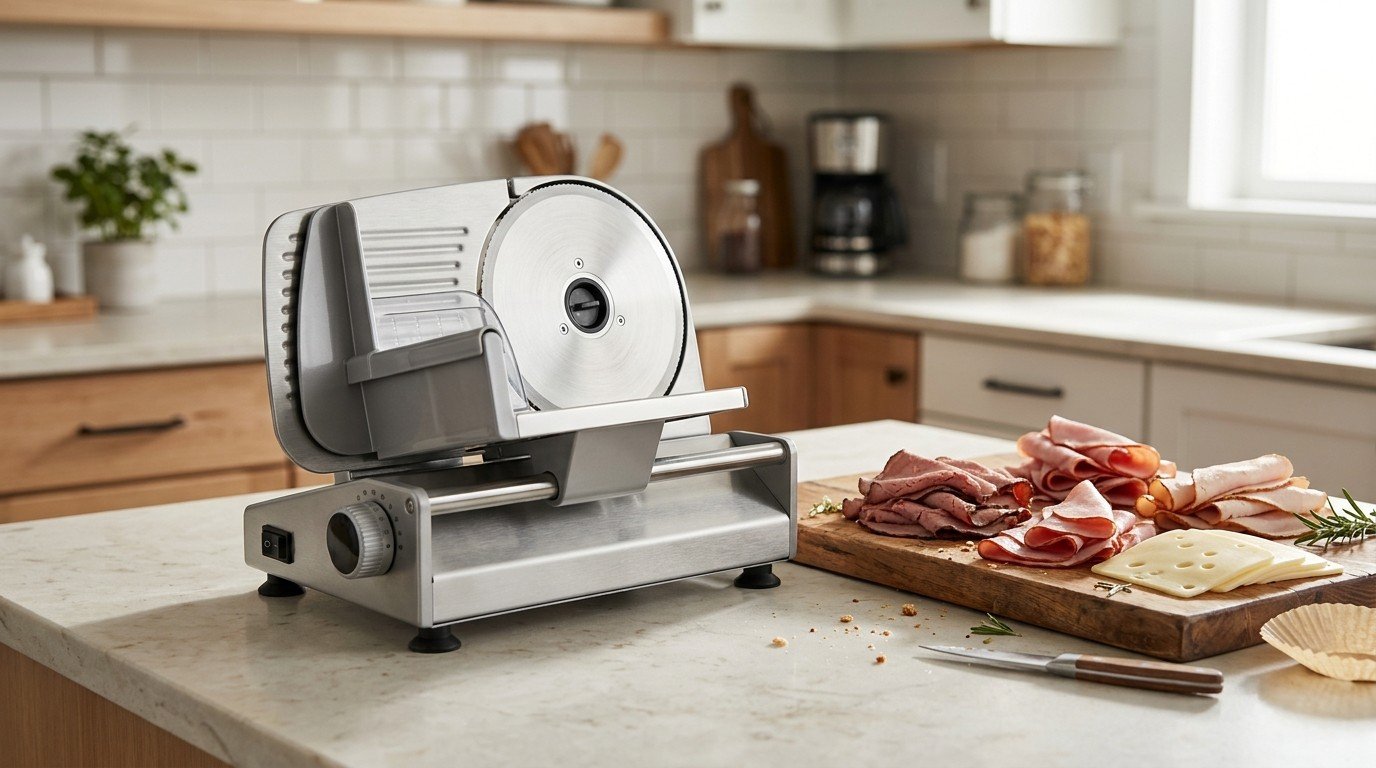
A meat slicer is an electric kitchen appliance designed to cut food into uniform slices. Most home models use a rotating circular blade and an adjustable thickness control.
Unlike manually slicing meat with a kitchen knife, an electric slicer can produce more consistent slices. This can be especially useful when preparing roast beef, ham, turkey, salami, cheese, and similar foods.
For occasional home use, a compact slicer is usually more practical than a large commercial machine.
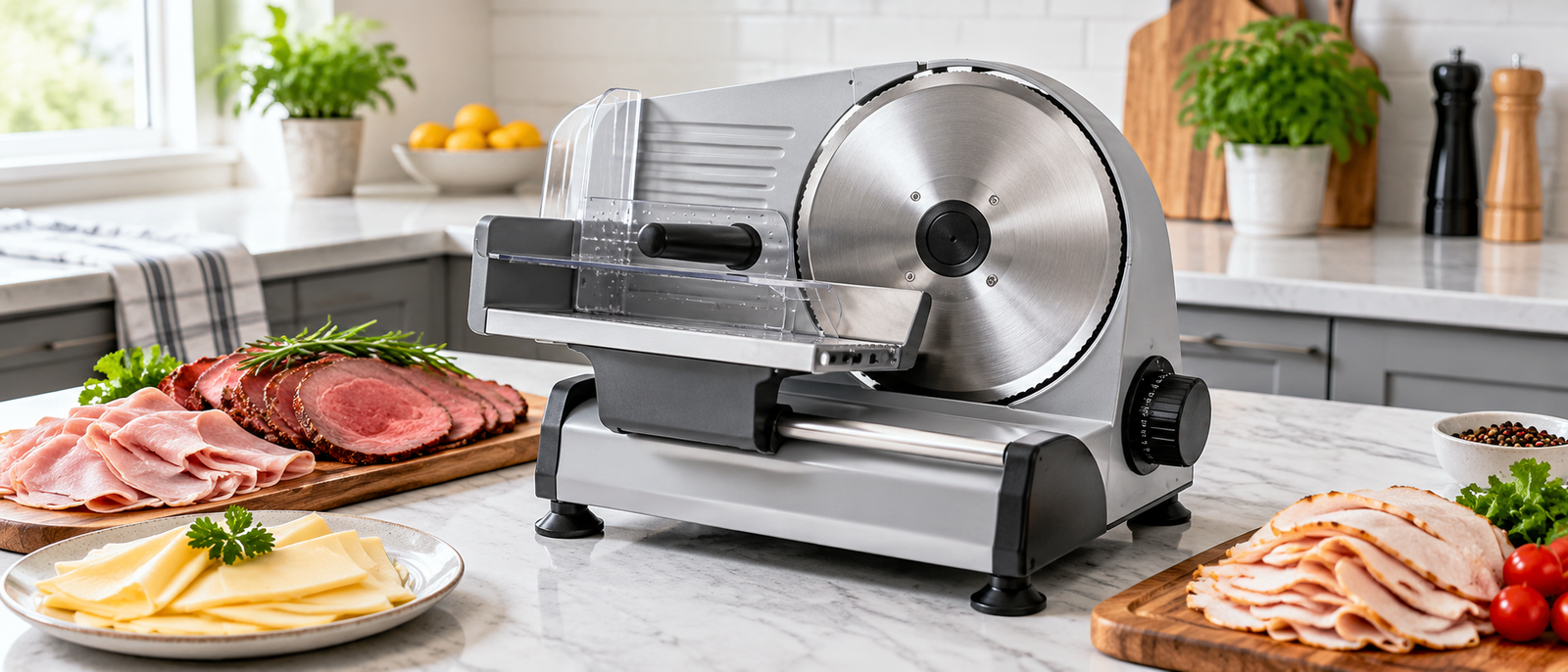
Best Meat Slicer for Home Use: Key Features to Consider
When comparing the best meat slicer for home use, look beyond the price. Several features can affect performance, convenience, and safety.
Blade Size and Quality
Blade diameter is one of the first specifications to check. Many home slicers use blades around 7 to 10 inches in diameter.
A larger blade can be useful for larger cuts of meat, while a smaller blade may be easier to handle and store. Stainless steel blades are popular because they are durable and relatively easy to maintain.
Adjustable Thickness Control
A good slicer should allow you to adjust the thickness of each slice. This gives you greater control when preparing thin deli-style meat or thicker slices for sandwiches and meals.
Look for a model with a clearly marked thickness dial that is easy to adjust.
Motor Power
Motor power affects how easily the slicer handles different foods. A stronger motor can be helpful if you frequently slice dense or larger pieces of meat.
However, higher power does not automatically mean better performance. The blade design, construction, and overall quality of the machine also matter.
Safety Features
Safety should be a major consideration when choosing a home meat slicer because the blade is extremely sharp.
Useful features may include:
Non-slip feet
Blade guards
Food carriage protection
Safety switches
Secure food holders
Stable construction
Always follow the manufacturer’s safety instructions before operating the machine.
Ease of Cleaning
Food particles can collect around the blade, food carriage, and other components. A slicer that is easier to disassemble and clean can make regular maintenance much simpler.
Before purchasing, check whether the removable parts can be cleaned according to the manufacturer’s instructions.
For additional food-safety information, you can also consult the USDA Food Safety and Inspection Service.
Best Meat Slicer for Home Use: What Can You Slice?
A home slicer can be useful for more than just meat. Depending on the manufacturer’s instructions and the design of the appliance, it may also handle foods such as:
Cooked beef
Turkey
Ham
Chicken
Salami
Sausage
Cheese
Some firm vegetables
Always check the product manual before slicing a particular food. Some foods may be unsuitable for certain slicers.
How to Choose the Right Home Meat Slicer
Choosing the best meat slicer for home use depends largely on how often you plan to use it and what foods you want to slice.
For Occasional Use
If you only slice meat occasionally, a compact and affordable model may be enough for your kitchen.
Look for simple controls that are easy to understand and operate.
Easy-to-clean parts can make occasional use more convenient and less time-consuming.
Also, make sure the slicer includes essential safety features for secure operation.
For Frequent Use
If you prepare deli meat or sliced foods regularly, choose a model designed for frequent operation.
Look for a durable blade, reliable motor, and adjustable thickness settings for consistent results.
Sturdy construction can provide better stability when slicing larger or denser foods.
Easy cleaning and maintenance are also important when the slicer is used frequently.
For Small Kitchens
Counter space can be an important factor. A compact slicer may be easier to store when it is not being used.
Check the appliance dimensions and weight before buying, especially if you plan to move it between storage and the countertop.
Manual vs. Electric Meat Slicers
Electric slicers are generally faster and require less physical effort than manual slicing. They can also provide more consistent thickness.
Manual slicers, on the other hand, may be simpler and require no electrical power.
For people who regularly prepare sliced meats at home, an electric model is often more convenient. For occasional use, a manual option may be sufficient.
Important Safety Tips
A meat slicer contains a sharp rotating blade, so careful operation is essential.
Follow these basic precautions:
Read the manufacturer’s instructions before use.
Keep your hands away from the blade while the machine is operating.
Use the food carriage and food holder correctly.
Place the slicer on a stable, dry surface.
Turn the machine off and unplug it before cleaning.
Never attempt to stop the blade with your hands.
Keep children away from the appliance during use and cleaning.
Never operate a slicer if its safety components are damaged or missing.
Cleaning and Maintenance Tips
Regular cleaning helps keep a meat slicer hygienic, safe, and ready for the next use. Food particles and grease can build up around the blade, carriage, and other components. Cleaning the machine after use can also help maintain its performance and extend its usable life.
Unplug Before Cleaning
Always switch off the meat slicer and unplug it before starting any cleaning. This helps prevent accidental operation while you are handling the machine. Allow the appliance to stop completely before touching or removing any components.
Remove Food Residue
After each use, remove leftover food particles from the food carriage and other accessible surfaces. Use a suitable soft cloth or cleaning tool as recommended by the manufacturer. Avoid allowing food residue to remain on the machine for long periods.
Clean the Blade Carefully
The blade is one of the most important parts to clean, but it also requires extra caution because of its sharp edge. Follow the manufacturer’s cleaning instructions and avoid unnecessary contact with the cutting surface. Handle removable blade components carefully if the model allows them to be removed.
Dry Components Thoroughly
After washing or wiping the removable components, dry them thoroughly before putting the slicer back together. Excess moisture can contribute to corrosion, unpleasant odors, or other maintenance problems. Make sure all parts are completely dry before storing or using the appliance again.
Common Mistakes to Avoid
Even a quality home slicer may not perform well if it is used incorrectly.
Avoid these common mistakes:
Overloading the food carriage
Using foods that are not suitable for the machine
Ignoring the manufacturer’s instructions
Cleaning while the appliance is plugged in
Using a dull or damaged blade
Forcing food through the slicer
Leaving food residue on the machine
Proper operation can improve both safety and slicing consistency.
Is a Home Meat Slicer Worth It?
A home meat slicer can be worthwhile if you regularly buy large cuts of meat or prepare sandwiches and deli-style foods at home.
It may help you control slice thickness and reduce the time required to prepare certain foods. However, if you only slice meat a few times each year, the cost, storage space, and cleaning requirements may make a slicer less practical.
Consider your cooking habits before making a purchase.
Best Meat Slicer for Home Use: Final Buying Checklist
Before choosing your machine, consider these factors:
| Feature | What to Look For |
|---|---|
| Blade | Durable stainless steel blade |
| Thickness | Adjustable thickness control |
| Motor | Sufficient power for your typical foods |
| Safety | Stable feet, guard, and food holder |
| Cleaning | Easy-to-clean accessible components |
| Size | Suitable for your available counter space |
| Construction | Sturdy and stable design |
| Storage | Easy to store when not in use |
The best meat slicer for home use is not necessarily the most expensive model. The right choice should match your cooking habits, available space, preferred foods, and desired slicing thickness.
- All Posts
- Buying Guides
- Commercial Kitchen
- Kitchen Equipment
- Product Reviews
- Tips & Maintenance