Finding the best countertop ice maker can make it easier to enjoy fresh ice at home, in the office, or during gatherings. Unlike traditional freezer trays, a countertop ice maker produces ice quickly and requires very little space. Therefore, it can be a practical choice for kitchens, apartments, home bars, and small offices.
These compact appliances offer convenient ice production without a permanent water connection. However, models differ in production speed, storage capacity, ice shape, noise, and cleaning requirements. Understanding these features will help you choose a machine that fits your daily needs.
What Is a Countertop Ice Maker?
A countertop ice maker is a compact appliance that produces ice without requiring a permanent water line. Most models include a built-in reservoir that you fill manually before starting the machine.
Once you add water and select a setting, the appliance freezes water around its cooling components and forms ice. Depending on the model, you may also choose different ice sizes or shapes.
These machines work well in homes, apartments, offices, RVs, and entertainment areas. In addition, their portable design makes them convenient for people who need ice without installing a full-size ice machine.
For more kitchen appliance tips, explore our Kitchen Equipment category.
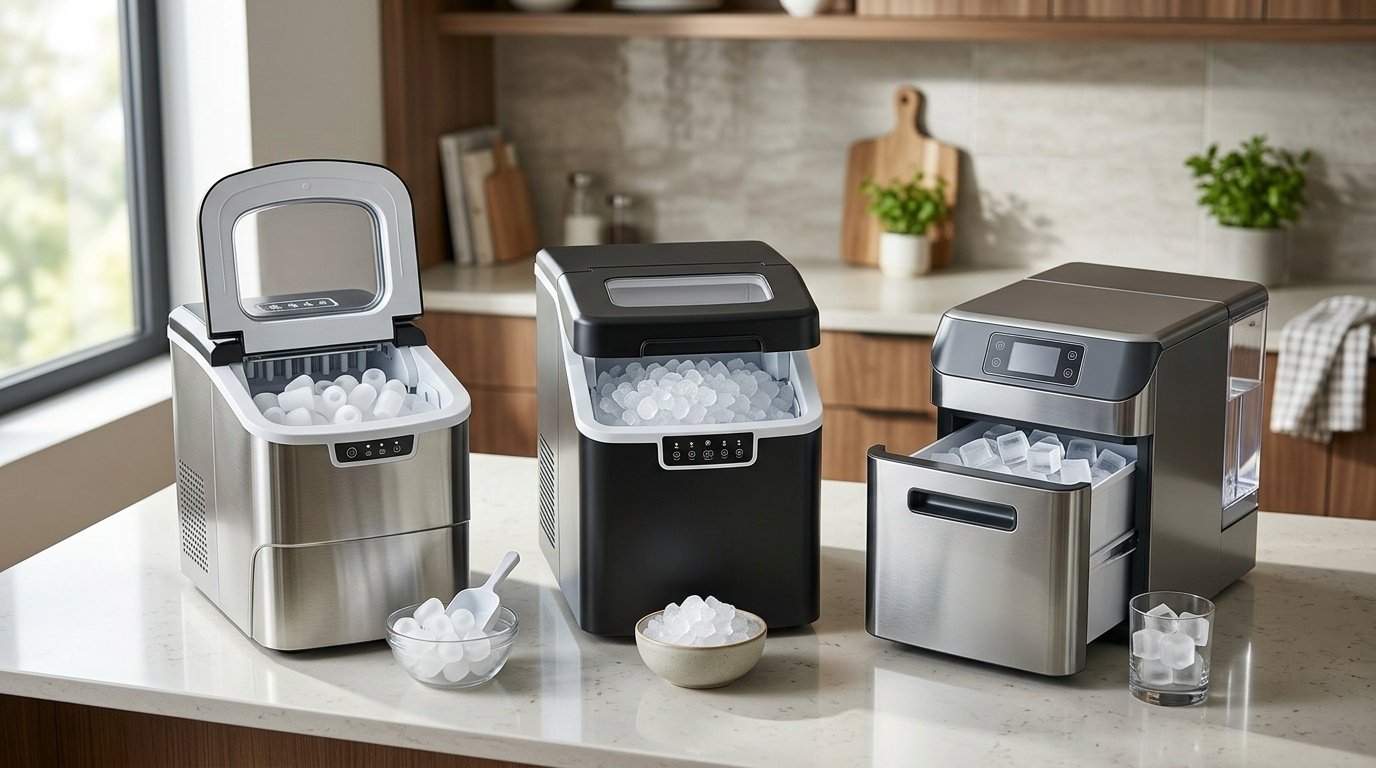
Best Countertop Ice Maker: Features to Look For
When comparing the best countertop ice maker options, consider more than the price or appearance. Production speed, storage capacity, water tank size, noise, and ease of use can all affect your experience.
Ice Production Speed
Ice production speed determines how quickly a machine makes its first batch and how much ice it can produce over time. Some models produce their first ice within minutes, while others require more time.
If you frequently host guests or use ice throughout the day, a faster machine can be more convenient. However, always check the manufacturer’s production estimates because actual performance may vary depending on room temperature and water conditions.
Ice Storage Capacity
Production capacity and storage capacity are not the same. A machine may produce plenty of ice throughout the day but hold only a small amount in its basket.
Before buying, consider how much ice you normally use at once. A larger basket can be useful for family gatherings, while a smaller one may suit everyday drinks. Moreover, remember that countertop ice makers generally do not keep stored ice frozen indefinitely.
Ice Shape and Size
Countertop ice makers can produce different ice shapes, including bullet-shaped and nugget-style ice. Each type offers a different texture and drinking experience.
Think about your favorite beverages before choosing a model. Bullet ice works well for many everyday drinks, while nugget ice is popular among people who prefer softer, chewable ice. Therefore, your preferred ice shape can help narrow down your options.
Water Reservoir
Most portable ice makers feature a water reservoir that you fill manually. This design eliminates the need for a permanent plumbing connection and makes installation simple.
However, reservoir size matters. A larger tank reduces the number of refills, which can save time when you use the appliance frequently. Check the tank capacity and refill instructions before making a purchase.
Noise Level
A countertop ice maker uses a cooling system and moving components that may produce operating noise. Some models sound louder than others, especially during ice production or when the basket fills.
If you plan to place the machine in a shared kitchen, office, or entertainment area, noise can become an important consideration. Look for customer feedback about operating sound and choose a location where the machine will not disturb daily activities.
How to Choose the Best Countertop Ice Maker for Your Home
The best countertop ice maker depends on your household’s ice consumption, available space, and preferred features. Instead of choosing the most expensive model, compare the options that matter to your routine.
Consider Your Available Space
Measure your countertop before purchasing an ice maker. Check the appliance’s width, height, and depth to ensure it fits comfortably in your chosen location.
Additionally, leave enough space around the unit for ventilation. Proper airflow helps the cooling system operate as intended, while sufficient clearance makes filling and cleaning easier.
Check Daily Ice Requirements
Consider how often you use ice and how many people will share the machine. Occasional users may prefer a compact model, while families or frequent entertainers may need higher production capacity.
Choosing a machine that matches your actual usage can prevent unnecessary spending. It also helps you avoid a model that struggles to keep up with your daily demand.
Look at Ease of Operation
A convenient ice maker should have straightforward controls and easy-to-understand settings. Many models include indicator lights, water-level alerts, or automatic shutoff features.
These functions can make daily operation easier. For example, water alerts help you know when to refill the tank, while full-basket indicators let you remove ice before production becomes interrupted.
Consider Cleaning and Maintenance
Regular cleaning helps maintain hygiene and prevents unwanted odors or buildup inside the water reservoir. Therefore, look for a model with an accessible tank, removable basket, and easy-to-clean surfaces.
Some machines also include a cleaning function. Nevertheless, always follow the manufacturer’s recommended cleaning procedure and use only suitable cleaning products.
For general appliance safety and maintenance guidance, you can also refer to the U.S. Food and Drug Administration’s food safety resources.
You can also learn more about how to clean commercial kitchen equipment for additional maintenance tips.
Best Countertop Ice Maker for Different Needs
Different households use ice in different ways. For that reason, the ideal machine for a small kitchen may not suit an office or a busy entertainment space. Consider your location and daily requirements before choosing a model.
Best for Small Kitchens
A compact ice maker is a practical choice for kitchens with limited counter space. Look for a smaller footprint that still produces enough ice for your everyday drinks.
Before buying, measure your available space and check the ventilation requirements. Furthermore, a lightweight model can be easier to move or store when you need extra counter space.
Best for Entertaining
If you frequently host parties or family gatherings, prioritize production speed and water reservoir capacity. A machine that produces ice quickly can help you serve more guests without constantly waiting for another batch.
A larger ice basket may also make serving easier. However, keep in mind that you may need to transfer finished ice to a freezer if you want to store it for longer periods.
Best for Offices
An office ice maker should be easy for multiple people to use and maintain. Simple controls, convenient refilling, and manageable operating noise can make a big difference in a shared space.
Additionally, consider the number of employees who may use the machine during breaks. A compact model with practical production capacity can provide a convenient solution for everyday office drinks.
Best for RVs and Small Spaces
RV owners, cabin users, and people living in compact spaces may benefit from a portable ice maker. Its small design can offer convenient ice production without requiring a full-size appliance.
Before using one in an RV, check the power requirements, available counter space, and ventilation. Also, secure the appliance properly when traveling and follow the manufacturer’s instructions for moving or storing it.
Countertop Ice Maker vs. Freezer Ice Trays
Freezer ice trays provide an inexpensive way to make ice at home. However, they usually require several hours to freeze and occupy space inside your freezer.
A countertop ice maker offers faster ice production and eliminates the need to repeatedly fill and remove trays. Consequently, it can be more convenient for households that regularly use ice.
On the other hand, countertop models cost more, consume electricity, require water refills, and need regular cleaning. They also have limited storage baskets, so you may need to transfer ice to your freezer.
If you use ice occasionally, traditional trays may be enough. However, frequent users may appreciate the speed and convenience of a countertop machine.
Important Safety and Maintenance Tips
Proper maintenance helps your countertop ice maker remain clean and perform reliably. Because the appliance handles water and produces ice for drinks, regular care is particularly important.
Clean the Water Reservoir Regularly
Clean the water reservoir according to the manufacturer’s instructions. Regular cleaning helps prevent residue, buildup, and unpleasant odors.
After cleaning, rinse the tank properly if the instructions require it. In addition, empty leftover water when you plan to leave the machine unused for an extended period.
Use Clean Drinking Water
Use clean drinking water to make ice unless your manufacturer recommends otherwise. Water quality can affect the taste of your ice and may contribute to residue inside the reservoir.
For better results, avoid leaving old water inside the machine for long periods. Instead, refresh the water regularly and follow the recommended operating instructions.
Keep the Appliance Dry and Ventilated
Place the ice maker on a stable, level, and dry surface. Keep it away from excessive heat, splashes, and areas that could expose the electrical components to moisture.
Furthermore, leave the ventilation openings clear. Good airflow allows the cooling system to work properly and helps prevent unnecessary overheating.
Follow the Manufacturer’s Instructions
Read the user manual before operating or cleaning the appliance. Different models may require specific cleaning methods, water conditions, or ventilation clearances.
Follow the manufacturer’s instructions when moving, storing, or restarting the machine. Proper care can help protect its components and support reliable operation.
Pros and Cons of a Countertop Ice Maker
A countertop ice maker offers several advantages, especially for people who use ice regularly. However, it also has a few limitations that you should consider before purchasing.
Pros:
Produces ice faster than traditional freezer trays
Compact design compared with full-size ice machines
Simple operation for everyday use
Convenient for parties, gatherings, and cold drinks
Usually does not require a permanent water line
Cons:
Requires regular cleaning and maintenance
Needs electricity to operate
Has limited ice storage capacity
May produce operating noise
Requires water refills
Finished ice may need to be transferred to a freezer for longer storage
What to Consider Before Buying
Before purchasing an ice maker, review your needs and compare the available features. A simple checklist can help you make a more informed decision.
How much ice do you use each day?
How much counter space can you spare?
Which ice shape do you prefer?
How large should the water reservoir be?
Is operating noise important to you?
Is the machine easy to clean?
Does it include automatic shutoff or water-level alerts?
Are the cleaning and maintenance instructions easy to follow?
By answering these questions, you can focus on the features that offer real value. As a result, you are less likely to spend money on unnecessary extras.
Final Thoughts on the Best Countertop Ice Maker
The best countertop ice maker should suit your daily ice requirements, available space, preferred ice shape, and maintenance expectations. Instead of focusing only on price, compare production speed, storage capacity, water reservoir size, noise level, controls, and cleaning requirements.
A well-chosen countertop model can be a useful addition to your home kitchen, office, RV, or entertainment area. Ultimately, choosing a machine that matches your routine will make ice production more convenient and help you get better value from your purchase.
- All Posts
- Buying Guides
- Commercial Kitchen
- Kitchen Equipment
- Product Reviews
- Tips & Maintenance