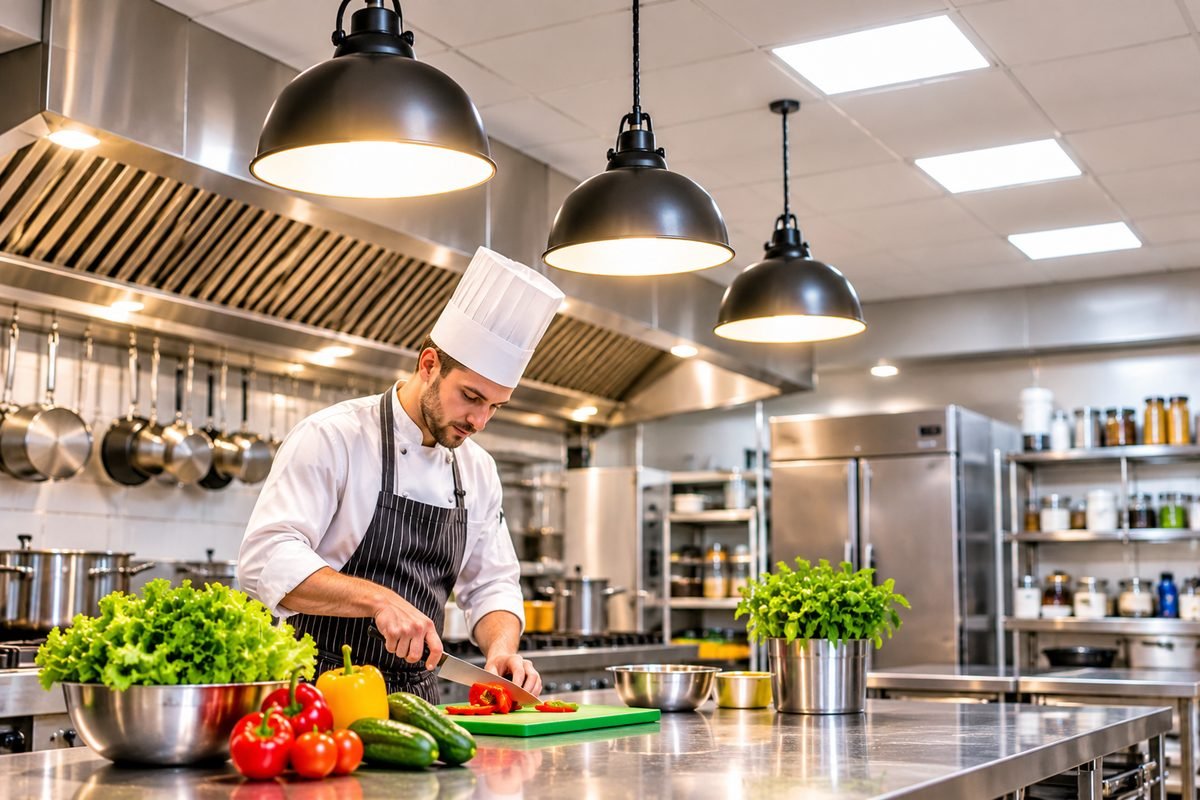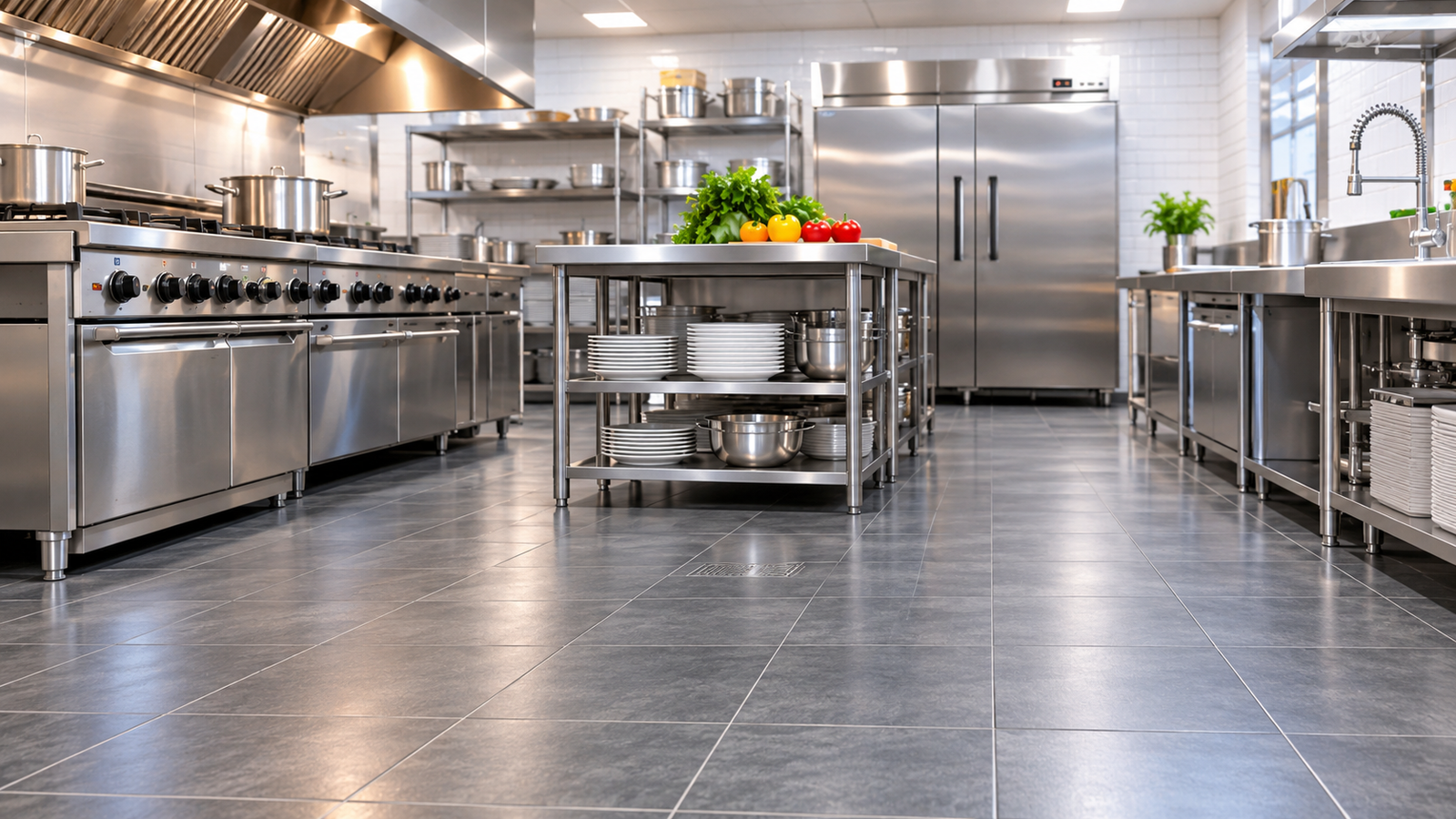
Commercial kitchen lighting plays an important role in food safety, staff productivity, and daily restaurant operations. Proper lighting helps chefs prepare ingredients accurately, inspect food, clean work surfaces, and operate equipment safely. However, poor lighting can create shadows, increase eye strain, and make it difficult to notice spills or food contamination.
A well-planned lighting system should provide sufficient brightness in every working area without creating glare or unnecessary heat. Moreover, restaurant owners should consider energy efficiency, fixture durability, cleaning requirements, and the layout of their kitchen before installing new lights.
Why Commercial Kitchen Lighting Is Important
Good lighting makes a professional kitchen safer and easier to manage. Staff members often work with sharp knives, hot equipment, slippery floors, and different ingredients throughout the day. Therefore, clear visibility can help reduce mistakes and improve working conditions.
Additionally, proper illumination makes cleaning more effective. Employees can identify grease, food residue, stains, and other problems that might remain unnoticed in poorly lit areas. Bright, evenly distributed light also helps kitchen staff maintain a consistent food preparation process.
Types of Commercial Kitchen Lighting
Different kitchen areas require different lighting solutions. Choosing the right fixture for each zone can improve visibility while reducing energy consumption.
1. LED Lighting
LED lights are a popular choice for modern restaurants because they use less electricity and offer a long service life. They also provide consistent illumination and come in different brightness levels.
Furthermore, LED fixtures can help businesses reduce maintenance costs because staff do not need to replace bulbs as frequently. However, restaurant owners should select models designed for heat, moisture, grease, and the cleaning conditions of their kitchen.
2. Task Lighting
Task lighting focuses on specific work areas where employees perform detailed activities. For example, food preparation counters, chopping stations, sinks, and plating areas benefit from focused illumination.
In addition, task lighting helps reduce shadows around knives, cutting boards, and ingredients. Proper positioning makes the work surface easier to see without creating uncomfortable glare.
3. Ambient Lighting
Ambient lighting provides general illumination throughout the kitchen. It helps employees move around, locate equipment, and perform routine tasks.
Instead of relying on a few bright fixtures, restaurant owners should distribute ambient lights evenly across the ceiling. This approach reduces dark corners and creates a more comfortable working environment.
4. Under-Cabinet Lighting
Under-cabinet fixtures illuminate counters located beneath shelves, cabinets, or equipment. They are particularly useful when overhead lighting creates shadows on preparation surfaces.
Moreover, these lights can improve visibility in compact kitchens where storage units may block ceiling illumination. Choose sealed fixtures that can handle grease, moisture, and regular cleaning.
How to Choose the Right Commercial Kitchen Lighting
Choosing suitable fixtures requires more than checking their brightness. Restaurant owners should consider several important factors before making a purchase.
Proper lighting also plays an important role in a well-planned commercial kitchen design, helping create a safer workspace and a more efficient workflow.
Brightness and Light Intensity
Each working area needs enough light for the tasks employees perform. Food preparation and inspection areas require brighter illumination than general storage spaces.
For example, the Codex food hygiene guidance recommends approximately 540 lux at food preparation and inspection points, 220 lux in workrooms, and 110 lux in other areas. However, local building codes and food safety requirements may differ, so always confirm the standards that apply to your location.
Color Rendering Index (CRI)
The Color Rendering Index (CRI) describes how accurately a light source displays colors. High-quality color rendering helps kitchen staff examine ingredients and recognize changes in food appearance.
Consequently, fixtures with a good CRI can be useful in food preparation, inspection, and plating areas. They also make it easier to distinguish different ingredients and identify discoloration.
Heat and Moisture Resistance
Commercial kitchens expose lighting fixtures to heat, steam, grease, humidity, and frequent cleaning. Ordinary household fixtures may not withstand these conditions.
Instead, choose durable fixtures with suitable protection against moisture and dust. In areas near cooking equipment or sinks, check the manufacturer’s specifications for temperature limits, sealing, and cleaning compatibility.
Energy Efficiency
Energy-efficient lighting can lower electricity expenses over time. LEDs provide an effective option for restaurants that operate for long hours because they use less power than many traditional lighting systems.
Additionally, occupancy sensors can automatically switch lights off in areas that staff rarely use. Daylight controls may also reduce unnecessary lighting near windows when natural light is sufficient.
Best Lighting for Different Kitchen Areas
Every zone has different lighting requirements. Therefore, consider the kitchen layout before selecting fixtures.
Food Preparation Area

Food preparation stations need bright, clear lighting to support chopping, measuring, mixing, and ingredient inspection. Place fixtures above counters so they illuminate the working surface without casting shadows.
Furthermore, choose lights that display food colors accurately. Good visibility can make ingredient inspection and portion preparation easier.
Cooking Area
Cooking stations need lighting that helps employees monitor food, cookware, and equipment. Fixtures should withstand the heat generated by ranges, grills, fryers, and ovens.
However, avoid placing lights where they create glare on stainless-steel surfaces. A well-positioned fixture should provide clear visibility without distracting kitchen staff.
Dishwashing and Cleaning Area
Dishwashing stations need sufficient light to identify food residue, grease, and dirt on utensils, trays, and equipment.
Moreover, moisture-resistant fixtures work better in areas exposed to splashing water and cleaning chemicals. Select lighting that employees can clean easily and maintain regularly.
Storage and Walk-In Refrigerators
Storage areas require adequate light so staff can identify ingredients, read labels, and locate supplies quickly.
In addition, use fixtures suitable for cold temperatures when installing lights inside walk-in coolers or freezers. Always check the manufacturer’s recommended operating temperature range before installation.
Common Lighting Mistakes to Avoid
Poor lighting decisions can affect safety, energy costs, and kitchen performance. Fortunately, restaurant owners can avoid several common mistakes during planning.
Installing insufficient lighting: Dark workstations make food preparation and cleaning more difficult.
Creating unnecessary glare: Reflective surfaces can distract employees and reduce visibility.
Ignoring shadows: Incorrect fixture placement may leave counters or equipment poorly illuminated.
Using unsuitable fixtures: Household lights may not withstand commercial heat, moisture, grease, or cleaning conditions.
Overlooking maintenance: Dirty lenses and aging lamps reduce light output over time.
Choosing lights without checking requirements: Fixtures must meet applicable electrical, sanitation, and safety standards.
Therefore, evaluate each lighting fixture according to its location, operating environment, and maintenance needs.
How to Maintain Kitchen Lighting
Regular maintenance keeps lighting systems efficient and helps staff maintain a clean workspace. A simple maintenance routine can also prevent unexpected lighting failures during busy service periods.
Clean fixture covers and lenses regularly to remove grease and dust.
Replace damaged lights immediately.
Check wiring, mounting points, and seals for signs of damage.
Confirm that workstations receive sufficient light.
Remove dirt or buildup from fixtures during scheduled cleaning.
Follow the manufacturer’s maintenance and cleaning instructions.
Additionally, include lighting fixtures in your kitchen’s routine cleaning schedule. This helps employees maintain consistent visibility while reducing the risk of contamination.
Final Thoughts
Commercial kitchen lighting is an essential part of a safe, productive, and well-organized restaurant environment. The right fixtures improve visibility, support food preparation, simplify cleaning, and help employees work more confidently.
By selecting energy-efficient LEDs, positioning task lights correctly, choosing durable fixtures, and maintaining them regularly, restaurant owners can create a more efficient kitchen. Ultimately, a well-planned lighting system supports better workflow, safer food handling, and long-term operating savings.
- All Posts
- Buying Guides
- Commercial Kitchen
- Kitchen Equipment
- Product Reviews
- Tips & Maintenance