A restaurant fire suppression system plays an essential role in protecting commercial kitchens from dangerous cooking fires. Every day, restaurants use hot cooking equipment, open flames, electrical appliances, and cooking oils. These activities can create serious fire hazards. Therefore, restaurant owners need reliable fire protection to safeguard employees, customers, equipment, and property.
What Is a Restaurant Fire Suppression System?
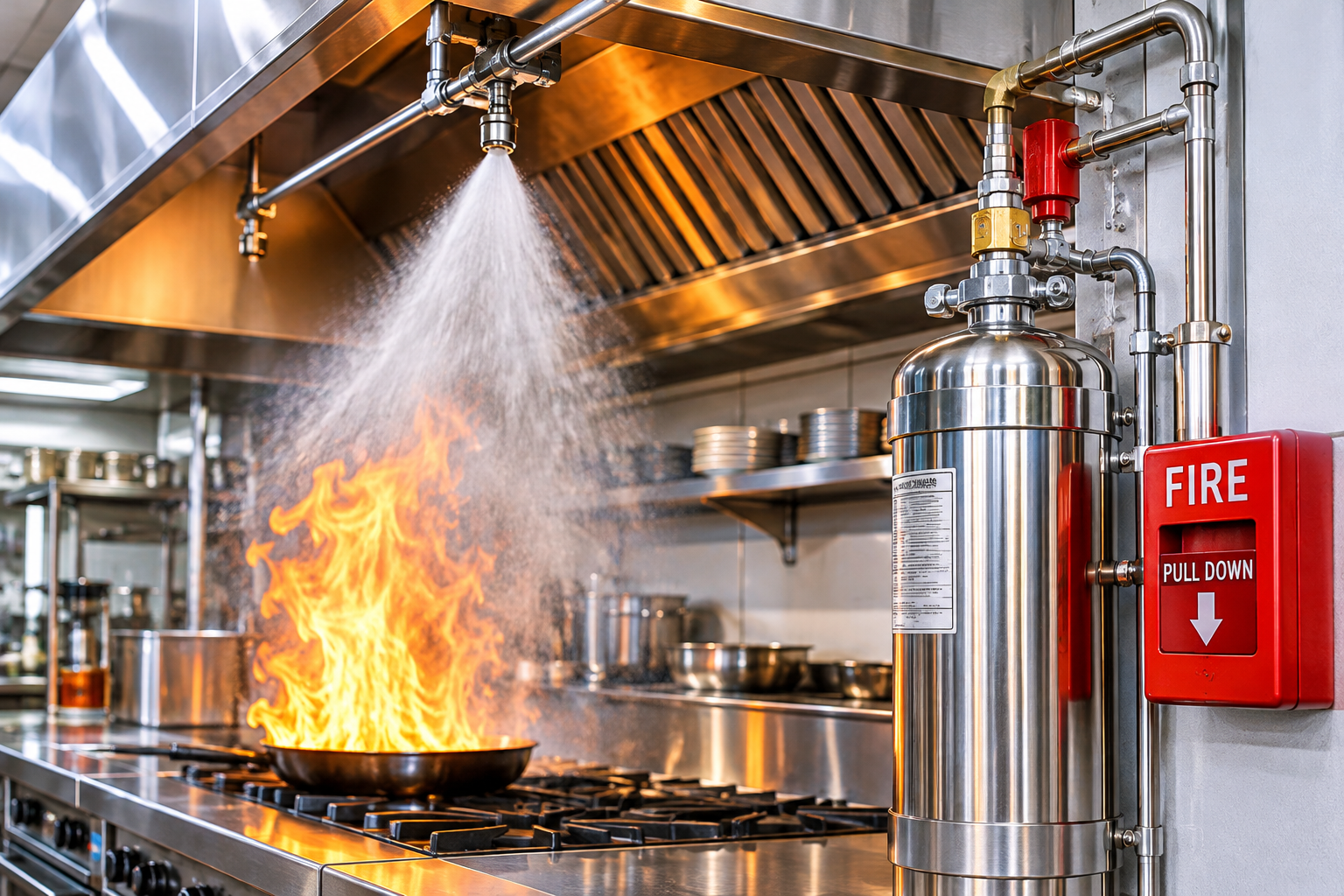
A restaurant fire suppression system detects and controls fires in commercial cooking areas. It protects important kitchen areas, including cooking appliances, exhaust hoods, filters, and ventilation ducts.
Unlike ordinary fire protection equipment, this specialized system handles cooking fires involving hot oil and grease. Most commercial kitchen installations use wet chemical agents to control these dangerous flames.
Additionally, automatic heat detectors can activate the system when temperatures reach a specific level. Some systems also provide a manual activation mechanism for emergency situations.
How Does a Restaurant Fire Suppression System Work?
A restaurant fire suppression system uses several connected components to detect heat and release an extinguishing agent. Each component performs an important task during an emergency.
Here is how the process works:
Heat Detection: First, a detection device identifies excessive heat around protected cooking equipment.
System Activation: Next, the automatic mechanism activates when the temperature reaches its designed limit.
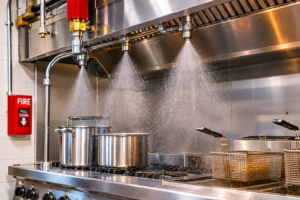
Chemical Release: Then, specially positioned nozzles release a wet chemical agent.
Fire Control: As a result, the agent helps suppress flames and cool hot cooking surfaces.
Equipment Shutdown: Finally, connected controls shut off the fuel or electrical supply to protected appliances when the system design includes this feature.
Consequently, the system helps control cooking fires and reduces the risk of flames spreading throughout the kitchen.
Main Components of a Commercial Kitchen Fire Suppression System
Restaurant owners should understand the main components before selecting or maintaining their fire protection equipment. Each part contributes to effective kitchen fire safety.
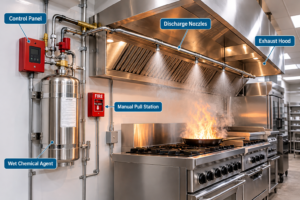
1. Detection System
Heat-sensitive detection devices monitor temperatures around cooking appliances. When they detect excessive heat, they activate the connected suppression mechanism.
2. Control Panel or Release Mechanism
The release mechanism controls the system’s activation process. Once the detection device identifies dangerous heat, this component triggers the extinguishing agent.
3. Wet Chemical Agent
Wet chemical agents help control fires involving cooking oils and fats. Moreover, these agents help cool hot cooking surfaces and reduce the chance of fire returning.
4. Discharge Nozzles
Specially designed nozzles distribute the extinguishing agent over protected cooking appliances. Their positions must match the equipment layout and the manufacturer’s specifications.
5. Manual Pull Station
A manual pull station gives trained employees another way to activate the system during an emergency. Therefore, restaurant managers should keep this control clearly visible and accessible.
6. Fuel or Electrical Shutoff
Connected safety controls can stop the gas or electrical supply when the suppression system activates. This function helps prevent additional fuel from feeding the fire.
Why Is Fire Suppression Important in Restaurants?
Commercial kitchens face several fire hazards because employees regularly handle hot oil, cooking equipment, and open flames. For this reason, restaurant owners should prioritize proper fire protection.
Protects Employees and Customers
Kitchen fires can threaten everyone inside a restaurant. An automatic suppression system helps control certain cooking fires quickly. As a result, it supports a safer environment for employees and customers.
Reduces Equipment Damage
A serious fire can destroy expensive appliances, ventilation systems, and kitchen structures. However, early fire control may limit damage and reduce repair costs.
Supports Kitchen Safety Compliance
Local building and fire codes establish important safety requirements. Therefore, restaurant owners should select appropriate protection equipment and follow the regulations that apply to their locations.
Helps Reduce Business Interruptions
A major kitchen fire can force a restaurant to suspend its operations. Moreover, effective fire protection may reduce the risk of unexpected closures and costly business interruptions.
Types of Restaurant Kitchen Fire Suppression Systems
Commercial kitchens can use different fire protection technologies. However, restaurant owners should choose a suitable option according to their cooking equipment, kitchen layout, and local safety regulations.
Wet Chemical Fire Suppression System
Wet chemical systems are widely used in commercial cooking environments. They protect equipment such as deep fryers, griddles, ranges, and other appliances that involve cooking oils and grease.
During activation, the system releases a chemical agent that helps control flames and cool hot cooking oils. Additionally, NFPA 17A and UL 300 provide important standards and guidance for commercial cooking fire protection systems.
For additional information, restaurant owners can review the NFPA 17A standard for wet chemical extinguishing systems
Automatic Fire Suppression System
An automatic system uses heat detection devices to activate without requiring manual operation. This feature provides valuable protection when employees cannot immediately reach the manual controls.
Manual Fire Suppression System
Manual activation allows trained staff to trigger the suppression mechanism during an emergency. Many commercial installations combine manual controls with automatic detection for additional protection.
Restaurant Fire Suppression System Installation Requirements
Proper installation helps a fire protection system perform effectively. Therefore, restaurant owners should consider their cooking appliances, exhaust hood, and ventilation arrangement before installation.
Before choosing fire protection equipment, restaurant owners should understand their commercial kitchen equipment requirements and installation needs.
Follow these important steps:
Evaluate Cooking Equipment: First, identify fryers, grills, ranges, and other appliances that require fire protection.
Check Hood Coverage: Additionally, examine the exhaust hood, filters, and associated ductwork to determine the necessary protection.
Use Listed Equipment: Always select equipment approved for its intended commercial cooking application.
Hire Qualified Professionals: Choose experienced fire protection technicians for system design and installation.
Follow Local Regulations: Finally, check applicable fire codes, permits, and inspection requirements.
Furthermore, changing cooking appliances or moving equipment can affect the existing protection arrangement. For this reason, ask a qualified technician to review the system before making major kitchen layout changes.
Inspection and Maintenance of Kitchen Fire Suppression Systems
Regular maintenance keeps fire protection equipment ready for emergencies. However, restaurant owners should follow the manufacturer’s instructions and applicable inspection requirements rather than relying on visual checks alone.
Additionally, regular cleaning helps maintain kitchen appliances and reduce grease buildup. Learn more about how to clean commercial kitchen equipment to maintain a safer working environment.
Important maintenance practices include:
Schedule Professional Inspections: Arrange professional inspections and servicing according to applicable requirements.
Check Detection Devices: Ask technicians to examine heat detectors and connected components.
Inspect Discharge Nozzles: Keep nozzles correctly positioned and free from grease buildup or obstructions.
Review the Extinguishing Agent: Check the agent supply and pressure indicators according to manufacturer instructions.
Examine Manual Controls: Keep manual pull stations visible and accessible at all times.
Maintain Service Records: Finally, organize inspection reports, maintenance documents, and service dates.
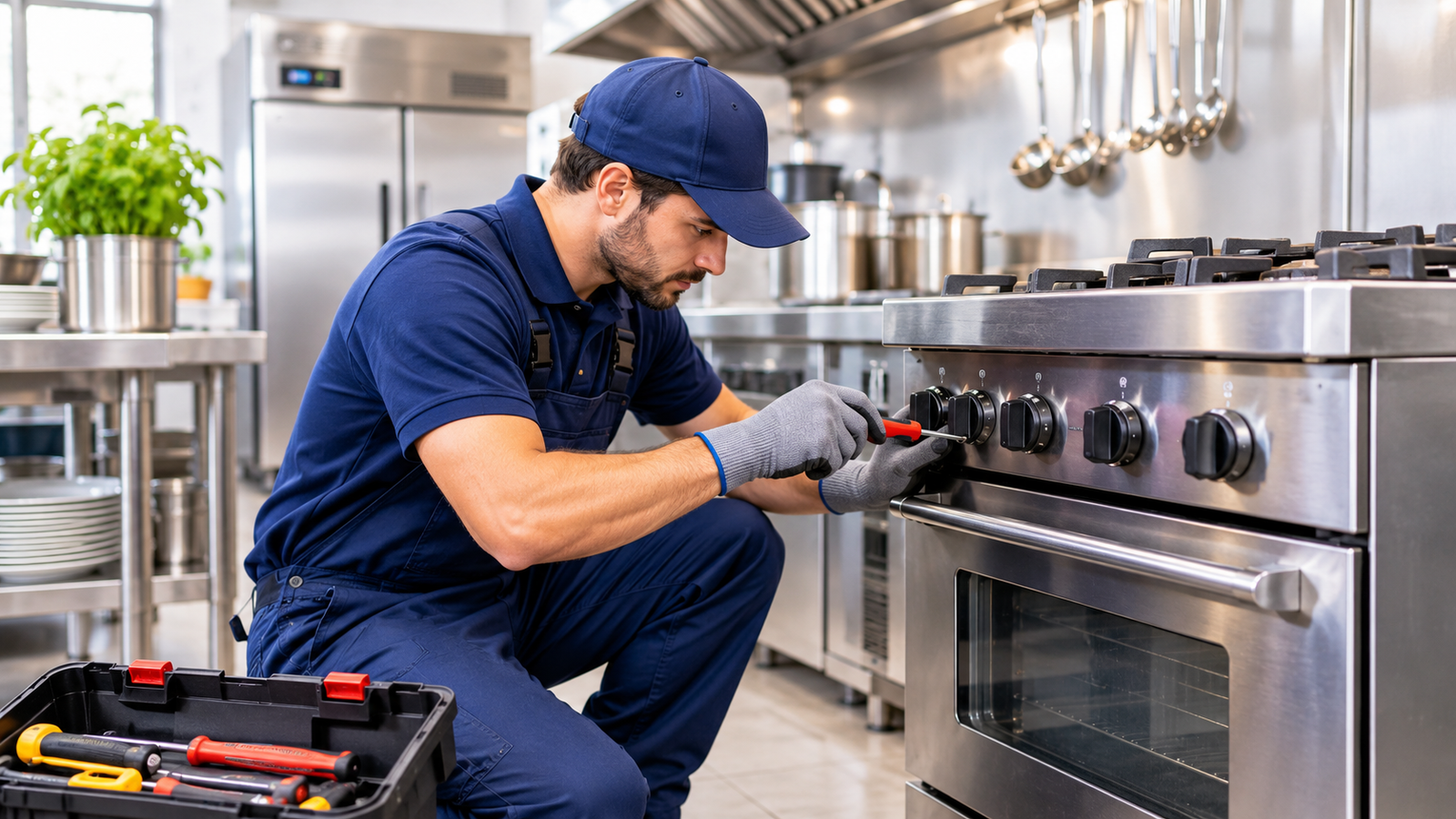
Additionally, employees should never attempt technical repairs or modify the suppression equipment themselves. Instead, qualified technicians should handle servicing, repairs, and system adjustments.
Common Fire Safety Mistakes in Commercial Kitchens
Even a reliable fire protection system cannot replace good kitchen safety practices. Restaurant managers should avoid the following mistakes to reduce fire risks.
Ignoring scheduled professional inspections.
Allowing grease to accumulate inside exhaust hoods and ducts.
Blocking access to manual activation controls.
Changing cooking appliances without checking system coverage.
Using damaged or poorly maintained kitchen equipment.
Failing to train employees about emergency procedures.
Moreover, employees should learn evacuation routes and understand how to respond during a kitchen fire. Never pour water onto burning cooking oil because water can spread the flames and cause serious injuries.
To maintain a cleaner and safer kitchen, follow a regular restaurant kitchen cleaning checklist and assign cleaning tasks to employees.
How to Choose the Right Restaurant Fire Suppression System
Choosing suitable fire protection equipment requires careful planning. Before making a purchase, restaurant owners should evaluate several important factors.
Kitchen Size and Layout: Consider the kitchen’s physical dimensions, cooking stations, and ventilation design. The system should cover all required areas.
Cooking Appliances: Different appliances may require specific nozzle positions and protection arrangements. Therefore, review every cooking station before selecting a system.
System Certification: Check the manufacturer’s documentation and confirm that the equipment meets relevant safety standards.
Professional Installation: Choose qualified technicians who understand commercial cooking fire protection and local regulations.
Maintenance Support: Also, consider the availability of inspections, servicing, replacement parts, and technical assistance.
Ultimately, the right system should match the kitchen’s requirements and provide reliable protection while meeting applicable fire safety regulations.
Final Thoughts
A reliable restaurant fire suppression system helps protect commercial kitchens from dangerous cooking fires. It also safeguards valuable equipment and supports a safer working environment for restaurant employees and customers.
However, purchasing suitable equipment represents only the first step. Restaurant owners must also arrange professional installation, schedule regular inspections, train employees, and maintain clean cooking areas. By following these practices, businesses can reduce fire risks and maintain safer kitchen operations.
- All Posts
- Buying Guides
- Commercial Kitchen
- Kitchen Equipment
- Product Reviews
- Tips & Maintenance