Making delicious sushi at home starts with properly cooked rice. Choosing the best rice cooker for sushi rice can make this process easier by providing consistent heat, suitable cooking settings, and reliable results. However, not every rice cooker is designed to handle short-grain rice equally well. Understanding the important features can help you choose an appliance that produces tender, slightly sticky, and well-textured rice for homemade sushi.
What Makes a Rice Cooker Good for Sushi Rice?
Sushi rice requires a particular texture that helps the grains hold together without becoming mushy. A suitable appliance should cook rice evenly while maintaining the moisture needed for preparing sushi rolls, nigiri, and rice bowls.
A dedicated sushi cooking setting is especially useful because it adjusts the cooking process for this type of rice. However, a quality standard rice cooker can also work well if it supports short- or medium-grain white rice.
Best Rice Cooker for Sushi Rice: Important Features
Before choosing an appliance, consider the following features. They can make a noticeable difference in cooking performance and everyday convenience.
1. Dedicated Sushi Rice Setting
A sushi rice setting is one of the most useful features to look for. It is designed to cook short-grain rice with a suitable texture for sushi preparation.
Some advanced rice cookers offer separate settings for white rice, brown rice, and sushi rice. This flexibility makes the appliance useful for preparing different meals throughout the week.
2. Fuzzy Logic Technology
Fuzzy logic technology helps a rice cooker adjust its cooking process based on temperature and other cooking conditions. This can improve consistency when preparing different quantities of rice.
Some models also use microcomputer controls to manage cooking time and temperature. These features are helpful for people who regularly prepare rice at home.
3. Nonstick Inner Cooking Pot
A good inner cooking pot helps prevent rice from sticking to the bottom and sides. A nonstick surface also makes serving and cleaning easier.
Look for a durable pot with clear measurement markings. A removable inner pot is especially convenient because it can be cleaned separately after cooking.
4. Suitable Cooking Capacity
The right capacity depends on how much sushi rice you usually prepare. A small household may need only a compact model, while families or people who frequently host guests may benefit from a larger appliance.
Avoid choosing a very large cooker for consistently small portions. Select a capacity that matches your regular cooking needs and the manufacturer’s recommended minimum quantity.
5. Keep-Warm Function
A keep-warm function helps maintain the temperature of cooked rice after the cooking cycle finishes. This can be convenient when preparing several dishes at once.
However, extended warming may affect rice texture and moisture. For the best results, follow the manufacturer’s instructions and prepare sushi rice close to serving time.
Types of Rice Cookers Suitable for Sushi Rice
Different types of appliances offer different levels of cooking control. Understanding these options can help narrow down your choices.
You can also explore Zojirushi rice cooker models and features to compare different cooking programs.
Basic Electric Rice Cookers
Basic electric models use straightforward controls and automatically switch off or move to a warming mode after cooking. They are generally affordable and easy to operate.
These appliances can prepare sushi rice when they support short-grain white rice and provide suitable water measurements. They are a practical option for occasional homemade sushi.
Micom Rice Cookers
Micom rice cookers use microcomputer technology to control cooking temperature and time. Many models offer multiple cooking programs for different rice varieties.
Some include a dedicated sushi rice setting, making them a convenient choice for people who prepare Japanese-style meals regularly.
Induction Heating Rice Cookers
Induction heating models use electromagnetic technology to heat the inner cooking pot. This approach can provide more controlled and even heating throughout the cooking process.
They are often more expensive than basic models. Consider one if you frequently cook rice and want additional temperature control.
What to Consider Before Buying a Sushi Rice Cooker
Choosing a suitable appliance involves more than comparing prices. Before making a purchase, consider these important features to find a model that matches your cooking needs.
Ease of use: Choose simple controls or clearly labeled cooking programs.
Cleaning: Look for a removable inner lid and an easy-to-clean cooking pot.
Cooking consistency: Check whether the appliance supports short- and medium-grain rice.
Capacity: Choose a cooking size that matches your household requirements.
Durability: Consider the quality of the inner pot, lid, and other components.
Warranty: Review the manufacturer’s warranty and available customer support.
Price: Compare features and long-term value instead of choosing the cheapest option.
Reading customer reviews can also help you understand how an appliance performs during regular use.
How to Cook Sushi Rice in a Rice Cooker
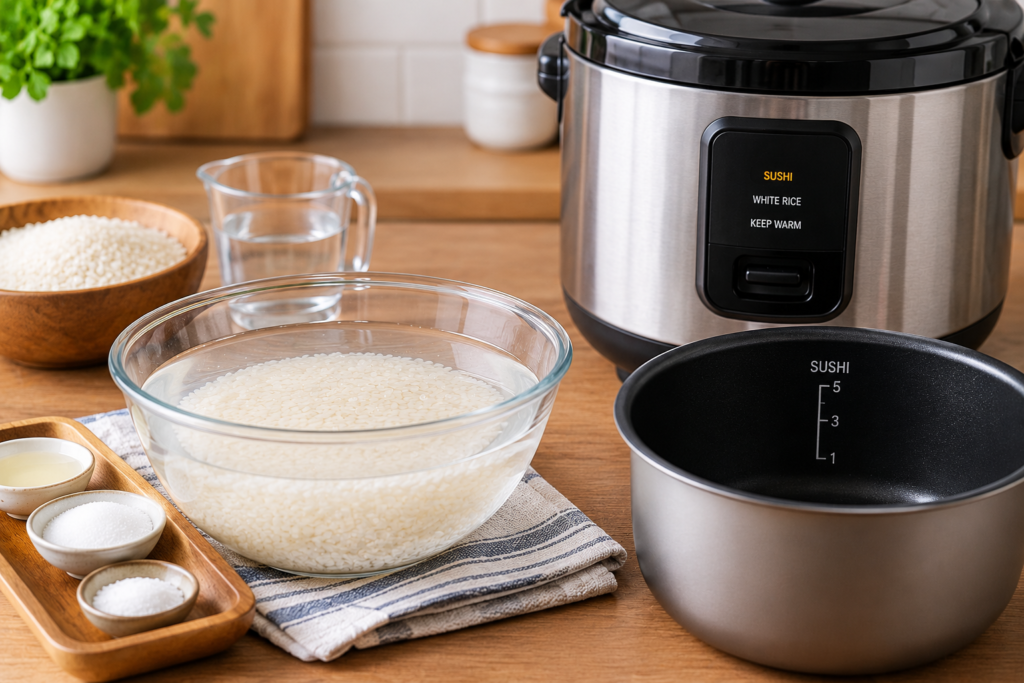
Proper rice selection and preparation are essential for achieving the right sushi texture. The following steps will help you prepare consistent results using your rice cooker.
Step 1: Choose the Right Rice
Use Japanese short-grain white rice or another suitable short- or medium-grain variety. These grains develop the slightly sticky texture needed for sushi.
Avoid assuming that ordinary long-grain rice will produce the same results.
Step 2: Rinse the Rice Properly
Measure the rice using the cup supplied with your appliance. Rinse it gently with cold water several times until the water becomes clearer.
This helps remove excess surface starch and prepares the grains for cooking.
Step 3: Add the Correct Amount of Water
Transfer the rinsed rice into the inner pot. Add water according to the sushi rice measurement line or the manufacturer’s instructions.
Water requirements can vary depending on the rice variety and appliance. Avoid using a universal ratio without checking the manual.
Step 4: Select the Sushi Setting
Choose the dedicated sushi program if your appliance provides one. Otherwise, select the appropriate white rice setting recommended for short-grain rice.
Allow the complete cooking cycle to finish before opening the lid.
Step 5: Season and Cool the Rice
Transfer the cooked rice into a wide, shallow nonmetallic container. Add a mixture of rice vinegar, sugar, and salt.
Gently fold the seasoning into the hot rice while fanning it. Continue until the rice cools to approximately body temperature and develops a glossy appearance.
Common Mistakes to Avoid When Cooking Sushi Rice
Even a high-quality rice cooker may produce poor results when preparation mistakes occur. Keep the following points in mind to improve the texture and quality of your sushi rice.
Using the Wrong Rice Variety
Long-grain rice generally produces a different texture from Japanese short-grain rice. Always choose a suitable variety for sushi preparation.
Adding Too Much Water
Excess water can make the grains overly soft and mushy. Follow the measurement markings and instructions for your particular appliance.
Skipping the Rinsing Process
Unrinsed rice may contain excess surface starch, which can affect the final texture. Rinse gently before cooking unless the product instructions specify otherwise.
Mixing the Vinegar Too Aggressively
Stirring or crushing the grains too roughly can damage their shape. Use a gentle folding motion to distribute the seasoning evenly.
Is an Expensive Rice Cooker Worth Buying for Sushi?
An expensive appliance is not always necessary for making good sushi rice. A reliable basic model can produce satisfactory results when it supports the correct rice variety and cooking method.
More advanced appliances may offer dedicated sushi programs, fuzzy logic controls, induction heating, and additional cooking options. These features can be worthwhile if you prepare rice frequently or want greater control over cooking performance.
Compare the available functions, warranty, capacity, and customer feedback before deciding how much to spend.
Final Thoughts
Finding the best rice cooker for sushi rice depends on your cooking habits, budget, and preferred features. A dedicated sushi setting, suitable capacity, reliable temperature control, and an easy-to-clean inner pot are useful qualities to prioritize.
For occasional sushi preparation, a straightforward electric model may be sufficient. Frequent home cooks may prefer a Micom or induction heating model with more specialized cooking programs. Choose an appliance that suits your needs and follow its instructions for consistent results.
- All Posts
- Buying Guides
- Commercial Kitchen
- Kitchen Equipment
- Product Reviews
- Tips & Maintenance