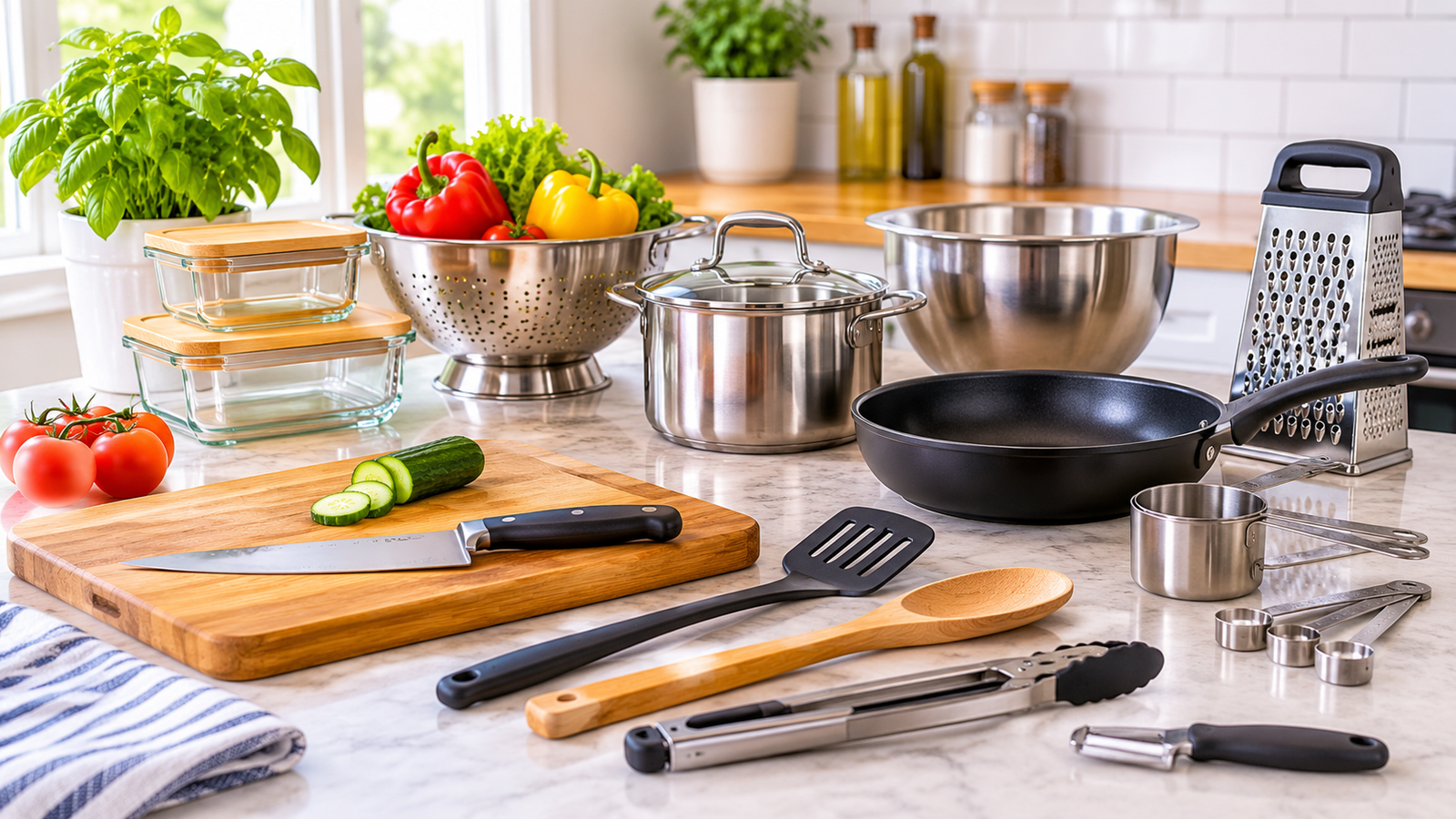
Induction cookware what is is a common question among people exploring induction cooking and looking for suitable pots and pans. This cookware features a magnetic base that works with an induction cooktop to heat food efficiently. Unlike traditional gas stoves, induction technology transfers energy directly to compatible cookware without using an open flame.
What Is Induction Cookware?
Induction cookware refers to pots, pans, and other cooking vessels made with magnetic materials that work on induction cooktops. These cooktops use electromagnetic energy to generate heat directly in compatible cookware.
Common examples include cast iron, magnetic stainless steel, and enameled steel cookware. Some aluminum and copper pans also work when they include a suitable magnetic base.
If you are buying new cookware, check the manufacturer’s compatibility information before making a purchase.
How Does Induction Cookware Work?
This process allows compatible pans to heat quickly and respond rapidly to temperature adjustments. Compared with conventional electric heating elements, the cooking surface may cool more quickly because heat is generated primarily in the cookware itself.
Which Materials Work for Induction Cookware?
The material and base construction determine whether a pot or pan will work on an induction cooktop. Not every product made from a particular material is automatically compatible.
1. Cast Iron Cookware
Cast iron is naturally magnetic and generally works well with induction cooking. It retains heat effectively, making it useful for searing, frying, and slow cooking.
However, cast iron can be heavy, so handle it carefully. Avoid dragging rough cookware across a glass cooktop because it may scratch the surface.
2. Stainless Steel Cookware
Stainless steel is popular because it is durable, versatile, and relatively easy to maintain. However, not all stainless steel cookware is magnetic.
Choose products specifically labeled as induction-compatible. Their bases contain suitable magnetic material to work with an induction cooktop.
3. Enameled Steel Cookware
Enameled steel cookware combines a steel body with a protective enamel coating. It can work well on induction cooktops when its base is magnetic.
Check the manufacturer’s instructions before use. Avoid cookware with damaged enamel, as exposed or deteriorating surfaces may affect its usability.
4. Aluminum and Copper Cookware
Traditional aluminum and copper cookware generally does not work directly on induction cooktops because these metals are not sufficiently magnetic.
Some models include a magnetic stainless steel or other compatible base. These products can work with induction systems when the manufacturer confirms compatibility.
What Is Induction Cookware Best Used For?
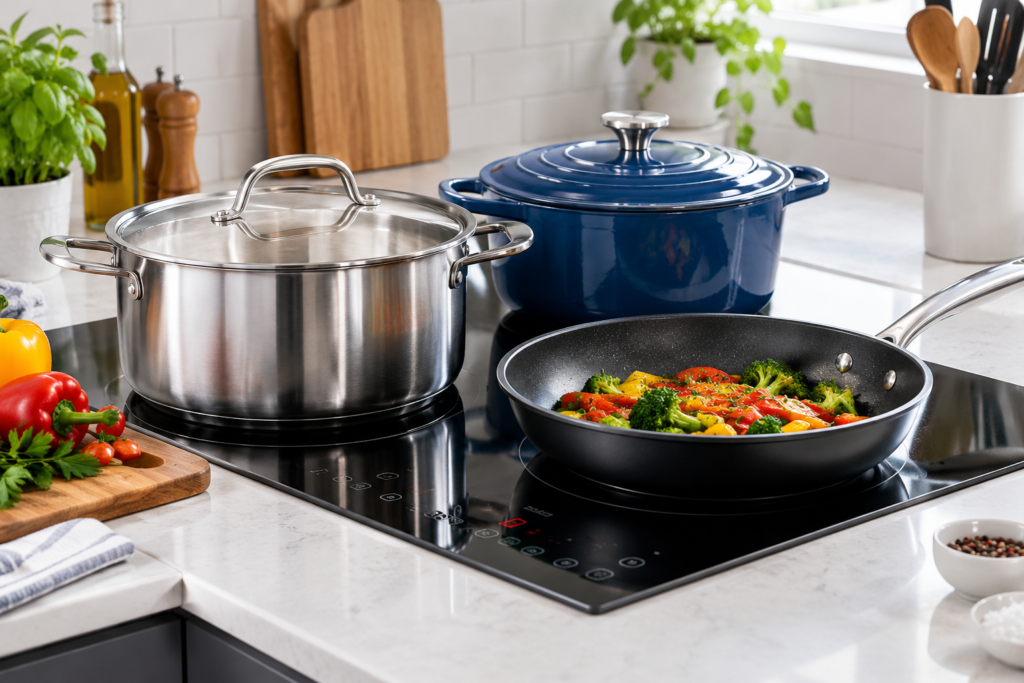
Induction-compatible cookware can handle many everyday cooking tasks. The best choice depends on your cooking habits and the type of food you prepare.
Frying and searing: Cast iron and suitable stainless steel pans are useful for browning meat and vegetables.
Boiling water: Compatible stainless steel pots can heat water quickly.
Making sauces: Stainless steel saucepans offer flexibility for simmering and preparing sauces.
Preparing soups: Induction-ready stockpots are useful for soups, pasta, and large meals.
Everyday cooking: Compatible nonstick frying pans can be convenient for eggs, pancakes, and foods that tend to stick.
Always match the cookware to the cooking zone and follow the instructions supplied with your cooktop.
Benefits of Using Induction-Compatible Cookware
Choosing the right kitchen equipment starts with checking compatibility, durability, and your everyday cooking needs.
Faster Heating
Compatible cookware can heat quickly, helping reduce preparation time for some meals. The actual heating speed depends on the cooktop, pan construction, and selected power setting.
Precise Temperature Control
Many induction cooktops allow rapid adjustments to cooking power. This can make it easier to manage simmering, frying, and other temperature-sensitive tasks.
Easy Cleaning
Induction cooktops usually have smooth surfaces that are easy to wipe down. Because the cooking zone does not rely on a glowing heating element, some spills are less likely to bake onto the surface immediately. Always allow hot cookware and the cooking area to cool before cleaning.
Improved Energy Efficiency
Induction technology transfers energy directly to compatible cookware, which can reduce wasted heat compared with some conventional cooking methods. Efficiency varies with the appliance and cooking conditions.
How to Check Whether Your Cookware Is Induction-Compatible
You do not always need to buy an entirely new cookware set. Test your existing pots and pans before replacing them.
Find a small household magnet.
Place the magnet against the bottom of the pot or pan.
Check whether it sticks firmly to the base.
Look for an induction-compatible symbol or manufacturer’s confirmation.
Make sure the cookware has a flat base and an appropriate size for your cooking zone.
A magnet test is a useful first check, but cookware construction can affect performance. Consult the manufacturer’s guidance if you are unsure.
For another practical reference, see Whirlpool’s induction cookware guide.
How to Choose the Right Induction Cookware
Before buying a new set, consider these important factors.
Check Compatibility First
Look for cookware specifically marked as suitable for induction cooktops. Do not rely on the product’s appearance or material name alone.
Choose the Right Size
Select pots and pans with a base that matches the recommended size of your cooking zone. Cookware that is too small may not be detected by some induction cooktops.
Consider Your Cooking Needs
Choose a practical combination of frying pans, saucepans, and stockpots based on your usual meals. A large cookware set may be unnecessary if you prepare only simple everyday dishes.
Review the Handle and Base Design
Look for secure handles, a stable base, and a construction suitable for regular use. A flat, smooth bottom is particularly important for proper contact with the cooking surface.
Compare Price and Durability
Compare materials, warranties, cleaning requirements, and manufacturer recommendations before choosing a product. The most expensive cookware is not necessarily the best option for every kitchen.
Common Mistakes to Avoid
Buying unsuitable cookware can lead to poor heating or a cooktop that fails to recognize the pan.
Assuming all stainless steel cookware is induction-compatible.
Using aluminum or copper pans without a magnetic base.
Choosing cookware with a warped or uneven bottom.
Ignoring the manufacturer’s recommended pan size.
Sliding heavy cookware across a glass cooktop.
Buying a complete set without checking which pieces you actually need.
Avoiding these mistakes can help you protect your cookware investment and improve your cooking experience.
How to Care for Induction Cookware
Proper maintenance helps cookware last longer and perform consistently.
Wash each pot or pan according to the manufacturer’s cleaning instructions. Use suitable utensils for coated cookware, and avoid abrasive cleaners that may damage protective finishes.
Lift heavy cookware instead of dragging it across the cooktop. After cooking, allow the pan to cool before cleaning, and dry it thoroughly when necessary to reduce the risk of rust on susceptible materials.
Check the cookware base periodically for warping, damage, or residue that could interfere with contact with the cooktop.
Choosing the right kitchen equipment starts with checking compatibility, durability, and your everyday cooking needs.
Conclusion
Induction cookware what is becomes easier to understand once you know how magnetic materials work with induction technology. Cast iron, enameled steel, and induction-compatible stainless steel are common options, while some aluminum and copper cookware requires a magnetic base.
Before purchasing new pots and pans, check compatibility, base size, durability, and your everyday cooking needs. The right cookware can help you use your induction cooktop effectively and make everyday meal preparation more convenient.
- All Posts
- Buying Guides
- Commercial Kitchen
- Kitchen Equipment
- Product Reviews
- Tips & Maintenance