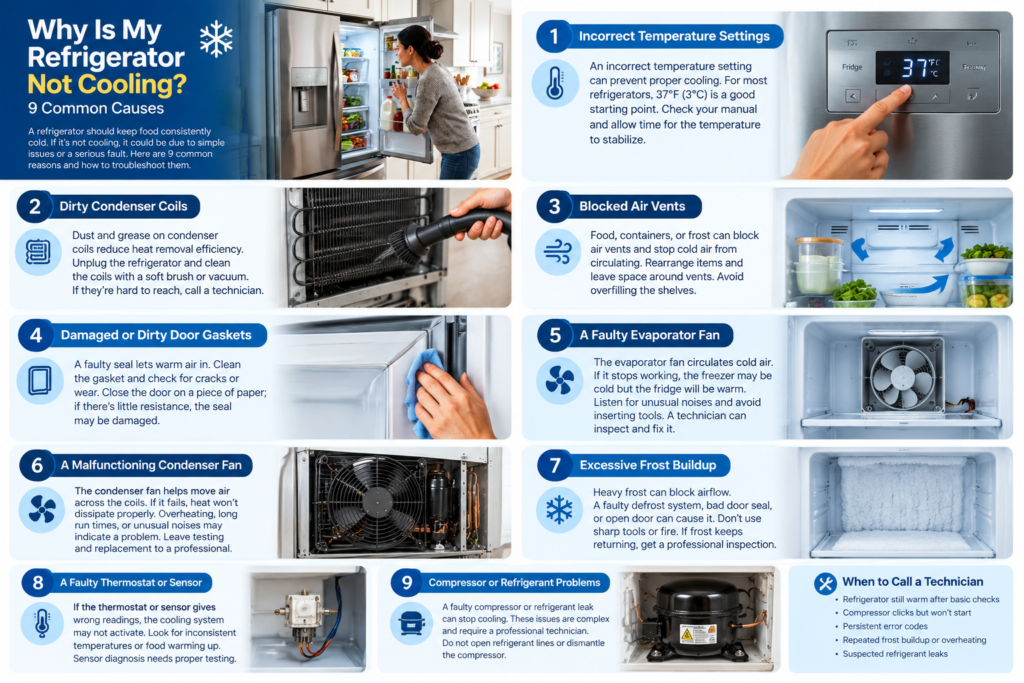
Why is my refrigerator not cooling even though it is running? This is a common household problem that can result from incorrect temperature settings, blocked air vents, dirty condenser coils, or damaged door seals. Understanding the possible causes can help you identify simple issues and decide when professional repair is necessary.
A refrigerator should keep food consistently cold to maintain freshness and food safety. Before replacing the appliance or paying for repairs, follow these practical troubleshooting steps to find out what might be wrong.
Why Is My Refrigerator Not Cooling Properly?
A refrigerator may stop cooling because warm air is entering the compartment, cold air cannot circulate properly, or an internal component is malfunctioning. Some problems are easy to correct, while others require a qualified appliance technician.
The first step is to check the power supply, temperature settings, door seals, and airflow. These basic checks can help you narrow down the cause without taking the appliance apart.
9 Common Reasons Your Refrigerator Is Not Cooling
1. Incorrect Temperature Settings
One of the simplest reasons a refrigerator is not cooling enough is an incorrect temperature setting. The control may have been changed accidentally during cleaning, loading groceries, or adjusting the appliance.
For many refrigerators, a temperature of around 37°F (3°C) is a suitable starting point. Check your owner’s manual for the recommended setting, make adjustments if needed, and allow time for the temperature to stabilize.
2. Dirty Condenser Coils
Condenser coils release heat from the refrigeration system. When dust and grease accumulate on these coils, the refrigerator may struggle to remove heat efficiently and maintain a cold temperature.
Unplug the refrigerator before cleaning any accessible coils. Follow the manufacturer’s instructions and use a suitable soft brush or vacuum attachment. If the coils are difficult to access, consult a technician rather than removing unfamiliar panels.
3. Blocked Air Vents
Cold air must circulate freely throughout the refrigerator and freezer compartments. When food containers, bags, or large packages block the air vents, some areas may become warmer than others.
Rearrange the contents and leave enough space around the vents for air to move. Avoid overfilling the shelves, and check whether frost buildup is restricting airflow between the freezer and refrigerator.
4. Damaged or Dirty Door Gaskets
The rubber gasket around the refrigerator door helps prevent warm air from entering. If the seal is dirty, loose, cracked, or worn out, the appliance may lose cold air and run more frequently.
Clean the gasket with a soft cloth and mild soapy water, then inspect it for visible damage. You can also close the door on a piece of paper and gently pull it; little or no resistance may indicate a sealing problem.
5. A Faulty Evaporator Fan
The evaporator fan circulates cold air through the refrigerator. If the fan stops working, the freezer may remain cold while the refrigerator compartment becomes noticeably warm.
Listen for unusual noises, but do not insert your fingers or tools near the fan. Ice buildup, a damaged motor, or another internal fault may be responsible. A qualified technician can inspect the fan and determine whether repair or replacement is needed.
6. A Malfunctioning Condenser Fan
The condenser fan helps move air across the condenser coils and compressor in models equipped with one. If it fails, heat may not dissipate properly, which can reduce cooling performance.
A refrigerator that runs continuously, overheats around the machinery area, or produces unusual noises may need further inspection. Because electrical components are involved, leave fan testing and replacement to a trained professional.
7. Excessive Frost Buildup
Heavy frost on the freezer’s rear wall or around its air vents can restrict the movement of cold air. A faulty defrost system, damaged door seal, or door left open for too long may contribute to the problem.
Check whether the freezer has unusual ice buildup and make sure both doors close completely. Do not chip ice away with sharp tools or use an open flame to speed up defrosting. If frost repeatedly returns, arrange a professional inspection.
8. A Faulty Thermostat or Temperature Sensor
The thermostat or temperature sensor helps regulate the refrigerator’s cooling cycle. If it provides incorrect readings, the appliance may not activate its cooling system when needed.
Possible warning signs include inconsistent temperatures, food becoming warmer than expected, or the refrigerator running irregularly. Sensor diagnosis requires appropriate testing, so contact a technician if basic troubleshooting does not resolve the problem.
9. Compressor or Refrigerant Problems
The compressor helps circulate refrigerant through the cooling system. If the compressor fails or the sealed refrigerant system develops a leak, the refrigerator may struggle to cool or stop cooling altogether.
These problems are more complex than simple maintenance issues. Do not attempt to open refrigerant lines, handle refrigerant, or dismantle the compressor. A qualified refrigeration technician should diagnose the fault and recommend the appropriate repair.
How to Troubleshoot a Refrigerator That Is Not Cooling
Before arranging a service visit, work through these basic checks in order.
Step 1: Check the Power Supply
Make sure the refrigerator is plugged into a working outlet and that the display or interior light responds normally. If the circuit breaker has tripped, investigate the cause rather than repeatedly resetting it.
Never use a damaged power cord or handle electrical connections with wet hands. If you notice burning smells, sparks, or a damaged outlet, disconnect power only if safe and seek professional help.
Step 2: Adjust the Temperature
Check the control panel or temperature dial and compare the setting with the manufacturer’s recommendations. Avoid making repeated adjustments within a short period because the refrigerator needs time to respond.
After changing the setting, keep the doors closed as much as possible. Check the temperature again after the stabilization period recommended in your owner’s manual.
For additional troubleshooting advice, consult the manufacturer’s official refrigerator troubleshooting guide
Step 3: Inspect the Doors and Airflow
Make sure food packages, drawers, or shelves are not preventing the doors from closing. Inspect the gaskets and move items away from the internal air vents.
If the freezer is cold but the refrigerator is warm, restricted airflow or a fan-related problem may be responsible. Persistent problems should be checked by an appliance technician.
Step 4: Clean Accessible Condenser Coils
If your model has accessible condenser coils, disconnect power and clean them according to the manufacturer’s instructions. Leave the recommended clearance around the appliance so heat can escape properly.
Do not remove electrical covers or touch internal components. If you cannot locate the coils safely, consult the owner’s manual or arrange professional cleaning.
Step 5: Allow Time for Cooling
A newly installed refrigerator or one that has recently been serviced may need time to reach its normal operating temperature. A large load of warm groceries or frequent door opening can also temporarily affect cooling.
Follow the manual’s recommended stabilization time and monitor the temperature with an appliance thermometer. If the refrigerator remains warm, do not assume that waiting longer will solve a mechanical fault.
When Should You Call a Refrigerator Repair Technician?
Contact a qualified technician if the refrigerator continues to warm up after basic checks, the compressor repeatedly clicks without starting, or the appliance displays a persistent error code. Repeated frost buildup, unusual overheating, and suspected refrigerant leaks also require professional attention.
Avoid attempting electrical repairs or opening the sealed cooling system yourself. Early diagnosis may prevent further damage and help you understand whether repairing the appliance is more practical than replacing it.
How to Keep Your Refrigerator Cooling Efficiently
Regular maintenance can help reduce the risk of future cooling problems. Choosing the right commercial kitchen equipment can also help support an efficient kitchen.
Avoid leaving the doors open unnecessarily and check that the refrigerator has adequate ventilation around its sides and back. A refrigerator thermometer can help you confirm that food is being stored at a safe temperature.
Final Thoughts
If you are wondering why is my refrigerator not cooling, start by checking the temperature setting, power supply, door gasket, and air vents. Cleaning accessible condenser coils and improving airflow may resolve some common problems.
If the refrigerator still does not cool properly, a faulty fan, sensor, compressor, or sealed cooling system may be involved. A qualified technician can identify the underlying issue and help you choose a safe, cost-effective solution.
- All Posts
- Buying Guides
- Commercial Kitchen
- Kitchen Equipment
- Product Reviews
- Tips & Maintenance