Learning how to clean a dishwasher helps remove kitchen equipment maintenance, unpleasant odors, grease, and mineral buildup. Although dishwashers clean your dishes every day, the appliance itself also needs regular maintenance to perform efficiently. A dirty filter, clogged spray arms, or leftover detergent can affect cleaning results.
With a few simple supplies and the right cleaning routine, you can keep your dishwasher fresh, hygienic, and ready for everyday use without spending money on unnecessary cleaning products.
Regular cleaning is an important part of kitchen equipment maintenance to keep appliances working efficiently.
Why Is Dishwasher Cleaning Important?
Regular dishwasher cleaning helps prevent odors and keeps food particles from accumulating inside the appliance. Grease, soap residue, and hard-water deposits can gradually build up around the filter, door seals, and spray arms.
A clean dishwasher can also improve water circulation and help dishes come out cleaner. Routine maintenance allows you to notice blockages or damaged parts before they develop into bigger problems.
What You Need to Clean a Dishwasher
Before starting, gather a few basic cleaning supplies. Most household dishwashers can be cleaned with mild dish soap, a soft cloth, a soft-bristled brush, and warm water.
You may also need white vinegar or a dishwasher cleaner approved by the manufacturer. Check your appliance manual before using any cleaning solution, because some manufacturers recommend specific products and methods.
Avoid abrasive scrubbers and harsh chemicals that could damage the dishwasher’s interior, seals, or components.
How to Clean a Dishwasher Step by Step
Follow these practical steps to clean the main parts of your dishwasher safely and effectively.
Step 1: Empty the Dishwasher
Remove all dishes, glasses, cutlery, and other items from the dishwasher. Make sure the appliance is switched off before you begin cleaning its removable parts.
Check the bottom of the tub for leftover food, paper labels, broken glass, or other debris. Remove loose debris carefully, wearing gloves if necessary, and avoid reaching blindly into areas where sharp objects may be present.
Step 2: Remove and Clean the Dishwasher Filter
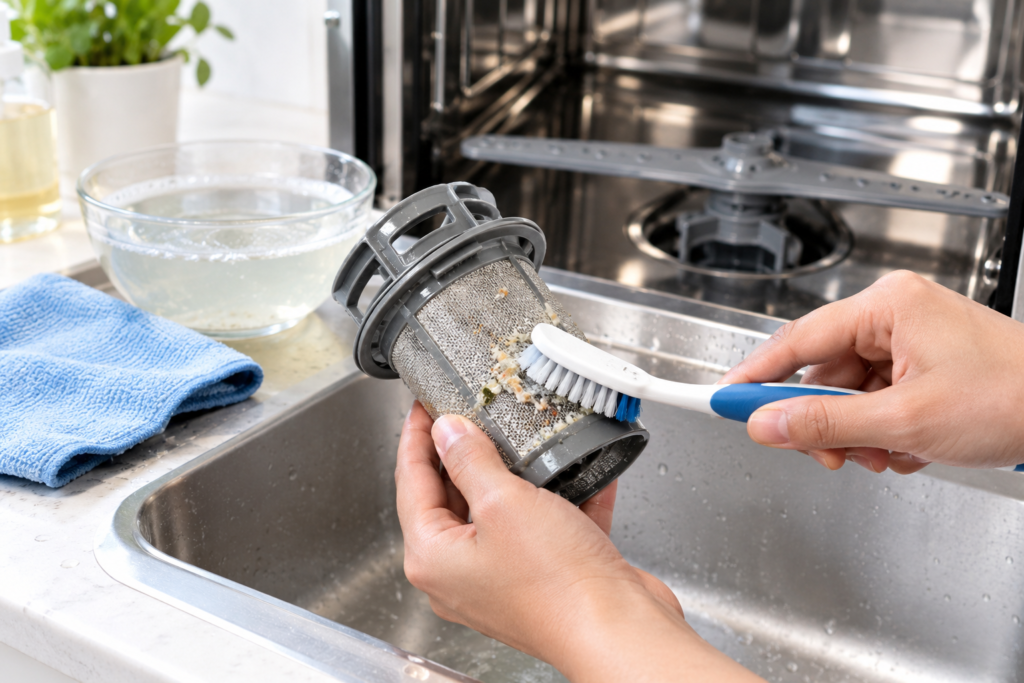
The filter catches food particles and prevents them from circulating back onto your dishes. Depending on your model, it may be located at the bottom of the dishwasher and can often be removed by twisting or lifting it according to the manual.
Rinse the filter under warm running water and use a soft brush with mild dish soap to remove stubborn residue. Avoid using abrasive tools that could damage the filter mesh. Reinstall the filter securely before running another cycle.
For more appliance cleaning advice, read our guide on cleaning kitchen equipment to maintain a cleaner and more efficient kitchen.
Step 3: Clean the Spray Arms
Spray arms distribute water throughout the dishwasher during a wash cycle. Small food particles and mineral deposits can block their openings, reducing water flow and leaving dishes dirty.
Inspect the spray arms for visible blockages and remove them only if your manufacturer’s instructions allow it. Clean accessible openings carefully with a soft brush, then rinse the parts and reinstall them correctly.
Step 4: Wipe the Interior Walls and Door
Use a soft, damp cloth with a small amount of mild dish soap to wipe the dishwasher’s interior walls, door, and bottom surface. Pay particular attention to areas where grease, food residue, and detergent buildup are visible.
Avoid soaking electrical components or spraying cleaner directly into openings. Wipe away soap residue with a clean damp cloth, then dry the accessible surfaces with a soft towel.
Step 5: Clean the Door Seal and Edges
The rubber door seal and surrounding edges can collect grease, crumbs, and moisture. These areas may develop unpleasant odors when residue remains trapped for long periods.
Gently wipe the seal with a damp cloth, using a soft brush for accessible creases if needed. Do not pull, stretch, or scrub the rubber aggressively, as this could damage the seal and cause leaks.
Step 6: Clean the Detergent Dispenser
Inspect the detergent dispenser for hardened detergent, grease, or residue that could prevent the compartment from opening correctly. Wipe the dispenser and surrounding area with a damp cloth.
If detergent has hardened inside the compartment, use warm water and a soft brush to loosen it. Avoid forcing the dispenser door or using sharp tools, and let the compartment dry before adding fresh detergent.
Step 7: Run an Empty Cleaning Cycle
After cleaning the removable parts and interior surfaces, run an empty cycle using a dishwasher cleaner approved for your appliance. Follow the product label and your dishwasher manual for the correct cycle and temperature.
Some manufacturers allow white vinegar for occasional cleaning, while others advise against it because repeated use may affect certain materials or seals. Never mix vinegar with bleach or other cleaning chemicals.
Once the cycle finishes, inspect the interior for remaining residue and leave the door slightly open if the manufacturer recommends it to help the dishwasher dry.
How Often Should You Clean a Dishwasher?
The ideal cleaning schedule depends on how frequently you use the appliance, the type of water supply, and the manufacturer’s recommendations.
After each use: Remove visible food scraps and check for leftover debris.
Weekly: Inspect the filter and wipe away visible residue when needed.
Monthly: Clean the filter, door seal, and interior surfaces, and run a suitable cleaning cycle.
As needed: Check the spray arms and detergent dispenser when dishes are not coming out clean.
Households that use their dishwasher heavily or have hard water may need more frequent maintenance. Always follow the cleaning schedule in your appliance manual.
Common Dishwasher Cleaning Mistakes to Avoid
Even simple cleaning routines can cause problems when unsuitable products or methods are used.
Using Too Much Detergent
Excess detergent can leave residue on dishes and inside the appliance. Use the amount recommended for your detergent type, water hardness, and dishwasher model.
Ignoring the Filter
A clogged filter can restrict drainage and allow food particles to remain inside the dishwasher. Inspect it regularly and clean it according to the manufacturer’s instructions.
Using Harsh Cleaning Products
Bleach, abrasive powders, and unsuitable chemicals may damage some dishwasher components. Never combine cleaning products, and use only solutions approved for your appliance.
Forgetting the Door Seal
Cleaning only the main interior leaves dirt and moisture around the door seal and edges. Include these areas in your routine to reduce residue and unpleasant smells.
When Should You Check Your Dishwasher Manual?
Your dishwasher manual provides model-specific instructions for removing the filter, cleaning spray arms, selecting a cleaning cycle, and choosing suitable products. These instructions are especially important if your appliance has stainless-steel surfaces, special coatings, or self-cleaning features.
For additional guidance, visit the official Bosch Home dishwasher support and maintenance resources. Choose the information that matches your model rather than assuming every dishwasher has the same cleaning requirements.
If your dishwasher continues to smell, drains poorly, leaks, or leaves dishes dirty after cleaning, check the troubleshooting instructions or contact a qualified appliance technician.
Choosing and maintaining the right commercial kitchen equipment can help improve kitchen efficiency and support long-term performance.
Final Thoughts
Knowing how to clean a dishwasher makes routine appliance maintenance easier and helps prevent common problems caused by grease, food particles, and mineral deposits. Cleaning the filter, spray arms, interior surfaces, and door seal can improve everyday cleaning performance.
Follow your manufacturer’s instructions, use suitable cleaning products, and maintain a regular schedule. These simple habits can help keep your dishwasher fresh and working reliably for longer.
- All Posts
- Buying Guides
- Commercial Kitchen
- Kitchen Equipment
- Product Reviews
- Tips & Maintenance