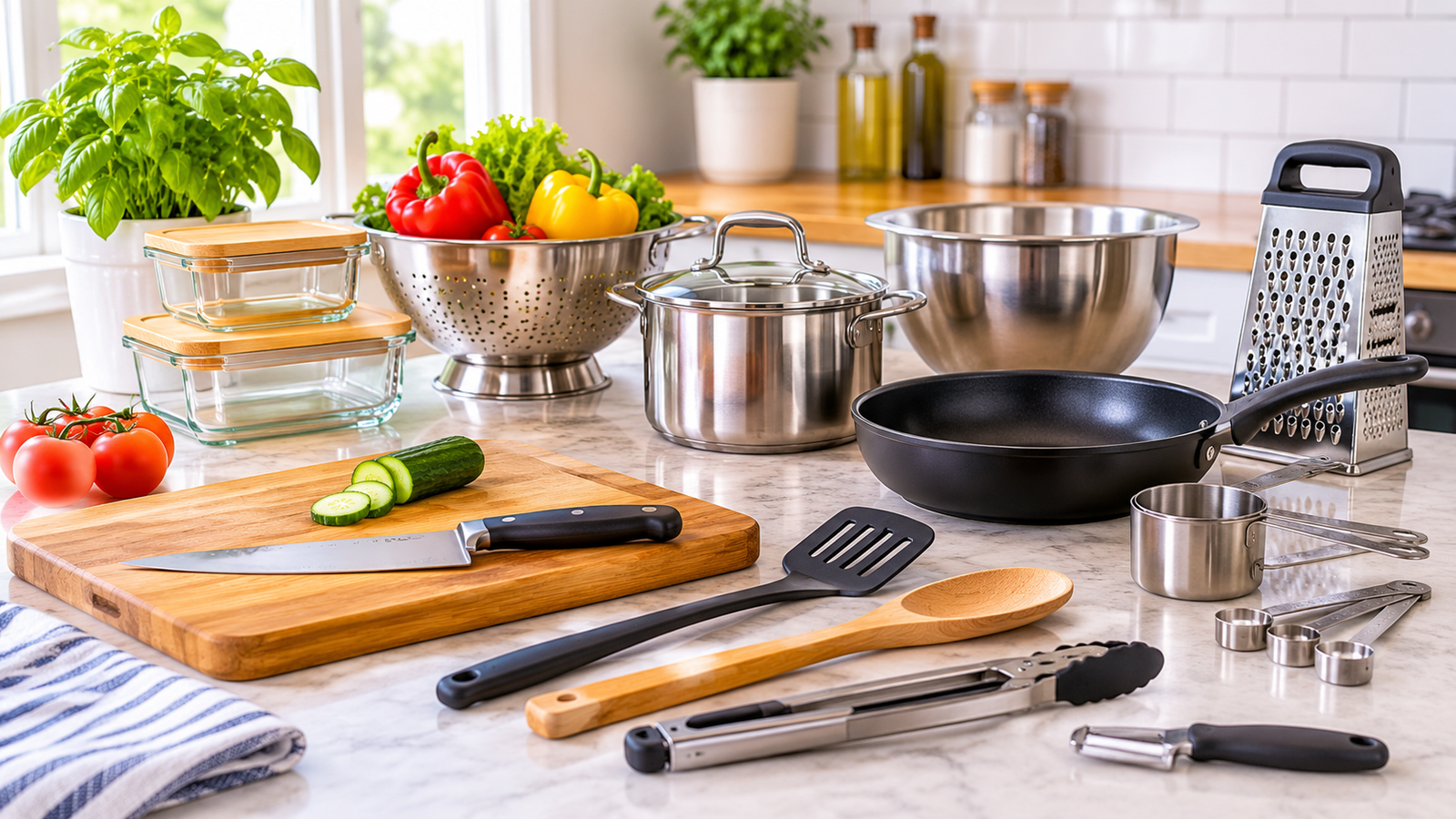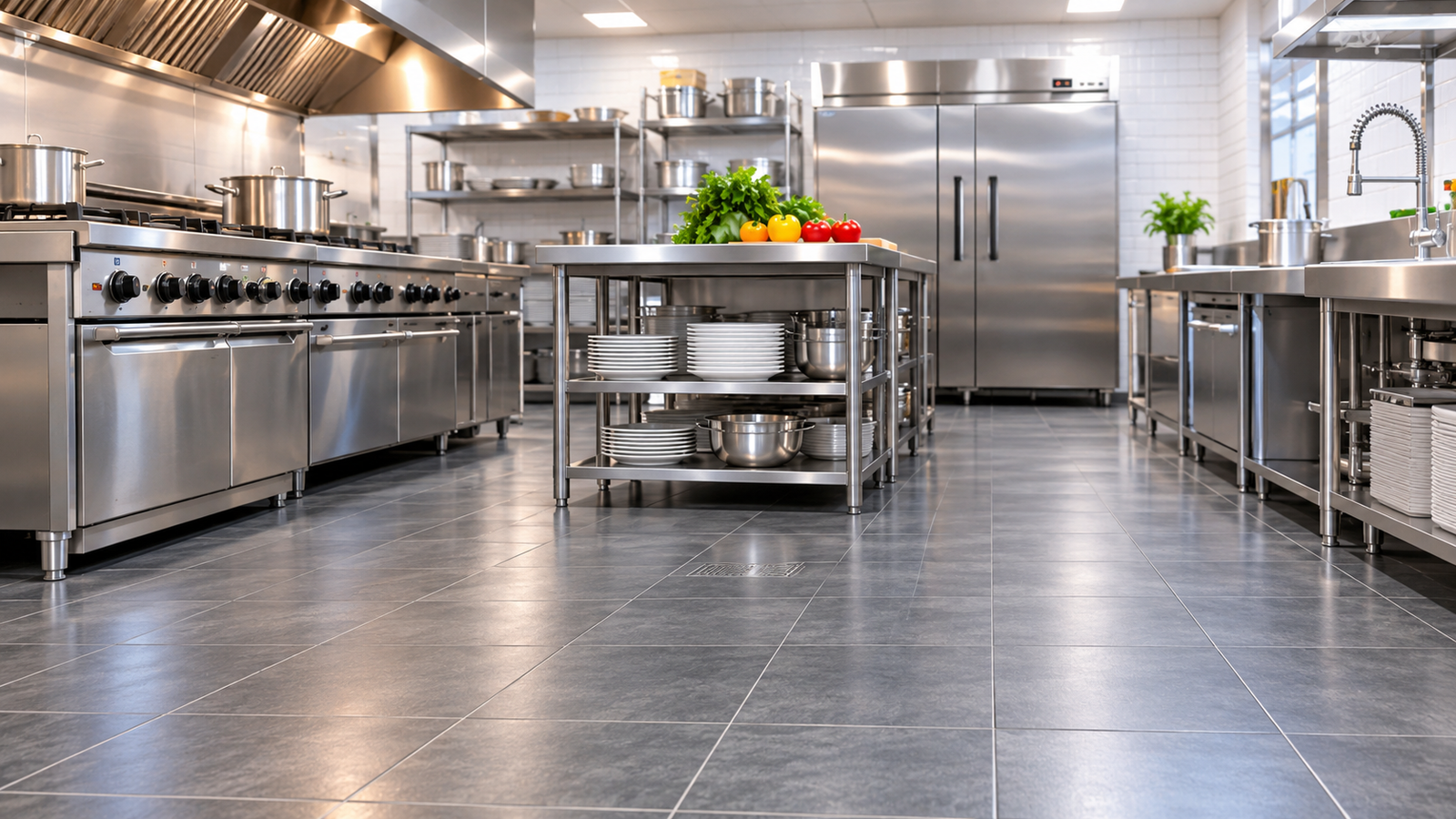
Commercial Kitchen Organization helps restaurants improve workflow, keep supplies accessible, and create a safer working environment. When every tool, ingredient, and appliance has a designated place, employees can prepare meals more efficiently. Moreover, an organized workspace makes cleaning easier and helps reduce unnecessary movement during busy service hours.
Whether you manage a small restaurant or a large foodservice operation, the right organization strategy can make daily tasks more manageable. This guide explains practical ways to organize storage, equipment, workstations, and cleaning routines.
Why Commercial Kitchen Organization Matters
A disorganized kitchen can slow down food preparation and create unnecessary stress for employees. For example, misplaced utensils may interrupt cooking, while poorly arranged ingredients can delay orders. These small problems become more noticeable during peak service periods.
An organized workspace supports a smoother workflow and makes better use of available space. Additionally, clear storage systems help staff identify supplies quickly and return items to their proper locations. As a result, your team can maintain consistent routines throughout the working day.
1. Plan the Kitchen Layout Around Workflow
Start by examining how food moves through your kitchen, from receiving ingredients to preparing, cooking, plating, and serving meals. Workstations should follow a logical sequence so employees can complete tasks without repeatedly crossing paths.
For smaller kitchens, prioritize essential equipment and keep frequently used items within easy reach. However, avoid placing too many appliances on preparation counters, as overcrowding can restrict movement. A practical layout should balance accessibility, safety, and available floor space.
2. Organize Commercial Kitchen Equipment
Every appliance should have a designated location based on its function, size, and frequency of use. For instance, food processors and cutting tools belong near appropriate preparation areas, while cooking equipment should remain within the designated cooking zone.
Commercial Kitchen Organization also involves leaving enough clearance around appliances for safe operation, cleaning, and maintenance. Before rearranging heavy equipment, check manufacturer instructions and applicable utility requirements. Furthermore, keep frequently used tools accessible without blocking walkways or emergency exits.
Commercial Kitchen Organization also involves arranging equipment for safe operation, cleaning, and maintenance. Read our Commercial Kitchen Equipment: Complete Buying Guide to learn how to choose suitable equipment for your restaurant.
3. Create a Clear Food Storage System
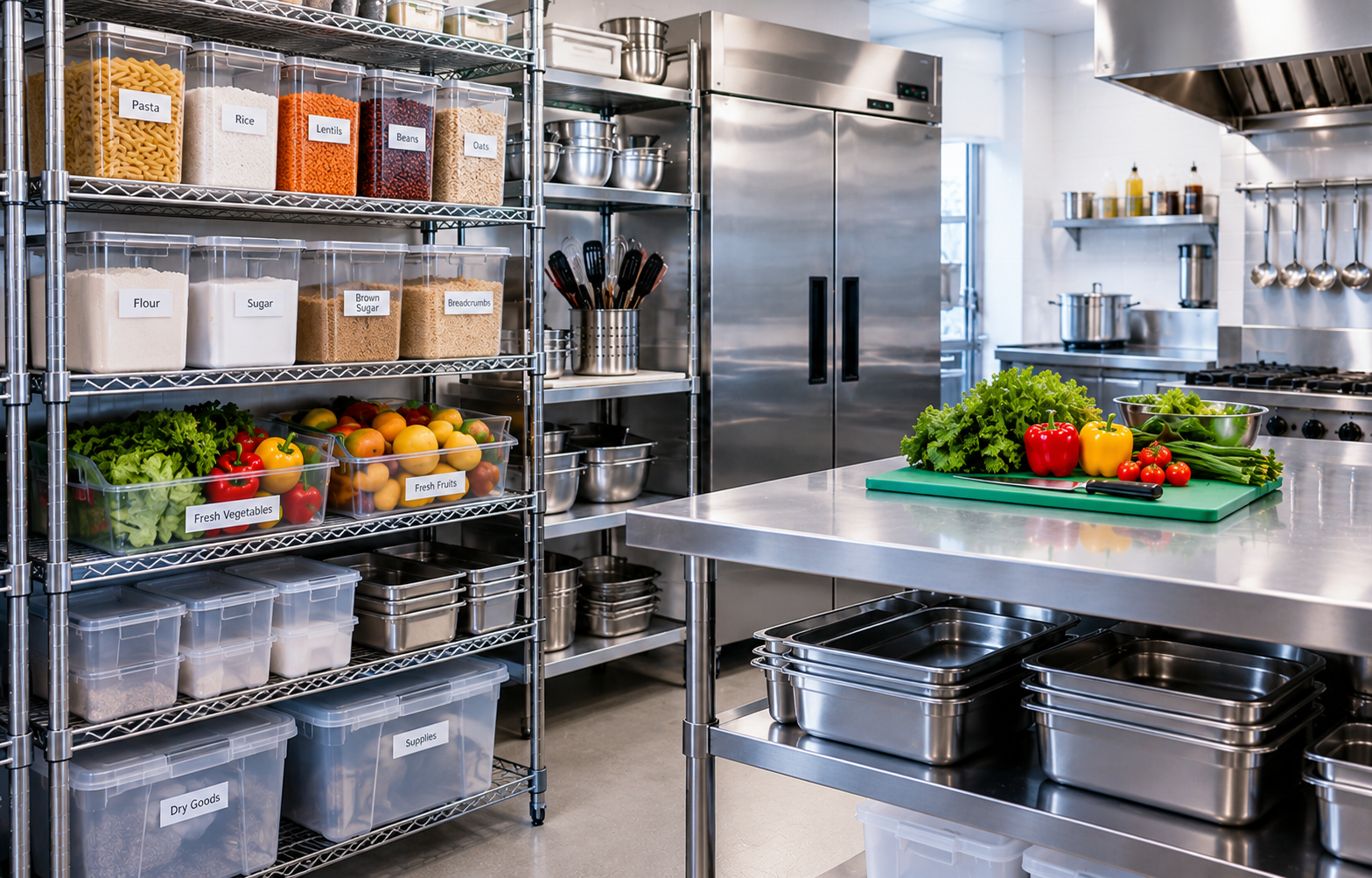
Separate ingredients according to their storage requirements, type, and frequency of use. Dry goods should remain in suitable, clearly labeled containers, while refrigerated and frozen ingredients must be stored at appropriate temperatures.
Use a first-in, first-out (FIFO) system to help staff use older stock before newer deliveries. Additionally, label containers with product names and relevant dates to support stock rotation. Never store food directly on the floor, and keep raw ingredients separated from ready-to-eat foods to reduce cross-contamination risks.
4. Use Vertical Space and Smart Storage
Wall-mounted shelves, suitable racks, and approved storage systems can help free valuable counter space. In a compact restaurant kitchen, vertical storage may provide additional room for lightweight supplies and frequently used utensils.
Nevertheless, heavy items should remain on stable, accessible shelves that can safely support their weight. Keep stored products away from heat sources, and ensure shelving does not obstruct ventilation, lighting, or sprinkler systems. Therefore, measure the available space before purchasing additional storage equipment.
5. Arrange Workstations for Faster Preparation
Each workstation should contain the tools and supplies needed for its assigned tasks. For example, a vegetable preparation area may need cutting boards, knives, containers, and access to a suitable sink.
Similarly, the plating station should have easy access to clean plates, garnishes, and serving utensils. By grouping related supplies together, employees can reduce unnecessary trips across the kitchen. Clear workstation boundaries also help prevent staff from interfering with one another during busy periods.
6. Improve Inventory Management
An effective inventory system helps managers track ingredients, disposable supplies, cleaning products, and replacement parts. Keep similar products together and use consistent labels so employees can identify stock without opening every container.
Additionally, maintain a simple inventory sheet or digital record that includes current quantities, expiration dates where applicable, and reorder levels. Regular stock checks can reveal items that are frequently overstocked or running low. Consequently, purchasing decisions become more organized and waste may be reduced.
7. Keep Cleaning Supplies Separate
Cleaning chemicals must be stored in designated areas away from food, ingredients, food-contact surfaces, and food packaging. Clearly labeled containers and appropriate storage arrangements help employees identify products and handle them correctly.
Moreover, provide easy access to cleaning tools without allowing them to clutter preparation stations. Follow product labels, safety data sheets, and applicable workplace requirements when storing or using chemicals. A consistent cleaning schedule also helps employees understand which tasks need attention during and after each shift.
For more cleaning advice, read our How to Clean Comme rcial Kitchen Equipment guide to learn about routine equipment care.
8. Maintain Clear Walkways and Safe Access
Keep entrances, exits, aisles, and access to emergency equipment free from obstructions. Loose cables, misplaced boxes, spills, and poorly positioned carts can create avoidable hazards in busy kitchens.
For this reason, assign responsibility for checking walkways at regular intervals. Store delivery boxes promptly, clean spills as soon as it is safe to do so, and return mobile equipment to designated parking areas. These simple habits support safer movement and help employees work with greater confidence.
9. Train Staff to Maintain the System
Even a well-designed storage plan will fail if employees do not follow it consistently. Introduce clear rules explaining where tools belong, how ingredients should be labeled, and which areas require cleaning after use.
Furthermore, use short opening and closing checklists to make responsibilities easy to remember. Managers can review these routines regularly and adjust storage arrangements when the menu, equipment, or staffing needs change. Over time, consistent habits help keep the entire kitchen organized.
Common Commercial Kitchen Organization Mistakes
Several common mistakes can undermine an otherwise practical kitchen setup. Recognizing them early makes it easier to improve efficiency without unnecessary spending.
Overcrowding workstations: Too many tools and appliances reduce usable preparation space.
Ignoring storage labels: Unmarked containers make supplies harder to identify and rotate.
Blocking equipment access: Poor placement can complicate cleaning and routine maintenance.
Mixing incompatible supplies: Food, chemicals, and other materials need appropriate separation.
Skipping regular checks: Without routine inspections, clutter and disorganization can return.
Instead of changing everything at once, address the most disruptive problems first. For example, clear blocked walkways, organize frequently used supplies, and establish a simple labeling system before investing in new storage equipment.
How to Maintain an Organized Commercial Kitchen
Maintaining order requires consistent daily habits rather than occasional major reorganizations. Assign responsibilities to specific employees and include storage, cleaning, and equipment checks in routine procedures.
Additionally, review the layout whenever your menu or production volume changes significantly. If staff frequently walk long distances to retrieve ingredients, consider relocating suitable supplies closer to their point of use. Regular feedback from employees can also reveal practical improvements that managers may overlook.
For food safety guidance, consult the FDA Food Code. Follow the requirements applicable to your location and operation, as local regulations may differ.
You can also explore more practical advice in our Commercial Kitchen category for related equipment, cleaning, and kitchen-planning topics.
Conclusion
Commercial Kitchen Organization is an important part of running an efficient restaurant. A logical layout, clearly labeled storage, well-arranged workstations, and consistent cleaning routines can help employees work more effectively.
Start with the areas that cause the most delays or clutter, then improve the system step by step. With regular staff training and routine inspections, your kitchen can remain easier to navigate, maintain, and manage.
- All Posts
- Buying Guides
- Commercial Kitchen
- Kitchen Equipment
- Product Reviews
- Tips & Maintenance