Silicone cooking utensils safe for everyday use? In many cases, food-grade silicone utensils are a practical choice for home kitchens because they are flexible, easy to clean, and gentle on nonstick cookware. However, safety depends on product quality, temperature limits, and proper use. Understanding these factors can help you choose suitable utensils and avoid unnecessary risks while cooking.
What Are Silicone Cooking Utensils?
Silicone cooking utensils are made from a synthetic rubber-like material containing silicon and oxygen. They are commonly used to make spatulas, turners, whisks, cooking spoons, and baking tools.
Unlike ordinary rigid plastic utensils, silicone tools are flexible and can tolerate heat within the limits specified by the manufacturer. However, not every silicone product has the same composition or quality, so choosing products intended for food contact is important.
Are Silicone Cooking Utensils Safe for Everyday Use?
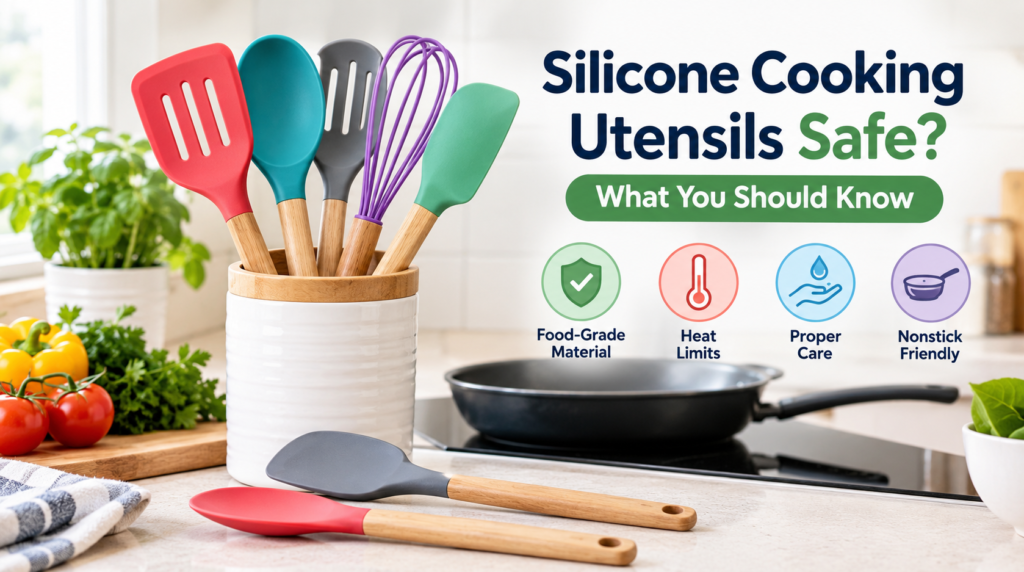
Generally, good-quality, food-grade silicone utensils are suitable for everyday cooking when used according to the manufacturer’s instructions. They are designed for contact with food and can be useful for stirring sauces, flipping eggs, mixing ingredients, and serving meals.
However, the word “silicone” alone does not guarantee that a product is safe under every condition. Low-quality or poorly manufactured products may not perform as expected, especially when exposed to temperatures beyond their intended range. Choose reputable products with clear food-contact information and care instructions.
For more information about cookware safety, read the guidance from Health Canada on the safe use of cookware and bakeware.
Benefits of Silicone Cooking Utensils
Silicone utensils offer several practical advantages that make them popular in modern kitchens. Their flexibility helps users scrape bowls and reach the edges of pans without much effort.
They are also lightweight and generally easy to wash. Many silicone utensils are nonstick-cookware-friendly, which helps reduce scratches when compared with metal tools. These benefits make them useful for daily meal preparation, baking, and serving.
Potential Risks of Silicone Cooking Utensils
Although suitable food-grade products can be used safely as directed, there are a few precautions worth understanding before purchasing or using them.
Excessive Heat
Every silicone utensil has its own temperature limit. Using a tool beyond that limit may damage it, cause deformation, or affect its performance. Never leave a silicone spatula resting against a hot burner or inside an overheated pan.
Poor Product Quality
Products with unclear material information or no reliable manufacturer details can be difficult to evaluate. Avoid utensils that have a strong, persistent chemical smell, feel unusually sticky, or show signs of deterioration. These signs do not prove a specific chemical hazard, but they are good reasons to stop using the product.
Damage and Wear
Silicone utensils can wear out over time, particularly with frequent use or improper cleaning. Cracks, tears, melting, or separation between the silicone head and handle can make a utensil harder to clean and less reliable. Replace damaged tools rather than continuing to use them.
How to Choose Safe Silicone Cooking Utensils
Choosing the right utensil is an important step in maintaining kitchen safety. Look for products specifically labeled for food contact and buy from a reputable manufacturer that provides clear product information.
Check the maximum operating temperature before using a utensil with hot food or cookware. If the product has a removable handle or multiple components, inspect how securely the parts fit together. Avoid products with vague labeling or no care instructions.
You can also consult the U.S. Food and Drug Administration’s information on food-contact substances to understand how materials intended to contact food are considered in food safety.
How to Use Silicone Utensils Safely
Following basic care practices can help you get more use from your kitchen tools. Always follow the product’s temperature rating and instructions, as heat tolerance varies between utensils.
Keep utensils away from direct flames and hot electric burners.
Do not leave silicone tools sitting in a hot pan for extended periods.
Wash utensils before first use and after every cooking session. Follow proper cleaning kitchen equipment practices to maintain kitchen hygiene.
Inspect them regularly for tears, cracks, sticky surfaces, or melting.
Use only cleaning methods recommended by the manufacturer.
Replace any utensil that becomes damaged or shows unusual changes.
These simple steps can help you use food-grade silicone tools more confidently during everyday cooking.
Silicone vs. Plastic and Metal Utensils
Each utensil material has advantages and limitations. Silicone is flexible and useful for nonstick cookware, while metal is durable but can scratch coated surfaces. Plastic utensils vary widely in heat resistance and should only be used within their specified temperature range.
Silicone is often a useful option for stirring and scraping, but no single material is ideal for every cooking task. Choose the right kitchen equipment and utensils based on your cookware, cooking temperatures, and the manufacturer’s safety instructions.
When Should You Replace Silicone Utensils?
Replace a silicone utensil if it melts, develops cracks or tears, becomes persistently sticky, or starts separating from its handle. A strong, unusual odor that remains after washing is another reason to stop using it and contact the manufacturer if necessary.
Do not attempt to repair a damaged food-contact surface with glue or other materials that are not intended for food contact. Replacing a worn utensil is usually the more practical choice.
Final Thoughts
So, are silicone cooking utensils safe? Good-quality, food-grade silicone utensils are generally suitable for everyday cooking when used within their stated temperature limits and maintained properly. Product quality, clear labeling, and regular inspection all matter.
Choose utensils from reliable manufacturers, keep them away from direct heat sources, and replace damaged tools promptly. These habits can help you make informed choices and keep your kitchen equipment in good condition.
- All Posts
- Buying Guides
- Commercial Kitchen
- Kitchen Equipment
- Product Reviews
- Tips & Maintenance