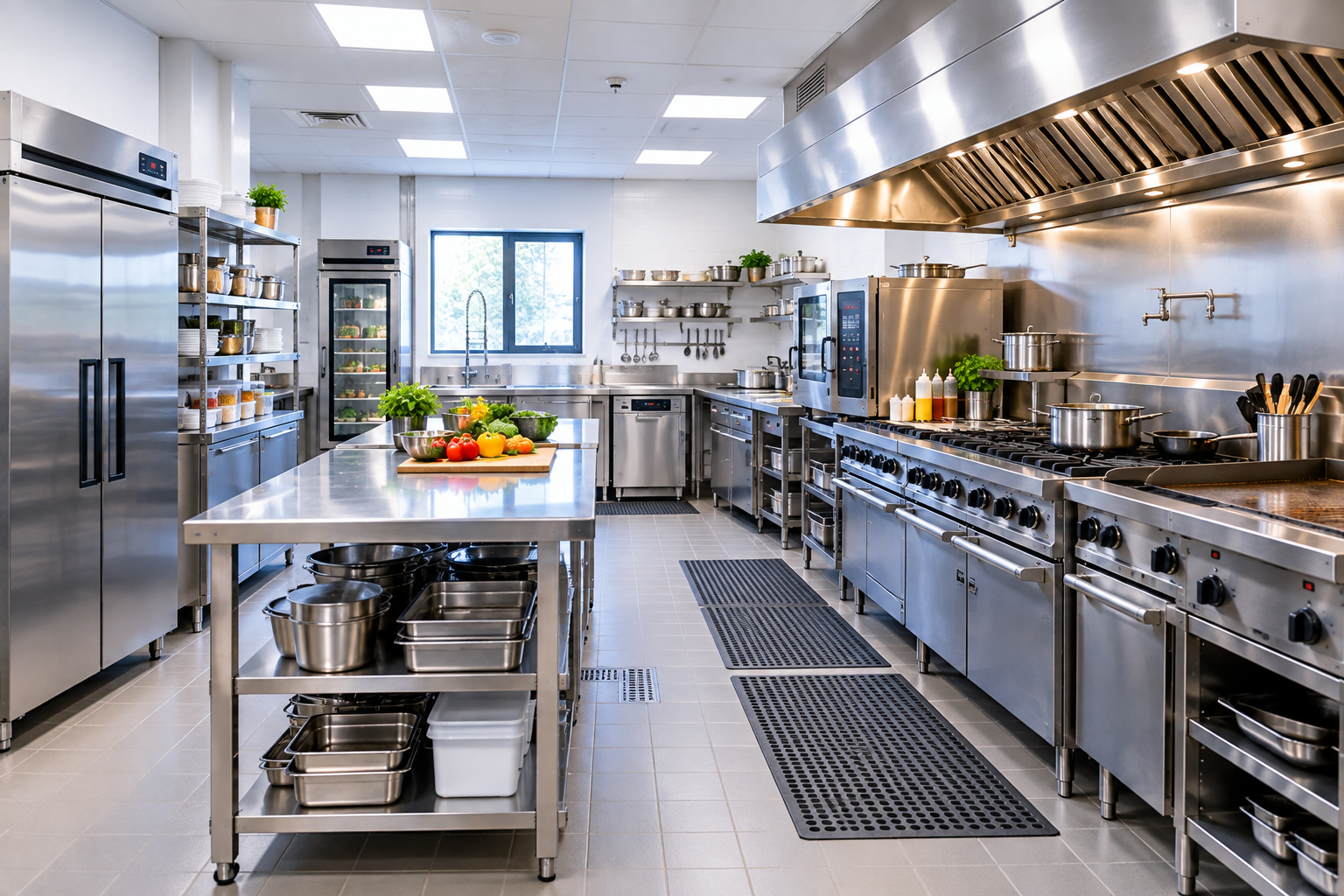
10 Types of Commercial Ovens and How to Choose One
Choosing the right oven can change how fast, safely, and consistently your kitchen works. However, comparing commercial oven types can feel difficult because each model cooks food in a different way.
A bakery may need even heat for bread, while a pizza shop needs a hot stone deck. A busy restaurant may prefer one oven that can steam, roast, bake, and reheat. This guide explains ten popular options, their best uses, and the key features to check before buying.
What Is a Commercial Oven?
A commercial oven is a heavy-duty cooking appliance made for restaurants, bakeries, hotels, cafés, catering companies, and other food businesses.
Unlike most home ovens, commercial units are built to run for many hours. They usually offer larger cooking space, faster recovery times, stronger parts, and more accurate controls.
The best model depends on what you cook, how much food you produce, and how your kitchen operates.
Commercial Oven Types at a Glance
The table below gives a quick comparison of the ten main options.
| Commercial oven type | Best for | Main strength | Main limitation |
|---|---|---|---|
| Standard oven | Small restaurants and cafés | Simple and affordable | Slower heat movement |
| Convection oven | Bakeries and general cooking | Fast, even cooking | Fans may dry delicate food |
| Combi oven | Hotels and high-volume kitchens | Steam and dry heat in one unit | Higher purchase price |
| Conveyor oven | Pizza and fast-casual businesses | Consistent, continuous cooking | Limited menu flexibility |
| Deck oven | Pizza, bread, and artisan baking | Strong bottom heat | Longer preheating time |
| Rack oven | Large bakeries | Very high batch capacity | Needs significant floor space |
| Rotisserie oven | Chicken and roasted meat | Attractive display cooking | Mainly suited to roasting |
| Cook-and-hold oven | Catering and slow cooking | Reduces food handling | Not made for fast browning |
| Steam oven | Vegetables, seafood, and healthcare meals | Helps retain moisture | Cannot create a crisp finish alone |
| High-speed oven | Cafés and convenience stores | Very fast service | Small chamber and higher cost |
1. Standard Commercial Oven
A standard oven, also called a conventional or radiant oven, uses heating elements or gas burners to warm the cooking chamber.
The heat does not move with a fan. This creates a calmer cooking environment that can work well for delicate cakes, custards, casseroles, roasts, and simple baked dishes.
Best Uses
Standard ovens are suitable for small restaurants, cafés, community kitchens, and businesses with basic menus.
They are also useful when a recipe needs gentle heat without strong airflow.
Advantages
- Simple controls
- Lower starting cost than advanced ovens
- Easy for new staff to understand
- Suitable for many basic recipes
Limitations
Heat can be uneven between the top, bottom, and corners. Staff may need to rotate pans during cooking.
A standard oven may also take longer to cook food than a convection model.
2. Commercial Convection Oven
A convection oven uses one or more fans to move hot air around the cooking chamber.
This moving air transfers heat quickly and helps food cook more evenly. It is one of the most widely used commercial oven types because it can handle baking, roasting, reheating, and batch cooking.
Best Uses
Convection ovens work well for:
- Cookies and pastries
- Roasted vegetables
- Meat and poultry
- Casseroles
- Sheet-pan meals
- Frozen products
Advantages
The fast airflow can shorten cooking times and improve batch consistency. Full-size and half-size models are available, so businesses can choose a unit based on their kitchen space.
Energy-efficient models may also lower operating costs. ENERGY STAR reports that certified commercial ovens can use substantially less energy than standard models.
Limitations
Strong airflow can affect light batters, soft cakes, and other delicate products. It may also dry food when the temperature or cooking time is too high.
Look for adjustable fan speeds when your menu includes both delicate and heavy products.
3. Combination Oven
A combination oven, usually called a combi oven, combines convection heat and steam.
Most models offer three cooking methods:
- Convection heat
- Steam
- A combination of steam and convection heat
This flexibility allows one unit to replace several pieces of cooking equipment.
Best Uses
Combi ovens are ideal for hotels, hospitals, schools, catering companies, large restaurants, and production kitchens.
They can roast meat, steam vegetables, bake bread, poach fish, reheat meals, and cook food at controlled humidity levels.
Advantages
A combi oven helps food retain moisture while still developing color and texture. Programmable controls can also improve consistency across different staff shifts.
Many models store recipes, control humidity, record cooking data, and include automatic cleaning cycles.
Limitations
Combi ovens often cost more than basic convection ovens. They may also need a water connection, drainage, ventilation, water treatment, and trained staff.
The extra cost makes sense when the kitchen will use several cooking modes every day. It may be harder to justify for a small menu.
Demo image: View a commercial bakery convection combi oven
Image ALT tag: alt="Commercial oven types featuring a convection combi oven with baking trays"
4. Conveyor Oven
A conveyor oven moves food through a heated chamber on a metal belt.
Staff place uncooked items at one end. The belt carries them through the oven at a set speed, and the finished food comes out at the other end.
Best Uses
Conveyor ovens are common in:
- Pizza shops
- Sandwich restaurants
- Fast-casual kitchens
- Food courts
- High-volume snack businesses
Advantages
Once the temperature and belt speed are set, the oven produces highly consistent results. Employees do not need to watch every item closely or use a timer for each order.
The continuous cooking system is helpful during busy service periods.
Limitations
A conveyor oven works best when menu items use similar cooking temperatures and times.
It is less flexible for businesses that prepare many dishes with different cooking needs. The unit also requires enough space at both ends for loading and unloading.
5. Deck Oven
A deck oven cooks food on a flat stone, ceramic, or metal surface. Heat comes from the bottom and may also come from the top of the chamber.
The heated deck transfers energy directly into the product. This creates a crisp base and strong oven spring in bread.
Best Uses
Deck ovens are a top choice for:
- Artisan bread
- Pizza
- Flatbreads
- Bagels
- Pastries
- Traditional baked goods
Advantages
The solid cooking surface produces excellent crust color and texture. Many models have separate decks, allowing staff to cook different products at different temperatures.
Some deck ovens also include steam injection for bread production.
Limitations
Deck ovens can take a long time to preheat. Staff may need more skill to load, rotate, and remove products without damaging them.
The chamber may also be too low for large roasts or tall food pans.
6. Rack Oven
A rack oven is a large bakery oven that holds an entire wheeled rack of pans.
During cooking, the rack often rotates inside the chamber. This movement exposes products to heat from different directions and supports even baking across many trays.
Best Uses
Rack ovens are designed for high-volume production of:
- Bread rolls
- Cookies
- Cakes
- Pastries
- Buns
- Packaged baked goods
Advantages
A rack oven can bake a large batch without staff loading each tray separately. Workers can prepare the rack, roll it into the chamber, and remove the whole batch after baking.
This saves labor in busy production bakeries.
Limitations
Rack ovens are large, expensive, and harder to install. They may require strong ventilation, wide doorways, high electrical or gas capacity, and enough room to move loaded racks.
They are usually too large for a small café or restaurant.
7. Rotisserie Oven
A rotisserie oven cooks food while it turns on spits, baskets, or rotating shelves.
The movement helps expose the food to heat evenly. Fat and juices move over the surface, creating rich color and a roasted appearance.
Best Uses
Rotisserie ovens are mainly used for:
- Whole chickens
- Turkey
- Beef
- Pork
- Ribs
- Roasted vegetables
Advantages
Many rotisserie ovens have glass fronts. Customers can see the food cooking, making the unit both a cooking appliance and a product display.
This can encourage impulse purchases in supermarkets, delis, and takeaway restaurants.
Limitations
A rotisserie oven is less flexible than a combi or convection oven. Cleaning spits, baskets, glass, and grease-catching parts can also take time.
Check whether the unit has removable, dishwasher-safe components.
8. Cook-and-Hold Oven
A cook-and-hold oven cooks food slowly at a controlled temperature. After cooking, it automatically lowers the heat and keeps the food warm.
This allows kitchens to prepare food overnight or before a busy service period.
Best Uses
Cook-and-hold ovens work well for:
- Large meat cuts
- Pulled pork
- Beef brisket
- Roasts
- Braised food
- Banquet meals
Advantages
Low-temperature cooking can reduce shrinkage and help meat stay tender. The holding function also reduces the need to move food into separate warming equipment.
These ovens are useful for catering, banquets, and operations that prepare meals before service.
Limitations
Cook-and-hold ovens are not designed for quick cooking or strong browning.
Some kitchens sear or finish the food in another appliance to create a crisp outer layer.
9. Commercial Steam Oven
A steam oven cooks food with hot water vapor instead of dry air.
Steam transfers heat efficiently and creates a moist cooking space. It is useful for food that can become dry, tough, or faded in a standard oven.
Best Uses
Steam ovens are suitable for:
- Vegetables
- Rice
- Seafood
- Dumplings
- Potatoes
- Eggs
- Reheated meals
Advantages
Steam helps protect moisture and can support bright color in vegetables. It also allows kitchens to cook some products without adding much oil.
Steam ovens are common in hospitals, schools, hotels, and kitchens that produce large numbers of balanced meals.
Limitations
Steam alone does not create a brown or crisp surface. A separate oven, grill, or finishing process may be needed.
The equipment also requires regular descaling. Hard water can create mineral buildup and reduce performance.
10. High-Speed Oven
A high-speed oven combines two or more heating methods to cook food quickly.
Depending on the model, it may use convection heat, microwave energy, impingement air, infrared heat, or a combination of these methods.
Best Uses
High-speed ovens are popular in:
- Coffee shops
- Convenience stores
- Airport food outlets
- Hotel cafés
- Quick-service restaurants
- Small kitchens without a full cooking line
They can heat sandwiches, pizza slices, pastries, breakfast items, and prepared meals in minutes or even seconds.
Advantages
High-speed ovens help businesses serve hot food with short waiting times. Many countertop models use programmed settings, making operation simple for staff.
Some ventless models can be installed in places where a traditional hood system is difficult to add. Local approval is still essential.
Limitations
The cooking chamber is usually small. These ovens are better for individual orders than large batches.
They can also cost much more than basic countertop ovens.
How to Choose Between Commercial Oven Types
The most expensive oven is not always the best one. The right choice is the oven that fits your menu, workflow, space, and daily production needs.
Start With Your Menu
Write down the foods that generate most of your sales. Then note how each item must be cooked.
For example, a pizza restaurant may benefit from a deck or conveyor oven. A bakery may need a convection, deck, or rack oven. A hotel with a wide menu may gain more value from a combi oven.
Do not choose an oven mainly because it has many features. Choose it because those features solve real kitchen problems.
Calculate Daily Production
Estimate how many portions or trays you cook during your busiest hour.
An oven that handles an average weekday may become a serious bottleneck on Friday night. Select enough capacity for peak service, but avoid buying a unit so large that it wastes energy during quiet periods.
Consider whether a double-stack setup would offer more flexibility than one large oven.
Measure the Kitchen Carefully
Measure the oven’s planned location, doorways, hallways, lifts, and loading entrance.
Remember to include safe clearance around the equipment. Staff need room to open doors, carry hot pans, clean the unit, and access service panels.
A machine that fits the cooking area may still be impossible to move through the building.
Check Available Utilities
Before ordering, confirm whether the property can support:
- Natural gas or propane
- The required electrical voltage and phase
- Water supply
- Drainage
- Ventilation
- Fire suppression
- Water filtration
A low-priced oven can become expensive when major utility upgrades are required.
Compare Gas and Electric Models
Gas ovens often heat quickly and may have lower operating costs in areas where gas is affordable.
Electric ovens may offer accurate controls, easier installation in some buildings, and more even heat. Actual running costs depend on local utility prices, oven efficiency, and daily use.
Ask suppliers for energy consumption data instead of comparing only the purchase price.
Review Ventilation Requirements
Many commercial ovens need a ventilation hood to remove heat, smoke, grease, steam, or combustion gases.
Some electric countertop models are sold as ventless equipment. However, approval can depend on the food, cooking process, oven model, building, and local code.
Confirm the requirements with the local authority and a qualified kitchen designer before installation.
Look for Safe, Cleanable Construction
The oven should have smooth surfaces, accessible corners, removable racks, strong door seals, and parts that staff can clean safely.
NSF/ANSI 4 covers food protection and sanitation requirements for commercial cooking equipment. Buyers in the United States can check whether a model has suitable certification for their operation.
Consider Cleaning Time
Cleaning affects labor costs and food safety every day.
Ask the supplier to demonstrate the full cleaning process. Check how staff will clean fans, trays, stones, steam parts, door glass, drains, grease areas, and the space behind the unit.
Automatic washing is useful, but cleaning chemicals and service parts add ongoing costs.
Compare Total Ownership Cost
The oven price is only one part of the investment.
Include these expenses in your comparison:
| Cost area | What to check |
|---|---|
| Purchase | Oven, stand, racks, trays, and accessories |
| Delivery | Freight, lifting equipment, and site access |
| Installation | Gas, electricity, water, drainage, and ventilation |
| Operation | Energy, water, and cleaning chemicals |
| Labor | Loading, monitoring, cleaning, and training |
| Maintenance | Planned servicing and replacement parts |
| Downtime | Lost sales when the oven cannot operate |
A reliable, efficient oven with local service may cost less over its full life than a cheaper machine with poor support.
Useful Features to Look For
Not every kitchen needs advanced controls. Still, several features can make daily work easier.
Programmable Recipes
Recipe programs allow staff to save cooking temperature, time, humidity, and fan settings.
This reduces guesswork and helps different employees produce similar results.
Adjustable Fan Speed
A lower fan speed can protect cakes, pastries, and delicate foods. A higher speed can improve browning and heat transfer for heavier products.
Core Temperature Probe
A food probe measures the temperature inside meat or other products.
The oven can stop cooking or move into holding mode when the target temperature is reached.
Automatic Cleaning
Automatic cleaning can reduce manual work, especially in combi ovens.
Check how long each cycle takes and whether the oven can be used during the cleaning process.
Double-Pane Door Glass
An insulated glass door helps reduce outer surface heat and allows staff to check food without opening the chamber.
Keeping the door closed also reduces heat loss.
Energy-Saving Mode
Sleep modes, improved insulation, quick preheating, and efficient burners can lower energy use.
Compare certified models and published efficiency data where available rather than relying only on marketing claims.
Common Buying Mistakes to Avoid
One common mistake is buying based only on the lowest price. Weak service support or frequent repairs can quickly remove the original savings.
Another mistake is choosing capacity without studying peak demand. An undersized oven slows service, while an oversized one may waste space and energy.
Businesses should also avoid ordering equipment before checking utilities, ventilation, delivery access, and local approval. These details should be confirmed before a deposit is paid.
Finally, do not assume that staff will understand a new digital oven without training. Include recipe setup, cleaning instructions, and safe operation in the installation plan.
Questions to Ask a Commercial Oven Supplier
Before purchasing, ask the supplier these questions:
- Is this oven suitable for my main menu items?
- How many full loads can it cook per hour?
- What utilities and ventilation does it require?
- Does the quoted price include delivery and installation?
- Is staff training included?
- Which parts are covered by the warranty?
- Is local technical service available?
- How quickly can common replacement parts arrive?
- What daily cleaning does the oven need?
- Can I test the oven with my own recipes?
A cooking test is especially valuable. Brochures show features, but a live test shows how the oven handles your food.
Conclusion
Understanding the main commercial oven types makes it easier to choose equipment that supports your menu and daily workload.
Convection ovens are flexible and familiar. Combi ovens provide several cooking methods in one unit. Deck and rack ovens are strong choices for baking, while conveyor and high-speed ovens support quick, repeatable service.
Before buying, compare capacity, utilities, ventilation, cleaning, energy use, warranty coverage, and local service. The right commercial oven should not only cook food well. It should also improve speed, consistency, safety, and long-term operating costs.
Check Available Utilities
Before ordering, confirm whether the property can support:
- Natural gas or propane
- The required electrical voltage and phase
- Water supply
- Drainage
- Ventilation
- Fire suppression
- Water filtration
A combi oven is often the most versatile choice because it can use convection heat, steam, or both at the same time. It can roast, bake, steam, poach, reheat, and slow-cook many foods.
However, its higher cost may not suit every business. A convection oven may offer better value for a smaller kitchen with a simple menu.
A combi oven is often the most versatile choice because it can use convection heat, steam, or both at the same time. It can roast, bake, steam, poach, reheat, and slow-cook many foods.
However, its higher cost may not suit every business. A convection oven may offer better value for a smaller kitchen with a simple menu.
A combi oven is often the most versatile choice because it can use convection heat, steam, or both at the same time. It can roast, bake, steam, poach, reheat, and slow-cook many foods.
However, its higher cost may not suit every business. A convection oven may offer better value for a smaller kitchen with a simple menu.
Check Available Utilities
Before ordering, confirm whether the property can support:
- Natural gas or propane
- The required electrical voltage and phase
- Water supply
- Drainage
- Ventilation
- Fire suppression
- Water filtration
- All Posts
- Buying Guides
- Commercial Kitchen
- Kitchen Equipment
- Product Reviews
- Tips & Maintenance