Restaurant Kitchen Cleaning Checklist: A Complete Daily, Weekly & Monthly Guide
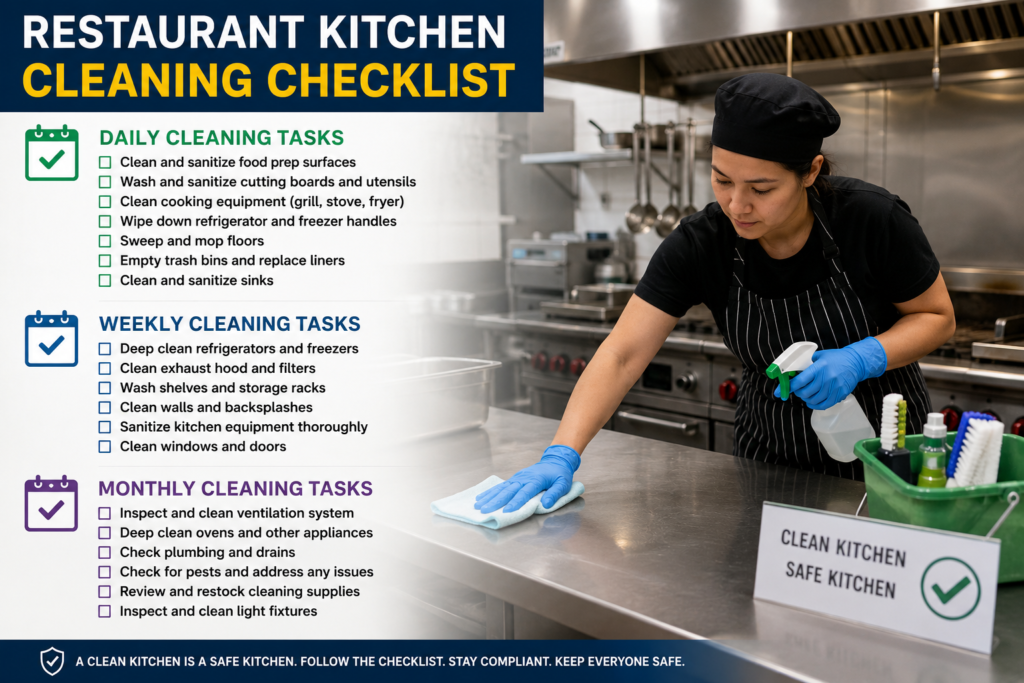
Restaurant Kitchen Cleaning Checklist: Keep Your Kitchen Safe and Hygienic Maintaining a clean commercial kitchen is essential for food safety, employee health, and customer satisfaction. A well-organized restaurant kitchen cleaning checklist helps restaurant owners and kitchen staff clean consistently, prevent cross-contamination, and comply with health regulations. Whether you operate a restaurant, café, hotel kitchen, or catering business, following a structured cleaning schedule can improve efficiency and reduce the risk of foodborne illnesses. Why a Restaurant Kitchen Cleaning Checklist Is Important A consistent cleaning routine provides several benefits: Maintains food safety standards Prevents bacteria and mold growth Extends the life of kitchen equipment Reduces health inspection violations Creates a safer work environment Improves overall kitchen efficiency Using a written checklist also ensures that no cleaning task is overlooked. Daily Cleaning Checklist The following tasks should be completed at the end of every working day. Food Preparation Areas Sanitize prep tables Wash cutting boards Clean knives and utensils Disinfect food preparation surfaces Remove food debris Cooking Equipment Clean grills Degrease fryers Wipe stovetops Clean ovens if necessary Sanitize cooking utensils Refrigeration Wipe refrigerator handles Remove expired food Clean spills immediately Check storage temperatures Floors Sweep floors Mop using food-safe cleaner Remove grease buildup Clean floor drains Waste Management Empty trash bins Replace garbage liners Clean recycling containers Sanitize waste areas Weekly Cleaning Checklist Some equipment requires deeper cleaning every week. Tasks include: Deep clean refrigerators Clean freezer shelves Wash storage racks Degrease exhaust hood filters Clean walls behind equipment Sanitize shelving units Polish stainless steel surfaces Clean windows and doors Weekly maintenance helps prevent grease accumulation. Monthly Cleaning Checklist Monthly deep cleaning improves long-term kitchen performance. Recommended tasks: Inspect ventilation systems Clean ceiling vents Deep clean ovens Check plumbing fixtures Remove scale from sinks Clean behind large appliances Inspect pest control measures Review cleaning supplies inventory Keeping a monthly schedule reduces costly maintenance issues. Equipment That Requires Regular Cleaning Every commercial kitchen contains equipment that should be cleaned routinely. Important items include: Commercial ovens Fryers Griddles Refrigerators Freezers Food processors Mixers Dishwashers Ice machines Stainless steel worktables Cleaning equipment according to manufacturer recommendations helps maximize its lifespan. Best Cleaning Supplies Use food-safe products whenever possible. Recommended supplies: Food-safe sanitizer Degreaser Microfiber cloths Scrub brushes Disposable gloves Mop and bucket Stainless steel cleaner Glass cleaner Paper towels Avoid harsh chemicals that may damage food-contact surfaces. Restaurant Cleaning Tips Improve cleaning efficiency by following these practices: Assign cleaning responsibilities. Follow a written schedule. Clean as you go. Train employees regularly. Replace damaged cleaning tools. Store chemicals safely. Record completed cleaning tasks. Consistency is the key to maintaining a sanitary kitchen. Common Cleaning Mistakes Avoid these common problems: Forgetting to clean behind equipment Mixing cleaning chemicals Using dirty cloths Ignoring floor drains Leaving food residue overnight Skipping refrigerator cleaning Not sanitizing food-contact surfaces Small mistakes can lead to major health risks. Printable Restaurant Kitchen Cleaning Checklist Use this simple checklist each day: Daily ✔ Clean prep tables ✔ Sanitize utensils ✔ Sweep and mop floors ✔ Empty trash bins ✔ Clean refrigerators ✔ Wipe cooking equipment Weekly ✔ Deep clean appliances ✔ Wash shelving ✔ Clean exhaust hood filters ✔ Sanitize storage areas Monthly ✔ Inspect ventilation ✔ Clean behind equipment ✔ Check plumbing ✔ Review pest control Printing this checklist makes it easier for staff to complete cleaning tasks consistently. Frequently Asked Questions How often should a restaurant kitchen be cleaned? Food-contact surfaces should be cleaned throughout the day, while complete kitchen cleaning should be performed daily. Weekly and monthly deep cleaning should also be scheduled. Who is responsible for kitchen cleaning? Every kitchen employee should follow assigned cleaning duties, while managers should verify that the checklist is completed. Why is cleaning documentation important? Cleaning records help demonstrate compliance during health inspections and improve accountability among staff. Final Thoughts A well-structured restaurant kitchen cleaning checklist is one of the most effective tools for maintaining a safe, hygienic, and efficient foodservice operation. By following daily, weekly, and monthly cleaning routines, restaurants can protect food quality, extend equipment life, and create a healthier workplace for employees and customers.
How to Clean Commercial Kitchen Equipment: The Complete Cleaning & Maintenance Guide
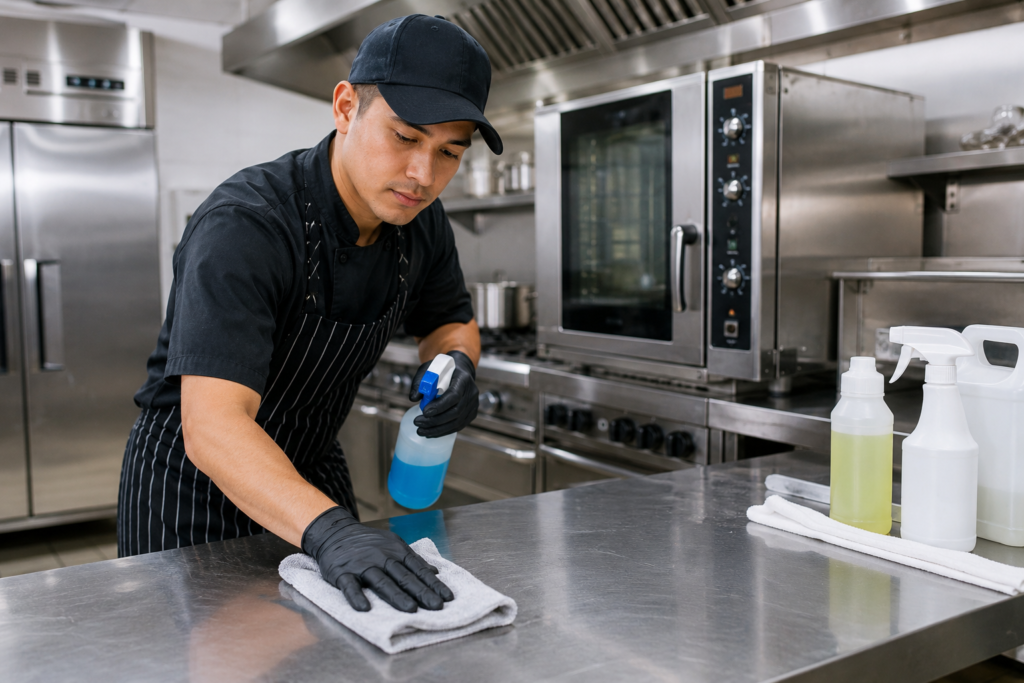
Keeping restaurant equipment clean is essential for food safety, equipment longevity, and efficient kitchen operations. Grease, food residue, and bacteria can build up quickly in busy commercial kitchens, leading to health risks and expensive repairs. If you’re looking for how to clean commercial kitchen equipment, this guide covers the best cleaning methods, recommended tools, and maintenance tips for every major appliance. Why Cleaning Commercial Kitchen Equipment Matters Understanding how to clean commercial kitchen equipment isn’t just about appearance. Proper cleaning helps: Prevent food contamination Meet health inspection standards Extend equipment lifespan Improve cooking performance Reduce repair costs Eliminate unpleasant odors Increase workplace safety A regular cleaning schedule also helps your kitchen run more efficiently during busy service hours. Essential Cleaning Supplies Before you begin, gather these supplies: Microfiber cloths Soft scrub brushes Food-safe degreaser Mild dish detergent Warm water Stainless steel cleaner Sanitizing solution Spray bottles Rubber gloves Bucket Always use cleaners approved for food-service environments. Daily Cleaning Routine A daily routine is the foundation of how to clean commercial kitchen equipment effectively. 1. Turn Off Equipment Disconnect power or gas before cleaning to prevent accidents. 2. Remove Food Debris Brush away crumbs, grease, and loose food particles before applying cleaners. 3. Wash Surfaces Use warm water mixed with mild detergent to clean exterior surfaces. 4. Sanitize Apply a food-safe sanitizer after washing to eliminate bacteria. 5. Dry Completely Use a clean microfiber cloth to prevent water spots and corrosion. Cleaning Stainless Steel Equipment Most commercial kitchens rely heavily on stainless steel. Best Practices Wipe in the direction of the grain. Avoid steel wool. Use non-abrasive cleaners. Polish with a stainless steel cleaner. Dry immediately after washing. Proper care keeps surfaces shiny and resistant to rust. How to Clean Commercial Ovens Grease buildup reduces efficiency and creates fire hazards. Steps Allow the oven to cool. Remove racks. Apply a commercial oven cleaner. Let it sit as directed. Scrub gently. Wipe with clean water. Dry thoroughly. Clean ovens weekly or more often in busy kitchens. Cleaning Fryers Safely Oil residue can affect food quality. Recommended Process Drain used oil. Remove loose debris. Fill with water and fryer cleaner. Boil according to manufacturer instructions. Scrub the interior. Rinse completely. Dry before refilling with oil. Cleaning Refrigerators and Freezers Learning how to clean commercial kitchen equipment also includes refrigeration units. Checklist Remove food items. Wash shelves with warm soapy water. Sanitize interior walls. Clean door seals. Vacuum condenser coils. Check drain lines. Keep temperatures stable after cleaning. Cleaning Grills and Griddles After each shift: Scrape food residue. Apply grill cleaner while warm. Wipe with a damp cloth. Lightly oil the surface if recommended. Daily maintenance improves cooking performance. Dishwashers Need Cleaning Too Commercial dishwashers require regular maintenance. Remember to: Clean filters. Remove mineral deposits. Inspect spray arms. Wipe door seals. Run a cleaning cycle weekly. Common Cleaning Mistakes Avoid these errors: Mixing chemical cleaners Using abrasive steel brushes Forgetting to sanitize Cleaning hot equipment with cold water Ignoring manufacturer instructions Skipping routine maintenance These mistakes can damage equipment and shorten its lifespan. Create a Cleaning Schedule An organized schedule makes how to clean commercial kitchen equipment much easier to manage. Daily Counters Ovens Grills Fryers Food prep tables Weekly Refrigerators Freezers Shelving Vent filters Monthly Exhaust hoods Deep-clean appliances Condenser coils Drain systems A checklist helps staff stay consistent. Tips for Long-Term Equipment Care After mastering how to clean commercial kitchen equipment, follow these maintenance habits: Train employees on proper cleaning procedures. Clean spills immediately. Use manufacturer-approved cleaning products. Inspect equipment regularly. Replace worn brushes and cloths. Schedule professional servicing when needed. Preventive maintenance reduces downtime and repair costs. Frequently Asked Questions How often should commercial kitchen equipment be cleaned? Food-contact surfaces should be cleaned after each use, while deep cleaning should follow a weekly or monthly schedule depending on the equipment. Can bleach be used on stainless steel? No. Bleach can damage stainless steel and cause discoloration. Use food-safe stainless steel cleaners instead. What’s the best degreaser for commercial kitchens? Choose a food-safe commercial degreaser designed specifically for restaurant equipment and always follow the manufacturer’s instructions. Why is sanitizing important after cleaning? Cleaning removes dirt and grease, while sanitizing reduces harmful bacteria that can contaminate food. Conclusion Knowing how to clean commercial kitchen equipment is essential for maintaining a safe, efficient, and professional kitchen. A consistent cleaning routine protects your investment, supports food safety, and helps your team meet health standards. By using the right cleaning products, following manufacturer guidelines, and creating a regular maintenance schedule, you can keep your commercial kitchen equipment performing at its best for years to come.
